





















Investigating the Cult-Like Tendencies in the Rationalist Community
By
glenstein

The kind of bagel that ruins lesser bagels for you.
Summary
The article explores the Rationalist community, which originated from Eliezer Yudkowsky's blog series 'The Sequences,' focusing on rational thinking. Despite its emphasis on critical thinking, the community has a tendency to form high-demand groups, often resembling cults. The piece investigates this phenomenon through the lens of a member of the Rationalist community.
Key quotes
· 3 pulledThe rationalist community was drawn together by AI researcher Eliezer Yudkowsky’s blog post series The Sequences, a set of essays about how to think more rationally.
There’s a lot to like about the Rationalist community, but they do have a certain tendency to spawn — shall we say — high demand groups.
We sent a card-carrying Rat to investigate what’s really going on.
You might also wanna read


Understanding Adversarial Thinking: Why Everyday Life Doesn't Prepare Us for True Opposition
The article explores the concept of adversarial thinking and how most people lack experience with true adversaries in everyday life. The aut
 inoticeiamconfused.substack.com·9mo ago
Portage food service director awarded national fellowship to boost scratch cooking in schools
Portage Township Schools Food Service Director Dawn Kelley has been awarded a 2026 Healthy School Food Pathway fellowship through the Chef A
 chicagotribune.com·10h ago
University of Vermont Study Challenges 70-Year-Old Theory That Language Is Organized Around Emotion
A new study from the University of Vermont challenges the 70-year-old theory that word meanings are organized primarily around emotion. Afte

Mathematical Model Identifies the Optimal Threshold for Human Ambition
A collaborative mathematical study reconciled conflicting pieces of cultural advice by mapping the exact parameters of human ambition. Using
 neurosciencenews.com·1d ago
Three communication habits of emotionally intelligent people, according to a Harvard-trained researcher
Article discusses three key communication habits of emotionally intelligent people based on insights from Harvard-trained researcher Dr. Jen
 cnb.cx·3d ago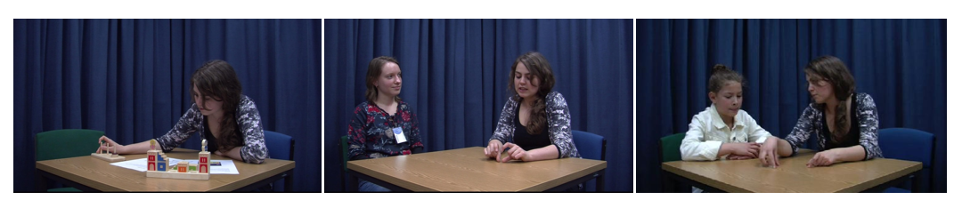
Study finds Italian and Dutch adults use similar teaching gestures when explaining concepts to children
A new study by researchers from the University of Catania and the Max Planck Institute for Psycholinguistics found that Italian and Dutch ad
 mpi.nl·3d ago