





















Introduction to Self-Adapting Language Models (SEAL)
By
archon1410

A bagel you'd recommend to a friend without hedging.
Summary
The article introduces Self-Adapting Large Language Models (SEAL), a framework that enables models to self-adapt by generating their own finetuning data and update directives. SEAL allows models to produce self-edits in response to new inputs, restructuring information, specifying optimization parameters, and invoking tools for updates. It uses reinforcement learning to train models for effective self-edits, leading to lasting adaptation.
Key quotes
· 3 pulledLarge language models (LLMs) are powerful but static; they lack mechanisms to adapt their weights in response to new tasks, knowledge, or examples.
Through supervised finetuning (SFT), these self-edits result in persistent weight updates, enabling lasting adaptation.
Experiments on knowledge incorporation and few-shot generalization show that SEAL is a promising step toward language models capable of self-directed adaptation.
You might also wanna read


Researchers Work to Decode the "Black Box" of Reservoir Computing and Brain-Inspired AI
This article explores Reservoir Computing (RC), a specialized form of recurrent neural networks (RNNs) that mimics biological brain processe
 akmaier.substack.com·47m ago
Experimental demonstration of quantum communication advantage for Euclidean distance calculation using coherent state fingerprints
This paper presents an experimental demonstration of quantum advantage in communication complexity for the Euclidean distance problem. The r
 arxiv.org·1h ago
Quantum research reveals when entanglement hinders rather than helps channel discrimination
This research paper investigates the role of entanglement in quantum channel discrimination, challenging the common assumption that more ent
arxiv.org·2h ago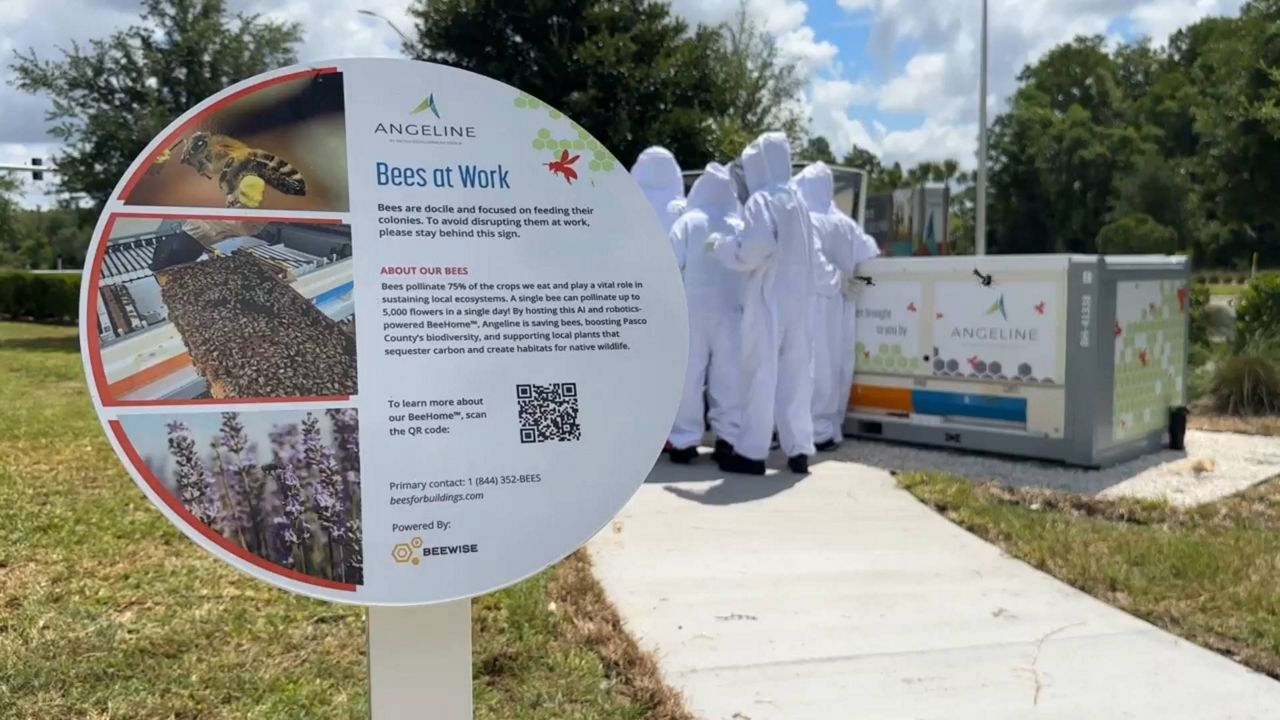
Florida community Angeline installs AI-powered robotic beehive to protect pollinators
A Pasco County, Florida community called Angeline has installed a robotic beehive system equipped with AI technology, becoming the first mas
 baynews9.com·2h ago
Study Finds Most AI Chatbots Prioritize Ad Revenue Over User Welfare in Conflict-of-Interest Scenarios
This research paper analyzes how large language models (LLMs) handle conflicts of interest when company revenue incentives (advertisements)
arxiv.org·2h ago
German study finds POLO back-junction solar cells more cost-effective than PERC technology in Europe
A German research team from the German Aerospace Center (DLR) conducted a techno-economic analysis of POLO back-junction (BJ) solar cells in
 pv-magazine.com·2h ago