





















Predictive Multicast Tech Wins Intel Award with 1.86× AI Speedup, Raises Network Security Concerns
By
HackMoN Ai

A baker's-dozen of insight crammed into one ring.
Summary
Professor Jiayi Huang of HKUST(GZ) received Intel's 2025 Outstanding Researcher Award for developing a predictive multicast technology that reduces on-chip network (NoC) traffic by up to 50% and accelerates AI applications by up to 1.86×. The software-hardware co-design addresses critical bottlenecks in AI and data-center workloads. However, the article also highlights that such efficient data movement introduces new security vulnerabilities, including side-channel leaks, multicast-specific denial-of-service, and misrouting attacks, emphasizing that network security must evolve alongside performance innovations.
Key quotes
· 3 pulledProfessor Jiayi Huang of HKUST(GZ) received Intel's 2025 Outstanding Researcher Award for a groundbreaking software-hardware co-design that uses predictive multicast to slash NoC traffic by up to 50% and accelerate AI applications by as much as 1.86×.
As artificial intelligence and data-center workloads scale, the on-chip network (NoC) has become a critical performance bottleneck.
Any technology that moves data so efficiently also introduces new vectors for side-channel leaks, multicast-specific denial-of-service, and misrouting attacks.
You might also wanna read

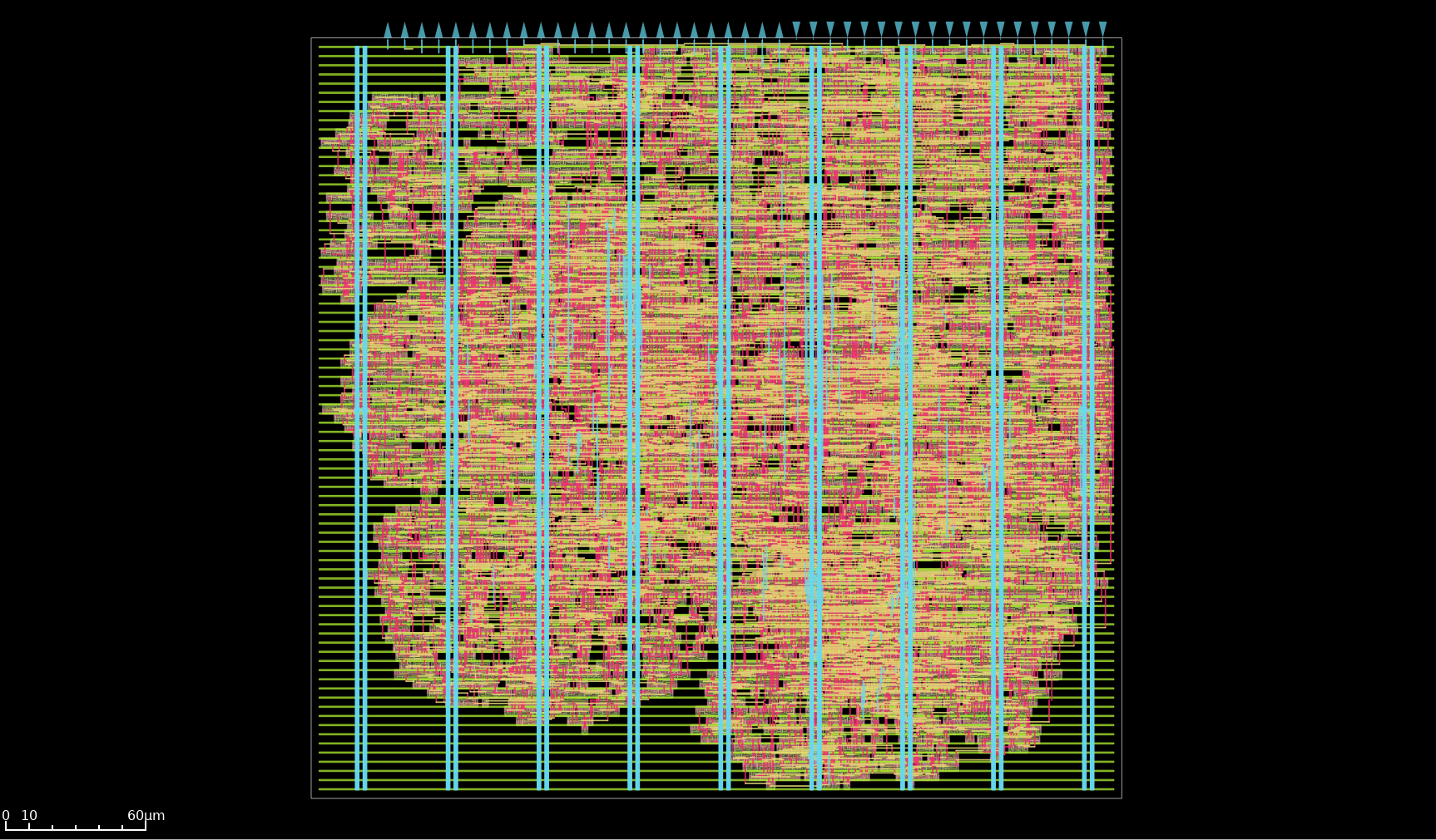
Designing a Systolic Array AI Accelerator in Two Weeks for Global Foundries 180nm Tapeout
The article details the author's ambitious project to design a systolic array AI accelerator with in-silicon debug infrastructure from scrat
 essenceia.github.io·4mo ago
Chinese Researchers Develop Analog Chip Claimed to Be 1,000 Times Faster Than Nvidia GPUs for Specific Applications
Chinese researchers from Peking University have developed a new analog chip using resistive random-access memory (RRAM) technology that repo
 livescience.com·7mo ago
Google TPU: A Deep Dive into the AI Inference Chip's History, Architecture, and Strategic Impact
This comprehensive deep dive explores Google's Tensor Processing Unit (TPU), covering its history, technical architecture, strategic importa
 uncoveralpha.com·6mo ago
Supercomputer networking to accelerate large scale AI training

Research Directions for Overcoming Memory and Interconnect Challenges in Large Language Model Inference Hardware
This article discusses the technical challenges of Large Language Model (LLM) inference, highlighting how the autoregressive Decode phase ma
 arxiv.org·4mo ago
Bridging the Semiconductor Talent Gap: Cross-Training CS Students and AI-Assisted Hardware Design
The article discusses innovative approaches to address the talent shortage in the semiconductor industry, including cross-training computer
 semiengineering.com·3mo ago