





















Thermally Activated Lithium Formate Enables Buried Interface Regulation and Enhanced Crystallinity in Perovskite Solar Cells
By
Chao Gao

If you only eat one bagel today, this is the bagel.
Summary
This article presents a scientific study on improving perovskite solar cells by using a thermally activated lithium formate (LiHCOO) buried interface strategy. The method triggers in situ pseudo-halide diffusion, which simultaneously reconstructs the SnO2/perovskite interface and regulates perovskite nucleation and growth. High-temperature treatment transforms LiHCOO from a low-temperature hexagonal polymorph to a metastable monoclinic phase with a more open molecular packing, enabling better interface regulation and crystallinity enhancement in perovskite solar cells.
Key quotes
· 3 pulledRegulating buried interfaces is pivotal for suppressing interfacial defects and facilitating crystallization toward compact, high-quality perovskite films.
We propose a thermally activated lithium formate (LiHCOO) buried interface strategy that triggers in situ pseudo-halide diffusion, thereby simultaneously reconstructing the SnO2/perovskite interface and regulating perovskite nucleation and growth.
High-temperature treatment transforms LiHCOO from its low-temperature hexagonal polymorph to a metastable monoclinic phase with a more open molecular pack
You might also wanna read


Wider Neural Networks with Fewer Parameters Improve Performance by Reducing Feature Interference
This research paper demonstrates that increasing the number of neurons in a neural network without increasing the number of non-zero paramet
 arxiv.org·39m ago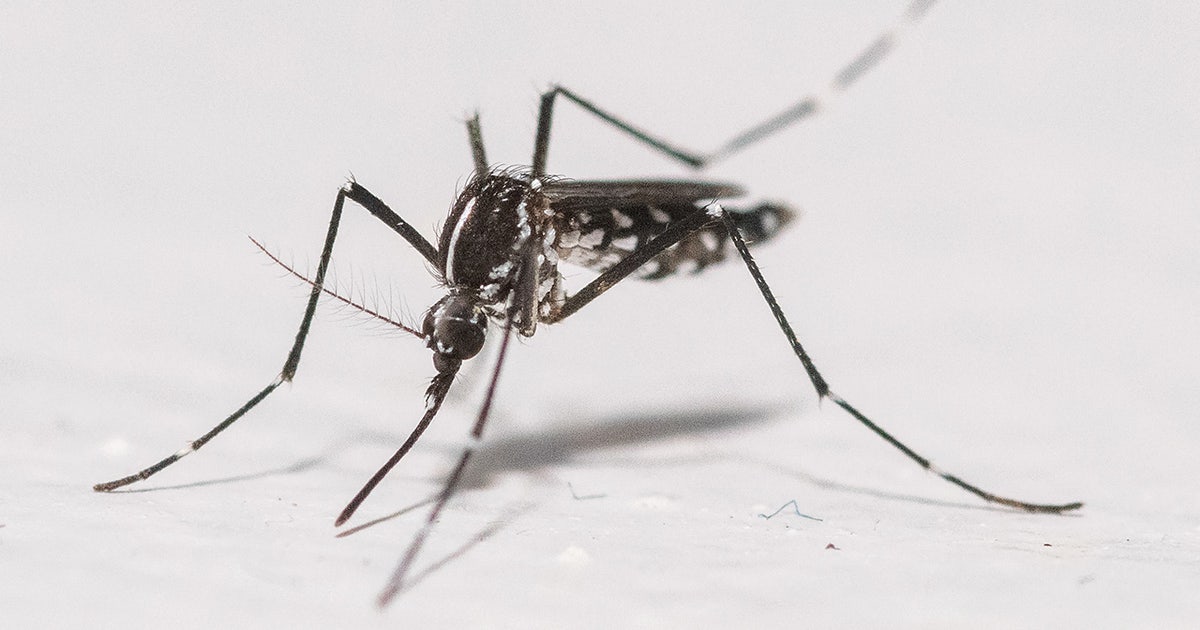
Google's Debug program seeks EPA approval to release 64 million modified mosquitoes in California and Florida
Google's Debug program plans to release up to 64 million genetically modified "good" mosquitoes in California and Florida over two years to
 bit.ly·1h ago
ARC Prize benchmark reveals AI systems score under 1% on spatial reasoning puzzles while humans achieve 100%
The article discusses the ARC Prize Foundation's May 2026 benchmark results showing that while humans scored 100% on a game-like AI test, th
 theconversation.com·1h ago
The dangers of anthropomorphising AI: Why we must see machines as machines
This article argues that anthropomorphising AI—projecting human thoughts, feelings, and intentions onto machines—is a natural but dangerous
 ethics.org.au·3h ago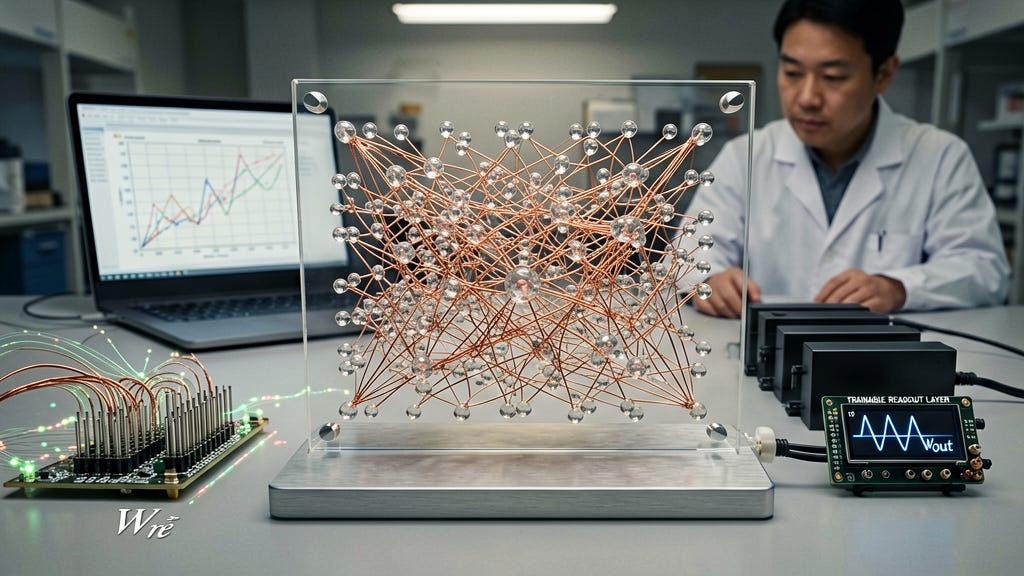
Researchers Work to Decode the "Black Box" of Reservoir Computing and Brain-Inspired AI
This article explores Reservoir Computing (RC), a specialized form of recurrent neural networks (RNNs) that mimics biological brain processe
 akmaier.substack.com·4h ago
Vera C. Rubin Observatory Set to Discover Millions of Asteroids and Transient Phenomena in Big-Data Astronomy Era
The Vera C. Rubin Observatory in Chile is preparing to begin operations, designed to capture the entire Southern Hemisphere night sky every
 quantamagazine.org·5h ago