





















Imagine gazing up at an alien sky… as rubies and sapphires pour down like glittering sounds like a fever dream from a fantasy novel, but this may be everyday weather on a real planet 880 light-years a
2d ago
Source
Twitter / XImagine gazing up at an alien sky… as rubies and sapphires pour down like glittering sounds like a fever dream from a fantasy novel, but this may be everyday weather on a real planet 880 light-years arain.itImagine gazing up at an alien sky… as rubies and sapphires pour down like glittering sounds like a fever dream from a fantasy novel, but this may be everyday weather on a real planet 880 light-years away.Using the James Webb Space Telescope, astronomers have just captured one of the most jaw-dropping portraits ever of WASP-121b — a hellish, bloated gas giant unlike anything in our Solar what they found: Insane supersonic winds screaming at 11,000 mph (18,000 km/h) — fast enough to lap the entire Earth in barely two hours. These are not gentle breezes; they’re apocalyptic gales ripping heat and chemicals from one side of the planet to the other. The dayside is a blistering inferno where temperatures are so extreme that iron, magnesium, and other metals boil into vapor and swirl through the atmosphere like metallic steam. On the cooler nightside, those same materials condense into exotic clouds and liquid droplets. Previous observations strongly suggest that rubies and sapphires could actually form in the upper atmosphere and rain downward in sparkling torrents — a jewel storm straight out of science fiction.And the planet itself is deformed. It orbits its star so ridiculously close that one “year” lasts just 30.5 Earth hours. The star’s crushing gravity has stretched WASP-121b into a giant cosmic football, tidally locked with one face forever scorched and the other in perpetual twilight.Thanks to Webb’s unmatched sensitivity, scientists can now distinguish the atmosphere at sunrise from sunset, revealing ferocious winds that ferry heat around the globe in a never-ending, super-heated conveyor belt. It’s the clearest map of weather on an exoplanet we’ve ever had.This isn’t just another hot Jupiter. It’s a living laboratory showing how bizarre and beautiful the Universe can get when you push physics to the edge. Somewhere out there, skies shimmer with falling gemstones while hurricanes of vaporized metal howl at thousands of miles per hour.And we’re only getting started. The more we look with tools like James Webb, the more we realize: reality is wilder than our wildest dreams. The stars are waiting… and they’re full of surprises.
You might also wanna read


NASA partners with Relativity Space for 2028 Mars orbiter mission
NASA has partnered with Relativity Space to design, build, and launch the next Mars orbiter, set for 2028. The spacecraft will carry NASA's
 space.com·2h ago
Matt Pocock's Composable Agent Skills for Real-World AI-Assisted Engineering
Matt Pocock shares his personal collection of agent skills for AI-assisted software engineering. These skills are designed to be small, comp
 github.com·3h ago
GitHub - labex-labs/practice-c-programming-projects: Build real C projects with 18 beginner-friendly challenges. Learn by doing with guided coding exercises and practical applications.
github.com·4h ago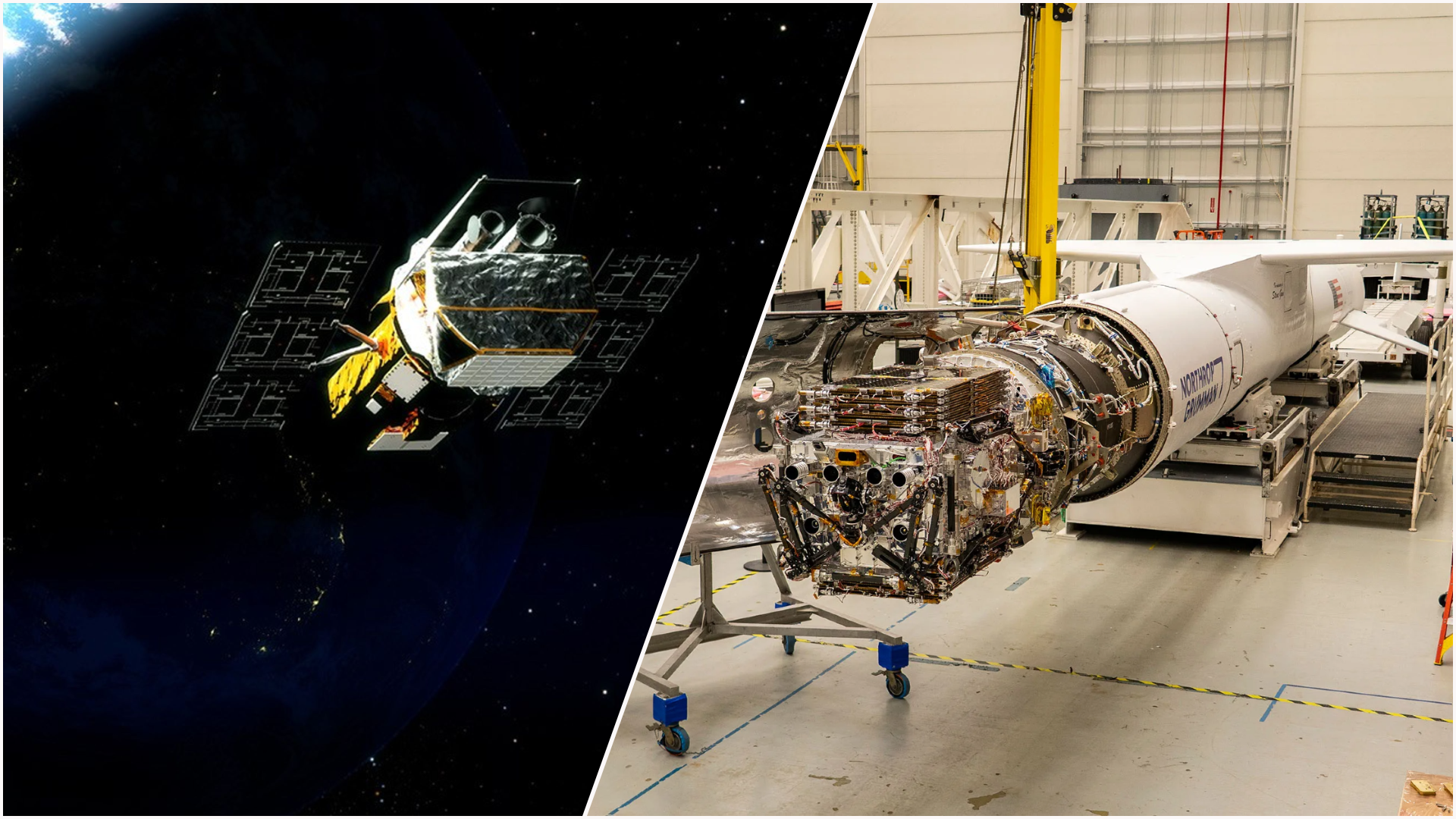
NASA plans unprecedented rescue mission to save Swift space telescope from orbital decay
NASA's Neil Gehrels Swift Observatory, a space telescope that has been studying gamma-ray bursts for over 20 years, is experiencing orbital
 space.com·4h ago
Gm crypto twitter 🙌🏻 still here. locked in. forever growing. Let's connect and grow together fam get yours
s.kaito.ai·5h ago

Interview: Evolutionary Psychology, Sex Differences, and the Nature-Nurture Debate
An interview with the author of "A Billion Years of Sex Differences" discussing evolutionary psychology, the interplay of nature and nurture
 stevestewartwilliams.com·5h ago