





















Historical Origins of Unix Directory Structure: /bin, /sbin, /usr/bin, /usr/sbin
By
csmantle

Crispy enough to crunch, soft enough to enjoy. A good bake.
Summary
This article explains the historical reasons behind the Unix directory structure split between /bin, /sbin, /usr/bin, and /usr/sbin. It traces the origins to the early 1970s when Unix was developed on PDP-11 systems with limited disk space. The split was originally based on what binaries were needed for system boot (/bin and /sbin) versus those that could be mounted later from /usr. The article provides historical context about how this structure evolved from practical constraints of early computing hardware.
Key quotes
· 3 pulledYou know how Ken Thompson and Dennis Ritchie created Unix on a PDP-7 in 1969? Well around 1971 they upgraded to a PDP-11 with a pair of RK05 disk packs (1.5 megabytes each).
The split was originally based on what binaries were needed for system boot (/bin and /sbin) versus those that could be mounted later from /usr.
This historical artifact explains why certain commands are in different directories despite similar functionality.
Article URL: https://lists.busybox.net/pipermail/busybox/2010-December/074114.html
Comments URL: https://news.ycombinator.com/item?id=46487921
Points: 8
# Comments: 0
You might also wanna read

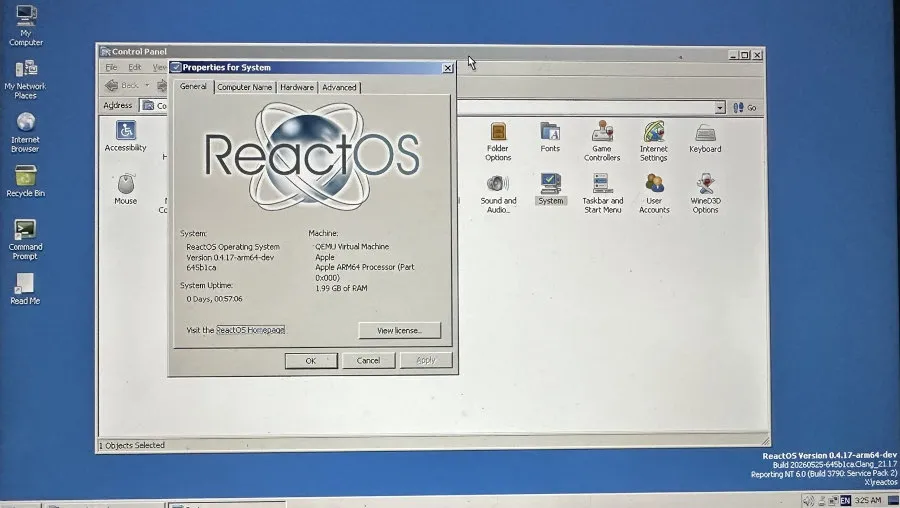
ReactOS Achieves Experimental ARM64 Support, Boots on Apple Silicon via QEMU
ReactOS, the open-source project aiming for binary compatibility with Microsoft Windows, has achieved experimental support for running on 64
 phoronix.com·5d ago
Understanding the Linux TTY Subsystem: History, Architecture, and Implementation
A comprehensive technical deep-dive into the TTY (teletype) subsystem in Linux and UNIX systems. The article traces the historical origins o
 linusakesson.net·12d ago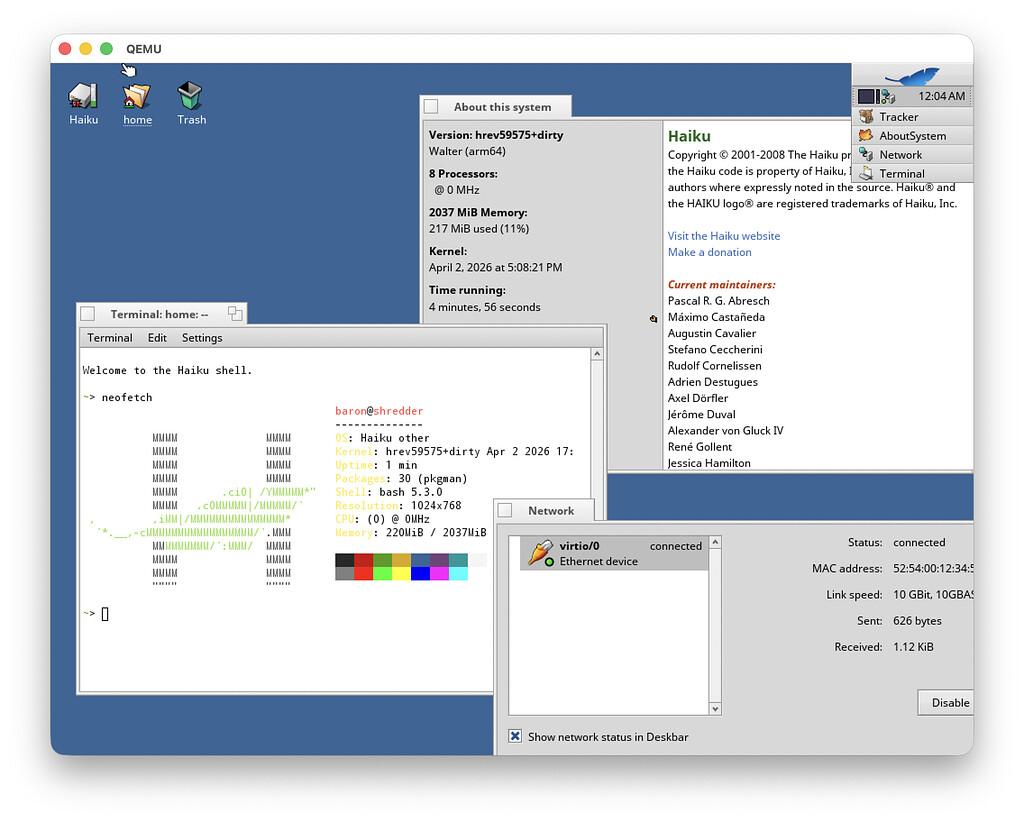
Progress on Haiku arm64 Port: Running Stably in QEMU, Targeting M1 MacBook Air
A developer is working on improving the arm64 port of Haiku, an open-source operating system, with the goal of eventually running it on an M
 discuss.haiku-os.org·13d ago
Haiku Project Releases Nightly Builds and April 2026 Activity Report
The Haiku Project provides nightly builds of its open-source operating system for testing purposes, offering bleeding-edge versions with the
 haiku-os.org·18d ago
Reefy: A Lightweight OS That Turns Any PC Into a Private AI Server
Reefy is a lightweight operating system that transforms any PC, laptop, mini PC, or GPU box into a private AI server with minimal setup. Use
 Product Hunt·24d ago
WSL9x: Running Modern Linux Kernel Inside Windows 9x
WSL9x is a technical project that runs a modern Linux kernel (version 6.19) cooperatively inside the Windows 9x kernel, allowing users to ru
 codeberg.org·1mo ago