





















Green Book Alliance Launches Free Carbon Calculator for Publishing Industry
By
By Jim Milliot |

Reliable enough to start your morning with. Toast it again tomorrow.
Summary
The Green Book Alliance (comprising BISG, BookNet Canada, and the UK's Book Industry Communication) has launched a free, web-based Book Carbon Calculator to help publishers and book industry organizations measure and understand their carbon emissions on a book-by-book basis. Developed over six months, the tool requires no subscription and is freely shareable, aiming to help the publishing industry better manage its environmental impact.
Key quotes
· 3 pulledThe Green Book Alliance—comprised of BISG, BookNet Canada, and the U.K.'s Book Industry Communication—is making available its GBA Book Carbon Calculator, a free tool intended to help publishers and book industry organizations measure and understand their emissions.
In development for roughly six months, the new calculator is web-based, can be freely shared, and does not require a subscription for a company to use.
It allows users to measure the carbon footprint of...
You might also wanna read
Greenmentor.co


MVRDV releases free CarbonSpace tool for architects to estimate building carbon emissions
Dutch architecture studio MVRDV has released its CarbonSpace web-based tool to the public for free. The tool helps architects estimate the e
 Dezeen·8mo ago
Practical Strategies for Reducing Website Environmental Impact and Carbon Footprint
This article provides practical guidance for digital professionals on reducing the environmental impact of websites through a decarbonizing
 Smashing Magazine·9mo ago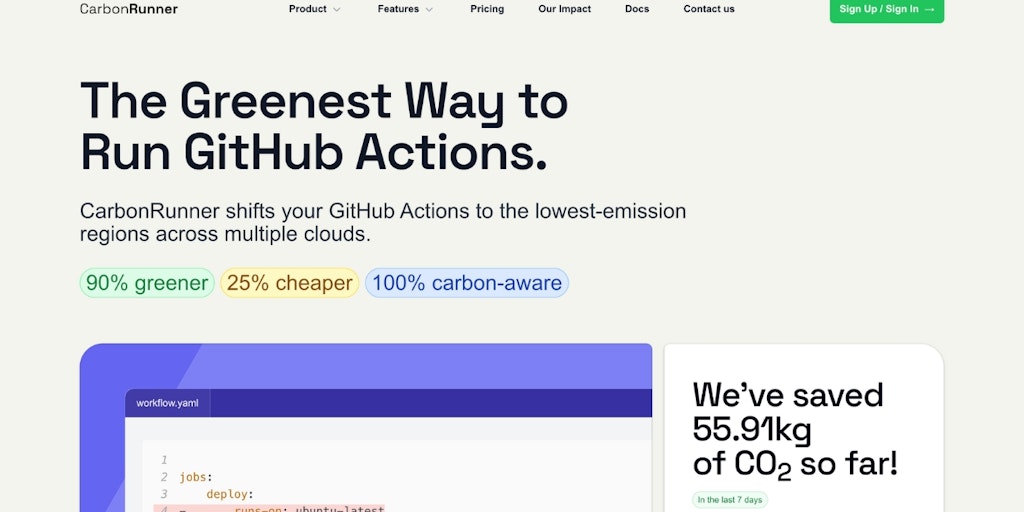
CarbonRunner Reduces GitHub Actions Emissions by 90% with Low-Carbon Compute
CarbonRunner offers a sustainable solution for running GitHub Actions by shifting compute workloads to data centers in low-carbon regions, r
 Product Hunt·10mo ago
PlasticFree Database Opens Access to Hundreds of Plastic Alternatives
Environmental organization A Plastic Planet has removed the paywall from its PlasticFree database, making hundreds of expert-verified plasti
Dezeen·8mo ago
Sustainable Carbon-to-Acetylene Process with Barium Compounds
This article discusses a sustainable methodology for converting carbon sources into acetylene and carbon monoxide while capturing CO2 based
pubs.rsc.org·11mo ago