





















GraphQL in Enterprise: When Complexity Outweighs Benefits
By
johnjames4214

Crackles when you bite it. Shows the baker did the work.
Summary
The article presents a critical perspective on GraphQL adoption in enterprise environments based on real-world production experience. The author argues that while GraphQL solves legitimate problems, its benefits are more niche than commonly acknowledged. In enterprise settings with existing infrastructure, the complexity and tradeoffs of GraphQL often outweigh its advantages, leading to diminishing returns after the initial 'honeymoon phase'. The analysis focuses on practical implementation challenges, team coordination issues, and the reality that many problems GraphQL addresses are already solved by existing enterprise tools and patterns.
Key quotes
· 5 pulledGraphQL solves a real problem, but that problem is far more niche than people admit.
In most enterprise setups, it's already solved elsewhere, and when you add up the tradeoffs, GraphQL often ends up being a net negative.
This isn't a 'GraphQL bad' post. It's a production-tested take on GraphQL in enterprise systems, why the honeymoon phase fades, and when its complexity outweighs the benefits.
I've used GraphQL, specifically Apollo Client and Server, for a couple of years in a real enterprise-grade application. Not a toy app. Not a greenfield startup.
A proper production setup with multiple teams, BFFs, downstream services, observability requirements, and real users.
You might also wanna read

Optimizing .NET APIs for High Throughput: Techniques for 1M Requests Per Minute
Article discusses techniques for designing high-throughput .NET APIs capable of handling 1M requests per minute. It covers horizontal scalin
 blog.elmah.io·15h ago
SQLite as a Viable Alternative for Durable Workflow Execution
The article argues that SQLite can replace complex orchestration systems for durable workflow execution in many cases. It builds on DBOS's a

JWT vs Opaque Tokens: A Technical Comparison for API Security Architecture
This article compares JWT (JSON Web Tokens) and opaque tokens for API security, clarifying the common confusion between bearer tokens and JW
 nordicapis.com·2d ago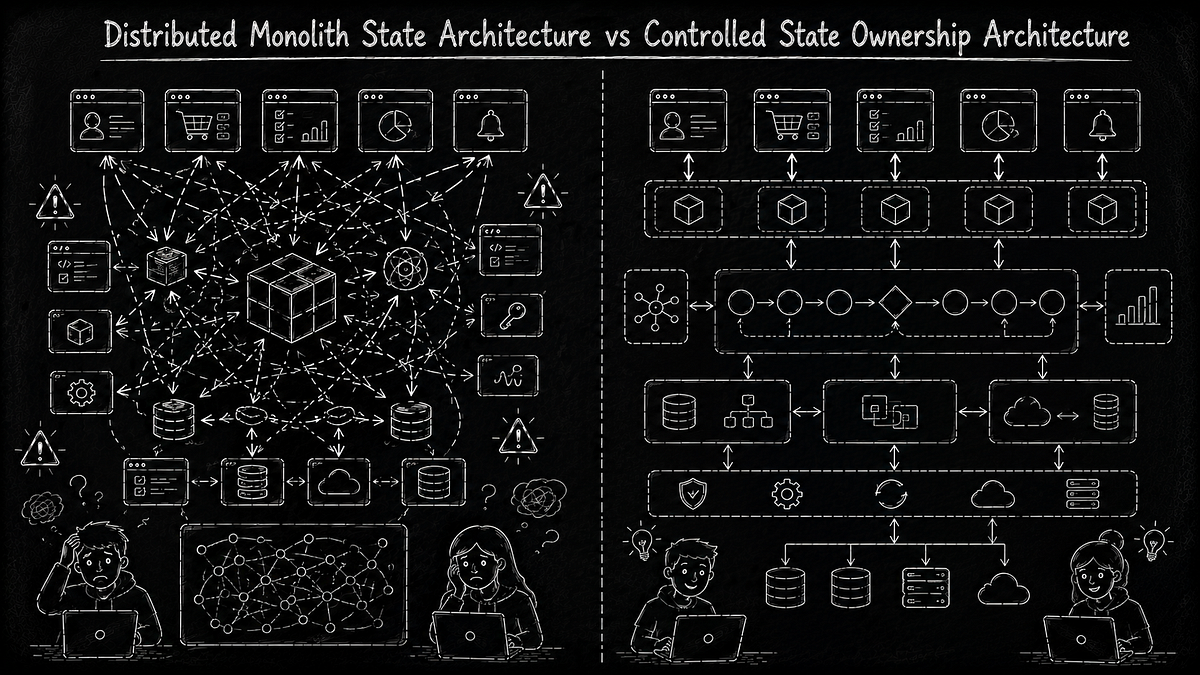
How Frontend State Management Becomes a Distributed Monolith as Apps Scale
This article discusses how frontend state management in growing applications can evolve into a "distributed monolith" — where state becomes
 medium.com·3d ago
A Field Guide to Production-Ready AI Agents: Context Windows, Security, and Drift Monitoring
Karl Mehta presents a field guide for building production-ready AI agents, focusing on four key engineering challenges: context-window disci

The Convergent Architecture of Frontier Agentic Systems
This article from Veso Research analyzes the emerging universal architecture across frontier agentic systems (Claude Code, OpenAI Codex, Gem
 veso.ai·6d ago