





















Self-Driving Laboratories Drive Perovskite Solar Cells Toward Reproducible Manufacturing at 28% Efficiency
By
Jiyun Zhang
Summary
The article discusses how perovskite solar cells (PSCs) have reached 28% efficiency, marking a transition where champion-device metrics are no longer sufficient. The field must now focus on reproducibility across batches, areas, operators, laboratories, and manufacturing platforms. Self-driving laboratories and AI-driven autonomous experimentation, as highlighted by Zhu et al., represent a paradigm shift toward reproducible manufacturing and scalable production of perovskite photovoltaics.
Source

 bskySelf-Driving Laboratories Drive Perovskite Solar Cells Toward Reproducible Manufacturing at 28% Efficiencypubs.acs.org
Key quotes
· 4 pulledAs single-junction PSCs enter the 28% efficiency era, the field has reached a stage where champion efficiency alone is no longer a sufficient measure of progress.
The more challenging question is whether high performance can be reproduced across batches, device areas, operators, laboratories, and manufacturing platforms.
Recent progress in autonomous experimentation, highlighted by Zhu et al., provides a timely signal of this transition.
Its significance lies not only in certified efficiency, module-level performance, or operational stability, but also in the demonstration that AI-driven...
You might also wanna read

New Perovskite Betavoltaic Cell Promises Decades of Power Without Recharging
A research group at DGIST developed a perovskite betavoltaic cell using carbon-14 and perovskite materials, offering long-lasting power for
neowin.net·11mo ago

Space-Based AI Infrastructure: Leveraging Solar Energy for Computational Power
The article explores the concept of building AI infrastructure in space to leverage the Sun's abundant energy. It discusses how solar panels
 research.google·7mo ago
Researchers Develop Materials for Light-Based Computer Chips to Improve Efficiency and Speed
Researchers are developing light-based computers that use photons instead of electricity, which could offer greater energy efficiency and fa
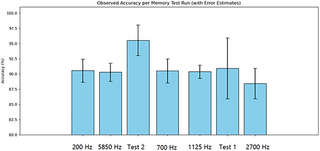
Shiitake Mushroom Mycelium Used to Create Sustainable Memristors for Neuromorphic Computing
Researchers have developed sustainable memristors using shiitake mushroom mycelium for high-frequency bioelectronics applications. The study
 journals.plos.org·7mo ago
2025 Home Solar and Battery System Performance Analysis: Cost Savings and Energy Data
The article presents a detailed personal case study of a homeowner's experience with a residential solar and battery system throughout 2025.
 scotthelme.co.uk·5mo ago
Bridging the Semiconductor Talent Gap: Cross-Training CS Students and AI-Assisted Hardware Design
The article discusses innovative approaches to address the talent shortage in the semiconductor industry, including cross-training computer
 semiengineering.com·4mo ago