





















UK food prices remain persistently high after shocks, new analysis finds
By
@ECIU_UK

Fresh out the oven, still warm. Top of the tray.
Summary
New analysis from the Energy and Climate Intelligence Unit (ECIU) reveals that food prices rise sharply during major shocks but fall only slowly and partially afterward, a phenomenon called the "rocket and feathers" effect. Based on over 30 years of UK data, the report shows shelf prices drop just 1% of the original rise after six months, 5% after a year, and 7% after two years. In wage-adjusted terms, only about a third (35%) of the affordability shock unwinds after two years. The report warns that household staples like bread and pasta will become less affordable for the foreseeable future due to compounding shocks including the Iran war and a 'super' El Niño event.
Key quotes
· 3 pulledOn average shelf-prices fall just 1% of the original rise after six months, 5% after a year and 7% after two years.
In wage-adjusted terms, only around a third (35%) of the affordability shock had unwound after two years.
This 'rocket and feathers' effect suggests food prices rise sharply during shocks but descend slowly and partially.
You might also wanna read

Climate Extremes Cause Global Food Price Shocks, Study Reveals
Research involving the Barcelona Supercomputing Center-Centro Nacional de Supercomputación (BSC-CNS) shows that climate extremes are causing
bsc.es·10mo ago
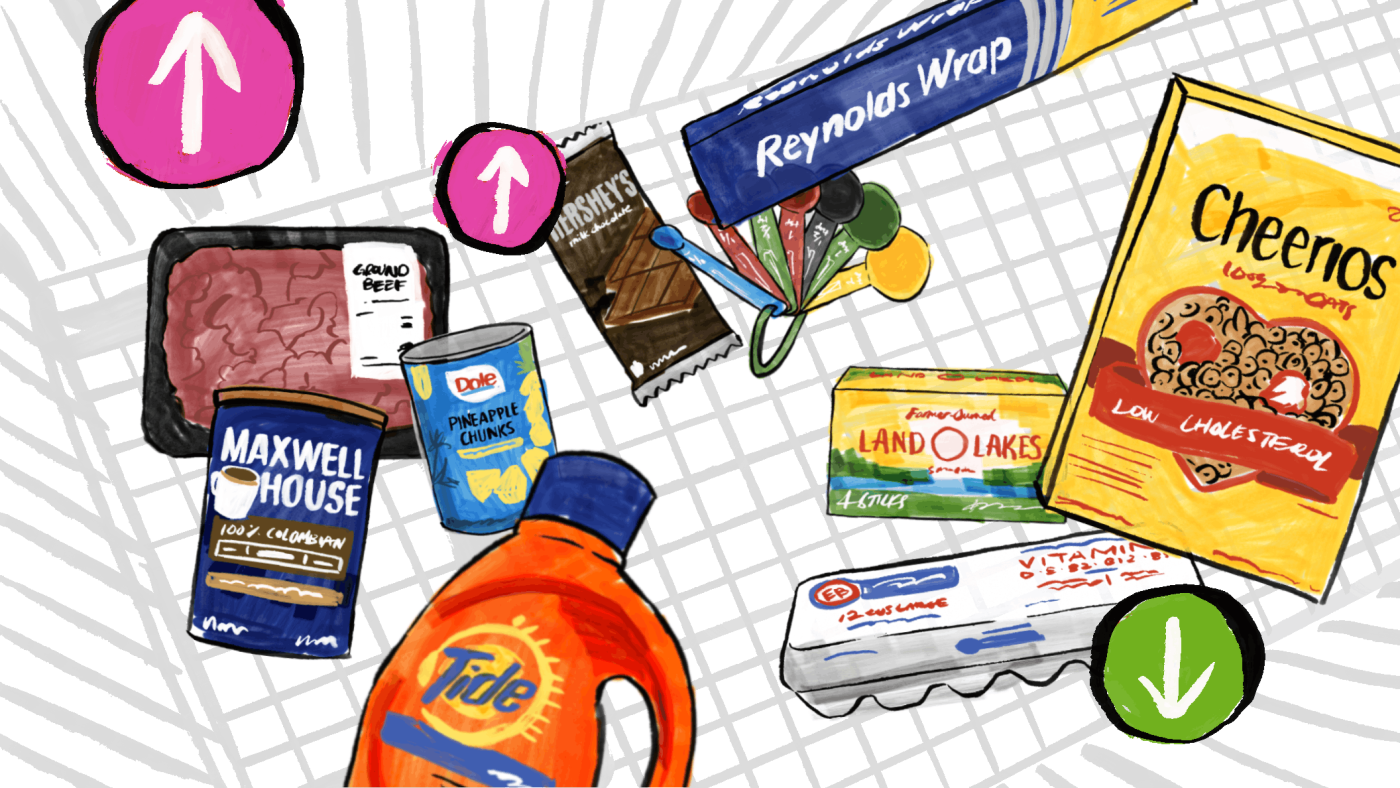
NPR's Year-Long Walmart Price Study Shows Inflation's Impact on Everyday Essentials
NPR conducted a year-long price tracking study of 114 items at a Walmart in Georgia, revealing significant inflation impacts on everyday ess
 npr.org·4mo ago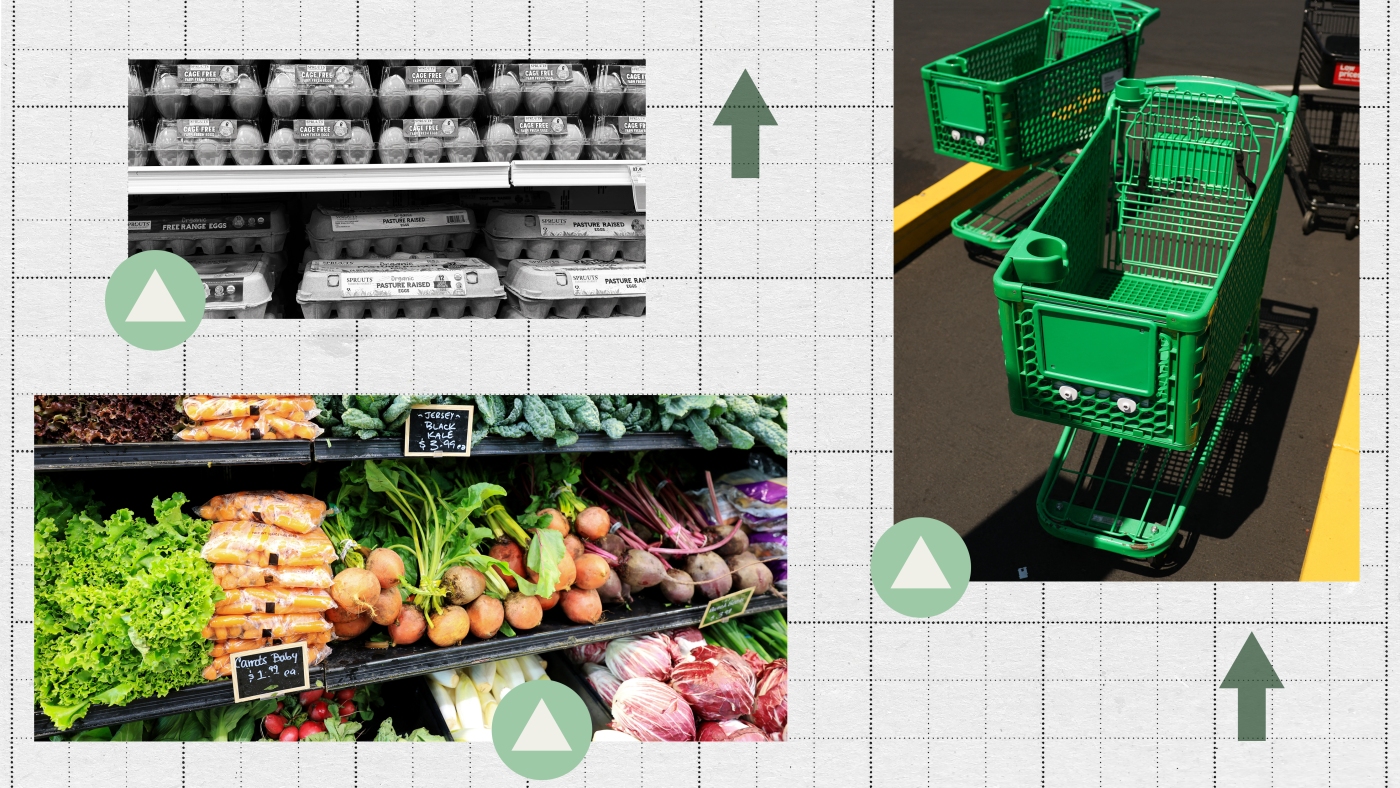
Grocery Prices Up 29% Since Pandemic, With No Relief in Sight
Grocery prices have increased by 29% since February 2020, marking the biggest jump in nearly three years. The price surge is driven by pande
npr.org·8mo ago
UK Poverty Crisis: How Inflation and Benefit Caps Are Pushing Families to Food Banks
The article examines the impact of inflation and the two-child benefit cap on poverty in the UK, focusing on families in Kent who are strugg
 theguardian.com·6mo ago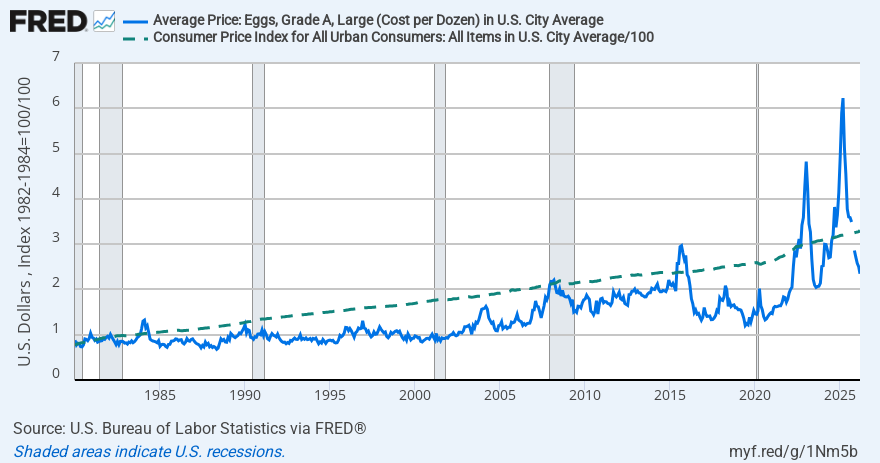
U.S. Average Price Data: Grade A Large Eggs (Cost per Dozen), 1947-2026
This article presents economic data from the FRED database showing the average price of Grade A large chicken eggs (cost per dozen) in U.S.

US Wholesale Inflation Hits Three-Year High in July Due to Tariff-Related Costs
US wholesale inflation surged in July, marking the highest increase in three years, driven by companies passing on higher import costs linke
 bloomberg.com·10mo ago