





















First Greenland shark genome sequenced, revealing genetic secrets to 400-year lifespan and cancer resistance
By
Chris Simms

Pulled from the oven just right. Trustworthy, fact-dense, deeply satisfying.
Summary
Scientists have completed the first whole-genome sequence of the Greenland shark, the longest-lived vertebrate species. The research reveals genetic adaptations related to DNA repair and cancer suppression that may explain their extreme longevity (potentially over 400 years) and resistance to age-related diseases. The findings could provide insights into aging and cancer mechanisms in humans.
Key quotes
· 3 pulledThe first-ever whole-genome sequence of a Greenland shark has revealed genetic clues to how the animals avoid cancer and live for hundreds of years.
The work may pave the way to a better understanding of age-related diseases in humans.
Greenland sharks (Somniosus microcephalus) typically grow to about 13 to 16 feet (4 to 5 meters) and live long lives in the North Atlantic and Arctic oceans.
You might also wanna read

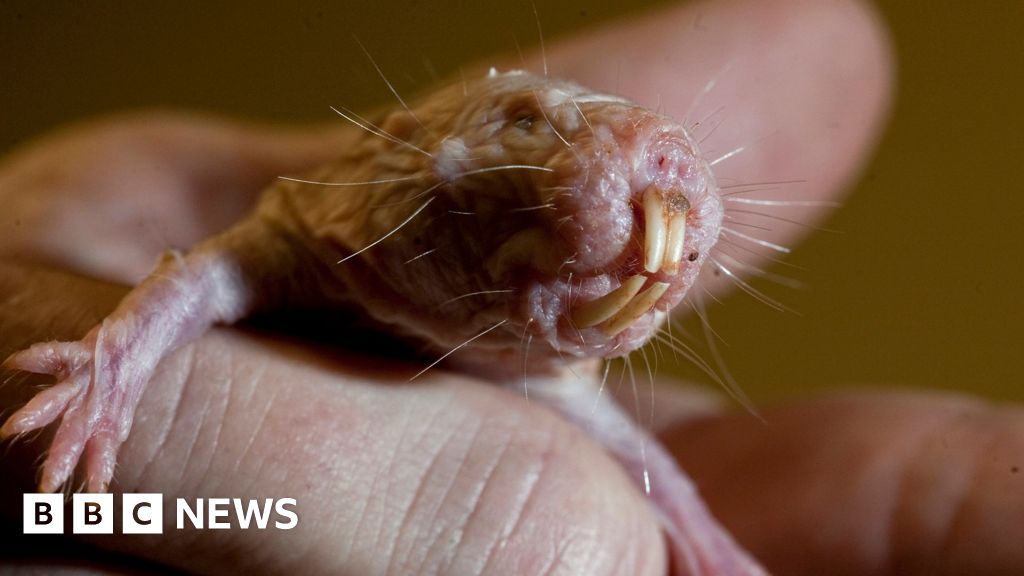
Naked Mole Rats' DNA Repair Mechanisms May Hold Key to Longevity
A study from Tonji University in Shanghai reveals that naked mole rats' exceptional longevity—living up to 40 years compared to 3 years for
 bbc.com·7mo ago
Geothermal Amoeba Sets New Upper Temperature Limit for Eukaryotes at 63°C
Researchers have discovered a novel geothermal amoeba, Incendiamoeba cascadensis, that divides at 63°C (145.4°F), establishing a new record
 biorxiv.org·5mo ago
Caffeine, cocaine, and painkillers detected in sharks from The Bahamas

Researchers Record First-Ever Blue Whale Heart Rate, Revealing Physiological Extremes
Stanford University researchers have successfully recorded the first-ever heart rate of a blue whale in the wild using a specialized sensor
 news.stanford.edu·2mo ago
Study Reveals 37,000 Years of Human Disease History Through DNA Mapping
A new study led by Professor Eske Willerslev reveals the impact of human-animal interactions on the spread of infectious diseases over 37,00
cam.ac.uk·10mo ago