





















Einstein Project: NewtonOS Emulator for Modern Operating Systems
By
fanf2

An everything bagel for the brain. Substantive, layered, well-seasoned.
Summary
The article describes the Einstein project, an open-source emulator that allows NewtonOS (the operating system from Apple's Newton MessagePad) to run on modern operating systems including Windows, macOS, Linux, and Android. The project is hosted on GitHub and includes extensive documentation, drivers, emulator components, and build tools. It represents a preservation effort for the classic Newton platform, enabling it to function on contemporary hardware through emulation technology.
Key quotes
· 3 pulledNewtonOS running on other operating systems
Contribute to pguyot/Einstein development by creating an account on GitHub
Einstein: NewtonOS running on other operating systems
You might also wanna read

ZX Spectrum BASIC interpreter rebuilt from scratch to run natively in web browsers
A developer has rebuilt the ZX Spectrum's BASIC interpreter from scratch to run in a web browser, without emulating the original Z80 hardwar
 boingboing.net·1d ago
MacSurf brings CSS3, ES5 JavaScript, and native HTTPS to Classic Mac OS 9 PowerPC systems
MacSurf is an early-alpha web browser for Classic Mac OS 9 PowerPC systems (like the G3 iMac) that brings modern web technologies — CSS3, ES
 github.com·1d ago
Context Free Tests C64 vs Raspberry Pi 4 in Practical Coding Focus Comparison
This article examines the concept of when computers peaked for focused, distraction-free coding. It compares the Commodore 64 (which boots s
 theoasisbbs.com·3d ago
16-Byte x86 Assembly Demo Released at Outline Demoparty 2026
A nostalgic exploration of creating a 16-byte x86 assembly program (a tiny intro) for an old IBM PC with a monochrome green monitor. The aut
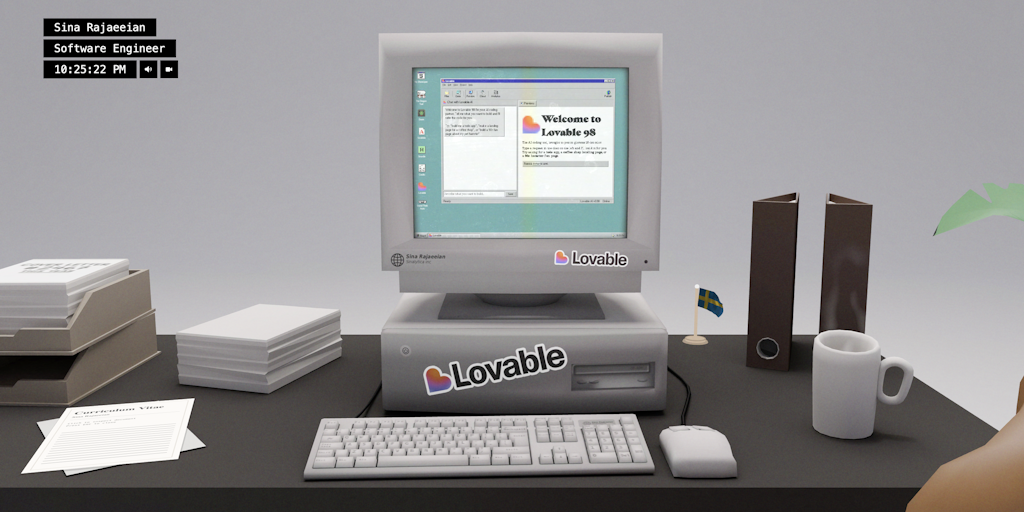
Sinalytica: Use Lovable AI App Builder on Windows 98 via Product Hunt
This appears to be a Product Hunt launch page for "Sinalytica," a product that allows users to use Lovable (likely an AI app builder) on Win
 Product Hunt·8d ago
Porting a 3D Points Renderer to the ZX Spectrum 48K: A Retro Computing Project
A developer recounts his journey of porting a 3D points-only renderer from modern hardware back to the original ZX Spectrum 48K+ computer he
github.com·14d ago