





















Scientists Use Mars Orbiter to Observe Third Interstellar Object 3I/ATLAS
By
Ben Cassese

The kind of bagel that ruins lesser bagels for you.
Summary
Astronomers observed a third interstellar object (3I/ATLAS) passing through our solar system. Since Earth was poorly positioned to view the flyby, scientists repurposed a spacecraft that was mapping Mars to get a much better view of the object as it passed nearby.
Key quotes
· 3 pulledWhen the third known object from the galactic space beyond our Sun barreled through the solar system last year, Earth was in a terrible spot to view its flyby.
Thankfully, however, a spacecraft that was previously busy mapping Mars took advantage of much better positioning for a closer look.
Astronomers have now observed three interstellar objects as they've flown through the solar system: 1I/ʻOumuamua, which shocked astronomers in 2017; 2I/Borisov, which followed in 2019 and behaved almost
You might also wanna read

Astronomers Find 3I/ATLAS: Third Interstellar Object Approaching Solar System
Astronomers have discovered a new interstellar object, 3I/ATLAS, likely a comet, moving at an incredible speed towards the Sun. This is only
abc.net.au·11mo ago
Interstellar Comet 3I/ATLAS: Current Observations and Future Studies
Observations of the interstellar comet 3I/ATLAS have revealed its fuzzy coma, a peculiar tail, and hints of an ancient history. Multiple tel
skyandtelescope.org·10mo ago
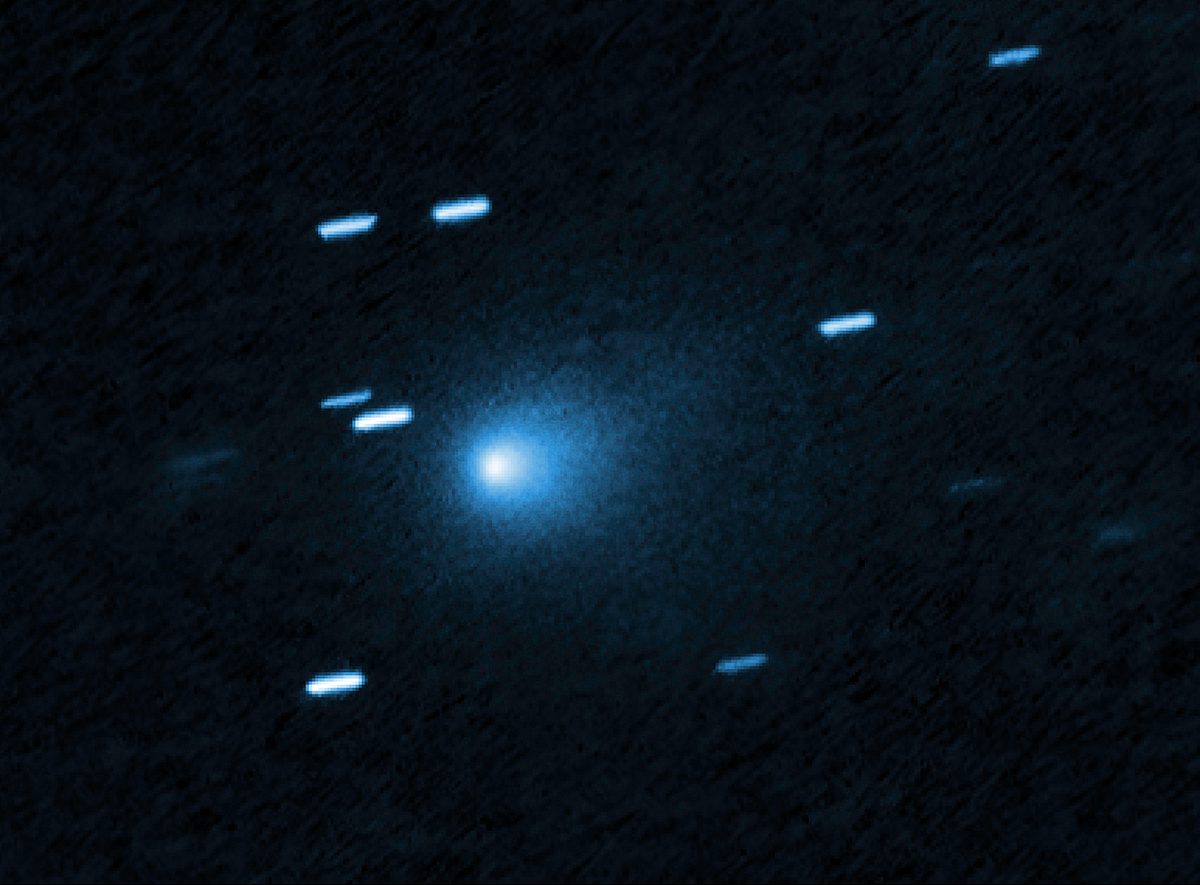
Hubble Space Telescope Captures Detailed Image of Interstellar Comet 3I/ATLAS
The Hubble Space Telescope has captured the sharpest image yet of interstellar comet 3I/ATLAS as it passes through our Solar System. The obs
 skyatnightmagazine.com·10mo ago
Astronomers Investigate Interstellar Object Speeding Through Solar System
Astronomers are racing to study an interstellar object spotted moving through the Solar System at high speed, sparking online interest and o
science.org·10mo agoIs the Interstellar Object 3I/Atlas Alien Technology? [pdf]

Interstellar Comet 3I/ATLAS Shows Rapid Brightening and Gas Emission Near Perihelion
Interstellar comet 3I/ATLAS, approaching its October 29, 2025 perihelion, has been difficult to observe from Earth due to its position oppos
 arxiv.org·7mo ago