





















China's HG-STR algorithm claims 100% kill rate for drone swarms in simulation, but real-world limits noted
By
Christopher McFadden

A good honest bake. Not flashy, but you'll finish the whole bagel.
Summary
Chinese researchers claim to have developed the HG-STR algorithm, a drone swarm system capable of achieving a "100 percent kill rate" in simulated combat conditions, even under network jamming and chaos. The system uses dynamic graphs to go beyond simple object recognition. However, the article cautions that perfect simulation results may not translate to real battlefield performance due to unpredictable variables like weather, deception, and electronic warfare.
Key quotes
· 4 pulledAccording to the researchers, it is the first known system capable of achieving a '100 percent kill rate' while operating quickly enough to keep pace with modern combat conditions.
As with many military AI claims, the headline figure should be treated carefully.
Especially since a perfect kill rate in simulation is very different from real battlefield performance.
Modern warfare introduces weather, deception, civilian presence, damaged sensors, electronic warfare, and countless unpredictable variables that can rapidly degrade even highly advanced systems
You might also wanna read


Chinese research team develops HG-STR algorithm for autonomous drone swarm targeting
Chinese researchers have developed a new algorithm called HG-STR (Heterogeneous Graph Spatio-Temporal Reasoning) that enables drone swarms t
 scmp.com·1d ago
Study Shows Weight Decay During Pretraining Improves Language Model Adaptability After Fine-Tuning
This research paper investigates how weight decay during pretraining of large language models affects their downstream adaptability (plastic
 arxiv.org·1h ago
Lumos-Nexus: A Training-Efficient Two-Stage Framework for High-Fidelity Video Generation with Reasoning Capabilities
Lumos-Nexus is a training-efficient unified video generation framework that addresses the computational challenge of integrating large high-
arxiv.org·3h ago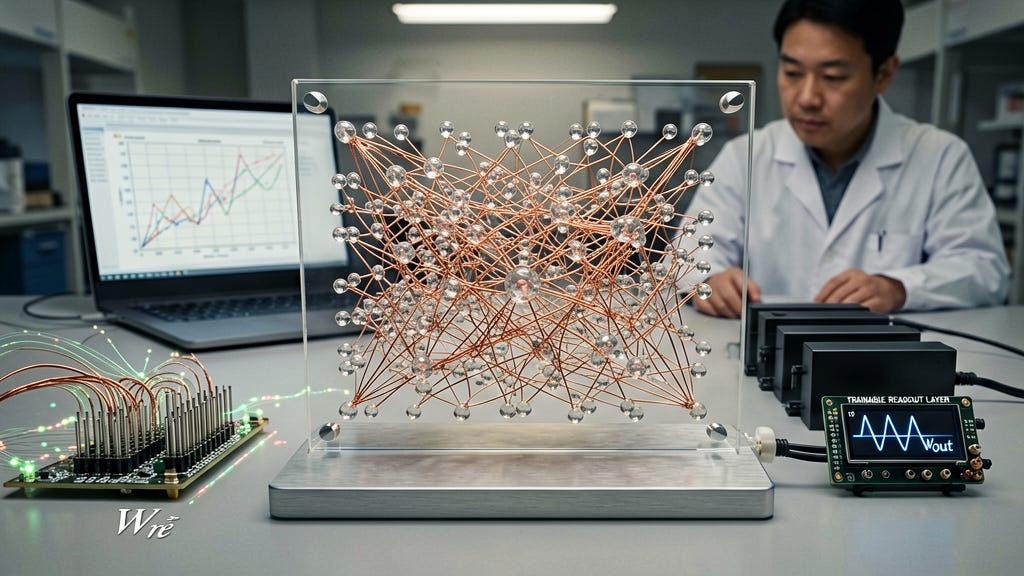
Researchers Work to Decode the "Black Box" of Reservoir Computing and Brain-Inspired AI
This article explores Reservoir Computing (RC), a specialized form of recurrent neural networks (RNNs) that mimics biological brain processe
 akmaier.substack.com·8h ago
AI-powered charging systems could extend EV battery life by up to 23%, researchers say
Researchers have developed AI-powered charging systems that could extend electric vehicle (EV) battery life by up to 23%. The technology opt
 bgr.com·14h ago
Study: 3-Year-Olds Read Intent in Human Eyes but Not in Robot Gaze
A pioneering international study in developmental psychology and AI reveals that children as young as 3 instinctively read intentions in hum
 neurosciencenews.com·16h ago