





















Brookhaven's Relativistic Heavy Ion Collider Concludes 25-Year Research Program
By
gnufx

Slow-proofed and worth the wait. Worth its weight in flour.
Summary
The Relativistic Heavy Ion Collider (RHIC) at Brookhaven National Laboratory has concluded its 25-year run with final collisions on February 6, 2026. The facility, which collided heavy ions at nearly light speed to recreate conditions of the early universe, produced groundbreaking discoveries about quark-gluon plasma and nuclear physics. The final run generated the largest-ever dataset, which will continue to yield scientific insights. RHIC's legacy includes technological advances in accelerators, detectors, and computing, with its infrastructure supporting future scientific endeavors.
Key quotes
· 5 pulledJust after 9 a.m. on Friday, Feb. 6, 2026, final beams of oxygen ions — oxygen atoms stripped of their electrons — circulated through the twin 2.4-mile-circumference rings of the Relativistic Heavy Ion Collider (RHIC) and crashed into one another at nearly the speed of light.
Milestone caps a quarter century of groundbreaking discoveries — with more to come from final run's largest-ever dataset — plus technological advances in accelerators, detectors, and computing.
RHIC's collisions of heavy ions at nearly light speed recreated conditions of the early universe, allowing scientists to study quark-gluon plasma — the state of matter that existed microseconds after the Big Bang.
The facility's 25-year run produced fundamental discoveries about the strong nuclear force, the structure of protons and neutrons, and the properties of quark-gluon plasma.
While the collider operations have ended, the scientific work continues as researchers analyze the massive dataset from the final run, which is expected to yield discoveries for years to come.
You might also wanna read

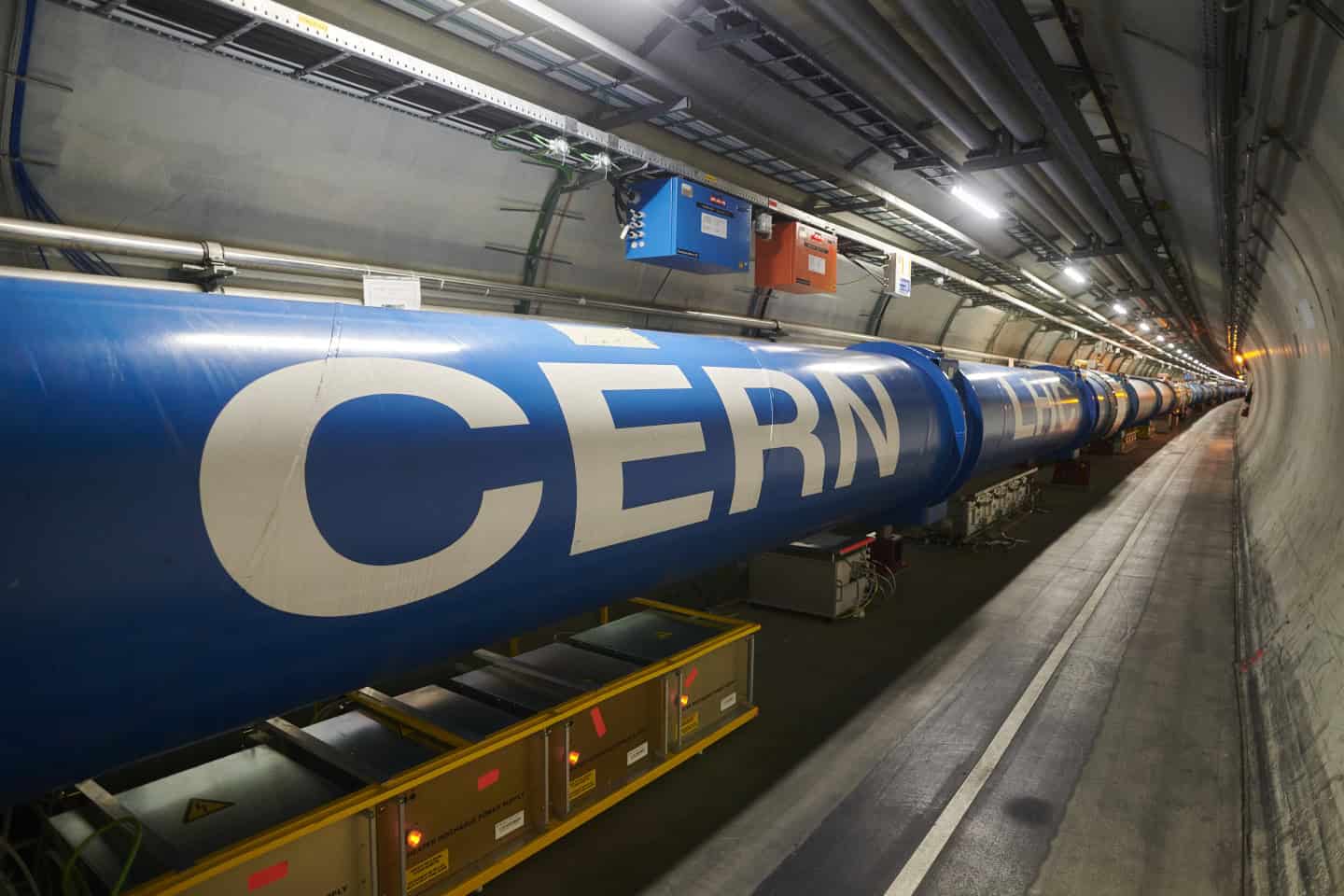
CERN Secures $1 Billion in Private Donations for Future Circular Collider Project
CERN has received $1 billion in private donations for its Future Circular Collider project, marking a significant shift in funding for parti

1-Meter Meteor Breaks Up Off Massachusetts Coast, Debris May Have Fallen Into Cape Cod Bay
A 1-meter meteor entered Earth's atmosphere off the coast of Massachusetts, releasing energy equivalent to 300 tons of TNT. Radar data sugge
 hackaday.com·4h ago
Study suggests homing pigeons may navigate using iron-laden liver immune cells as a magnetic compass
Researchers at the Max Planck Institute of Animal Behavior tested whether homing pigeons use iron-laden immune cells in their livers as a ma
 sciencenews.org·6h ago
China sends artificial human embryos to Tiangong space station to study reproduction in space
China has become the first country to send artificial human embryos to its Tiangong Space Station aboard the Tianzhou-10 cargo mission. The
 vice.com·9h ago
Why Birth Rates Are Declining Globally: An Analysis of the Great Depopulation
The article explores the global decline in birth rates, examining various theories including the impact of technology (smartphones, social m
 theatlantic.com·13h ago
Study finds salt levels impact natterjack toad size and survival in Scotland
A study of Scotland's only natterjack toad colonies reveals that salt levels in their breeding sites significantly impact their size and sur
 bbc.co.uk·16h ago