





















Astronomical Map of Star Systems Within 12.5 Light Years of the Sun
By
algorithmista

Leave it on the tray for the seagulls.
Summary
This article presents an astronomical map showing all star systems within 12.5 light years of our Sun, highlighting that most nearby stars are red dwarfs which constitute about 80% of all stars in the universe. It specifically mentions Proxima Centauri as the nearest star and a typical red dwarf example, and notes that Epsilon Eridani is orbited by a large planet.
Key quotes
· 4 pulledMost of the stars are red dwarfs - stars with a tenth of the Sun's mass and less than one hundredth the luminosity.
Roughly eighty percent of all the stars in the universe are red dwarfs.
The nearest star - Proxima - is a typical example.
Epsilon Eridani is orbited by a large planet which might look like this.
You might also wanna read


August 12, 2026 Total Solar Eclipse: Path and Viewing Safety Guide
The August 12, 2026 total solar eclipse will be visible across the Arctic Ocean, Greenland, Iceland, Atlantic Ocean, Portugal, and northern
 nso.edu·5d ago
Viewing Mars as an Exoplanet: Lessons for Detecting Habitability from Afar
This scientific article explores what we could learn about Mars if we viewed it as an exoplanet—a distant world orbiting another star. The a
 astrobites.org·15h ago
June 2026 Night Sky Guide: Planets, Stars, and Meteor Showers Visible This Month
A comprehensive stargazing guide for June 2026, detailing what celestial objects (planets, stars, Moon phases, meteor showers) are visible i
 skyatnightmagazine.com·2d ago
JWST observes normal AGB stars at Cosmic Noon through 5000x gravitational lensing
This article discusses a scientific study where researchers used the James Webb Space Telescope (JWST) to observe a galaxy magnified 5000 ti
astrobites.org·4d ago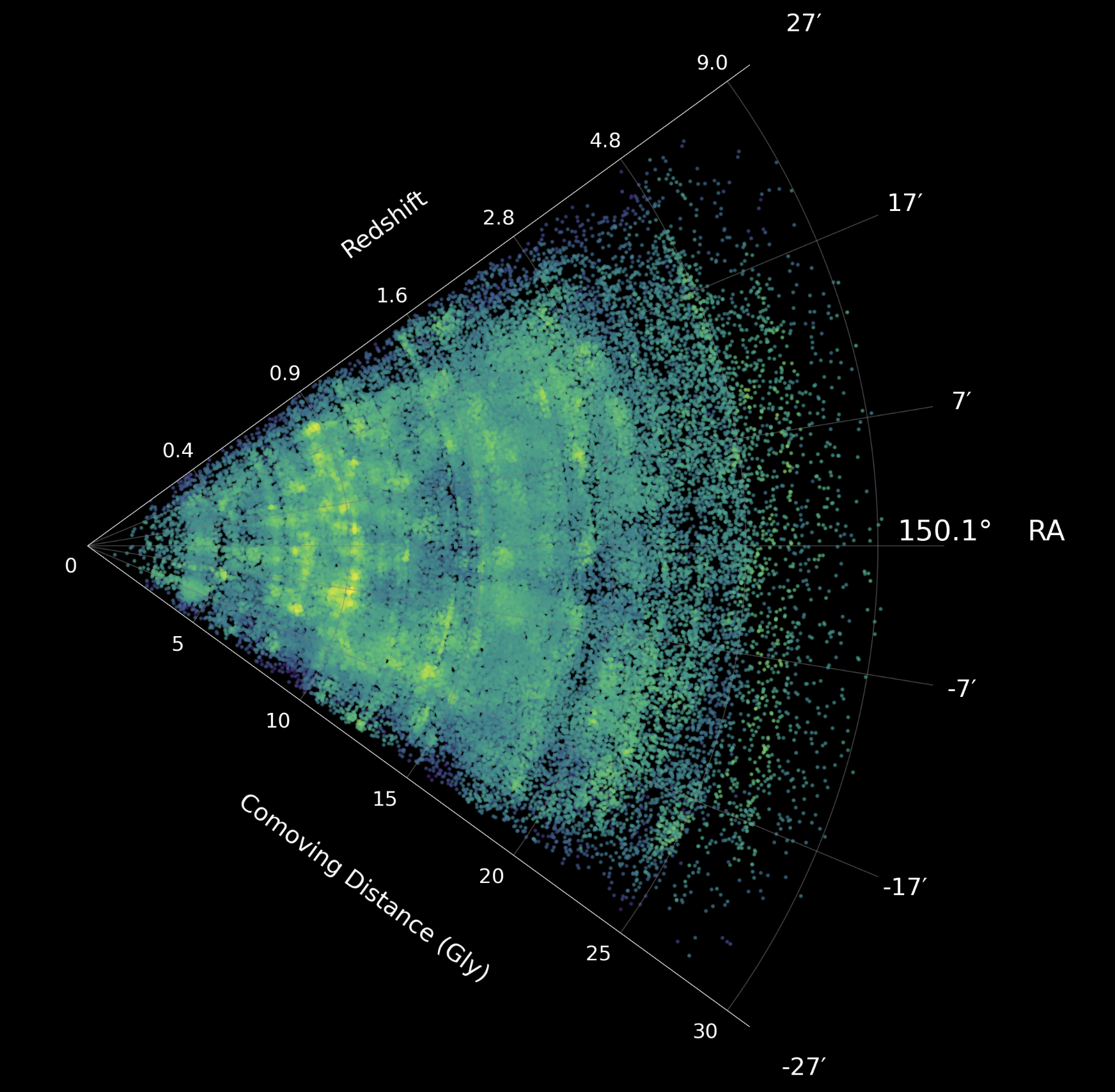
JWST's COSMOS-Web Survey Maps the Cosmic Web and Galaxy Evolution to Redshift z~7
Astronomers used the largest JWST survey (COSMOS-Web) to map the cosmic web — the large-scale structure of the Universe — tracing galaxy evo
astrobites.org·5d ago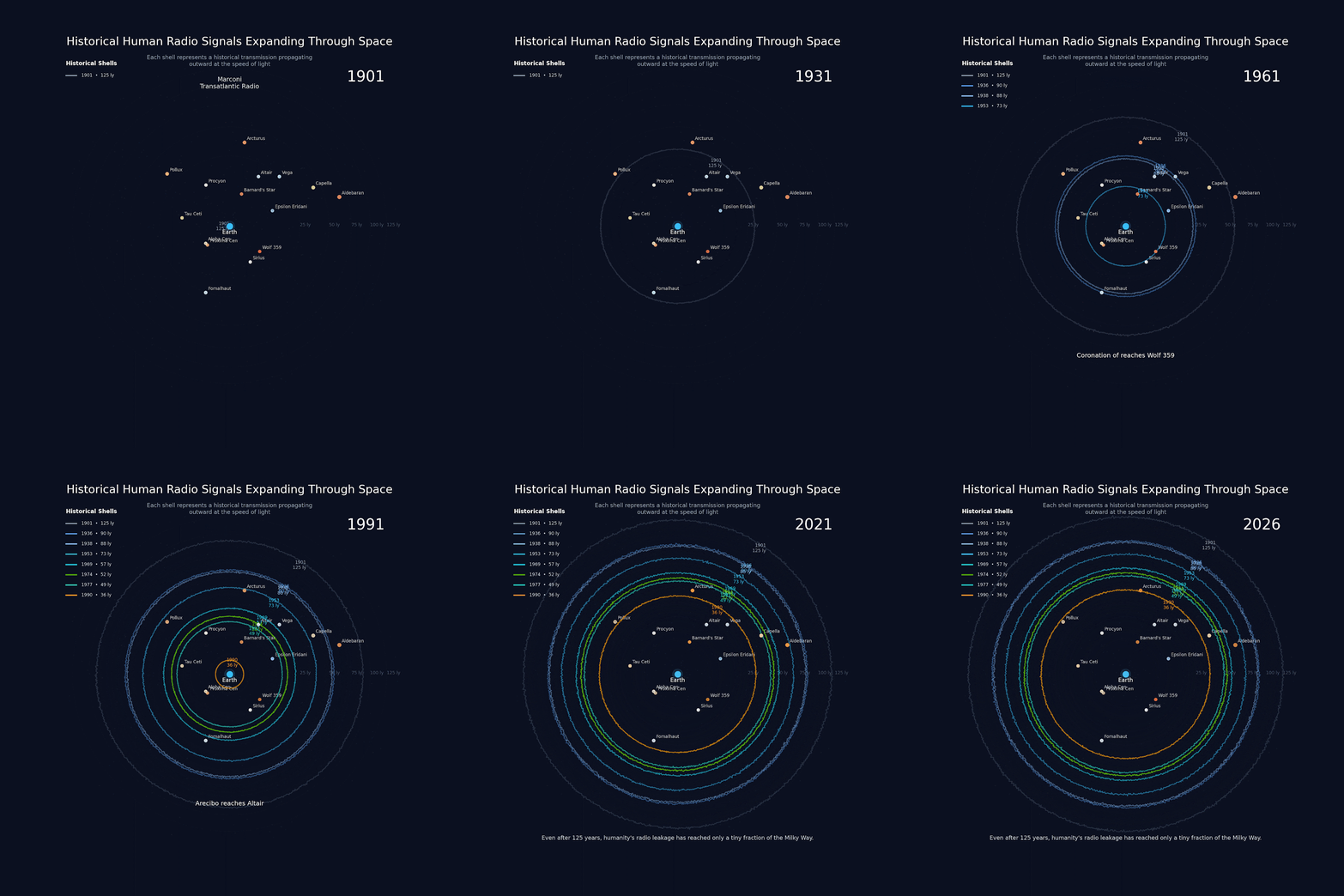
Earth's Expanding Radio Bubble: How Humanity's Signals Are Reaching the Cosmos
This article explores the concept of Earth's "radio bubble" — a sphere of electromagnetic radiation expanding outward at the speed of light
 thescientificdrop.com·14d ago