





















How Large Language Models Perform Arithmetic Using Only Matrices
By
By Alvaro Videla

Front-window bakery material. Catches the eye, delivers the goods.
Summary
This article explores how large language models (LLMs) perform arithmetic operations like finding greatest common divisors using only matrix operations and token embeddings, without any of the physical or symbolic aids humans use (fingers, abacuses, calculators). It delves into the internal mechanics of LLMs—tokens, activations, logits—and examines the surprising capabilities and limitations of these models when tackling mathematical problems with nothing but learned statistical patterns in high-dimensional spaces.
Key quotes
· 3 pulledIf you learned arithmetic the ordinary human way, you probably learned it with a body.
A language model has none of that. It has matrices.
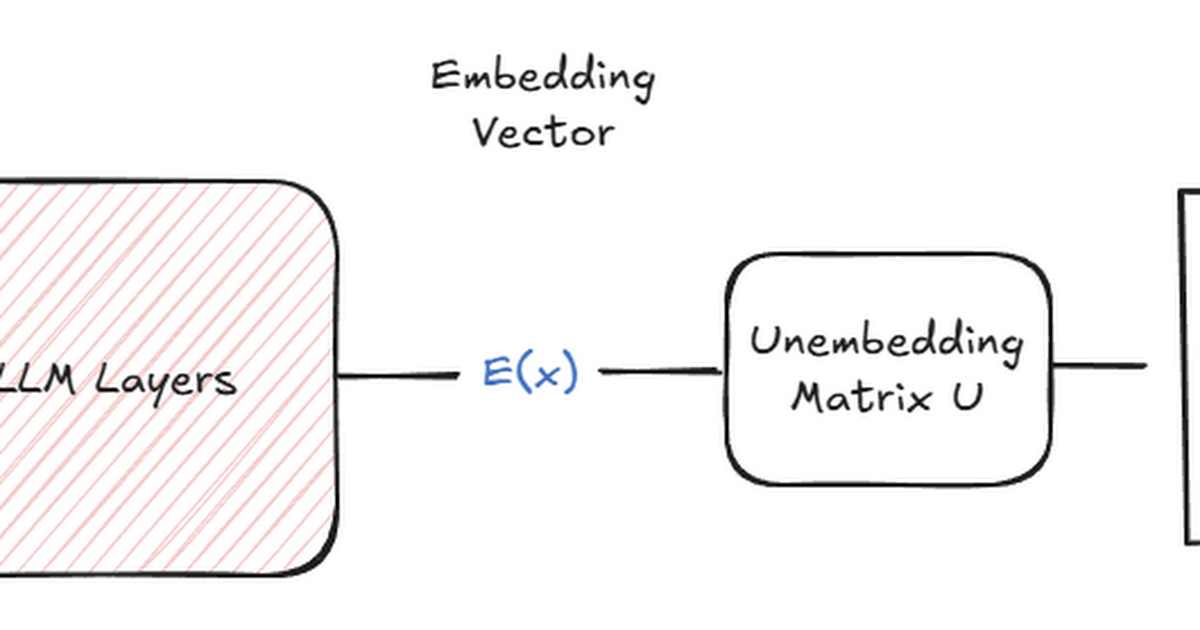
Tokens enter, activations flow, logits come out.
You might also wanna read

Understanding Linear Representations and Superposition in Large Language Model Interpretability
This article explores fundamental concepts in mechanistic interpretability of large language models (LLMs), focusing on linear representatio
 ternarysearch.blogspot.com·3mo ago
Challenges in Benchmarking Large Language Models
Large language models (LLMs) pose challenges in benchmarking due to their goal of mimicking human writing, which may not align with traditio
spectrum.ieee.org·11mo agoExploring the Limitations of Language Models as World Models
The article argues that language models (LLMs) are not world models, despite their complexity and capabilities. The author provides examples

Scaling Laws Limit Reliability of Large Language Models, Study Finds
This research paper demonstrates that the scaling laws governing large language models (LLMs) fundamentally limit their ability to improve p
 arxiv.org·9mo ago
Why LLMs Are Not a Higher Level of Abstraction in Computing
The article argues against the popular claim that Large Language Models (LLMs) represent a "higher level of abstraction" in computing. The a

The Historical Parallel: Are Large Language Models a 400-Year-Old Confidence Trick?
The article argues that Large Language Models (LLMs) represent a 400-year-long confidence trick, tracing the history of mechanical calculati