





















Archaeologists Discover 2,200-Year-Old Elephant Bone That May Be First Physical Evidence of Hannibal's War Elephants
By
bryanrasmussen

Baker's choice. Dense with flavour, light on filler.
Summary
Archaeologists have discovered a 2,200-year-old elephant bone in Spain that may provide the first direct physical evidence of Hannibal's war elephants used during the Second Punic War. The bone was found at the site of the Battle of Baecula and shows signs of being from a mature African forest elephant, which matches historical accounts of Hannibal's forces. This discovery could help confirm long-debated historical narratives about Hannibal's famous crossing of the Alps with war elephants.
Key quotes
· 4 pulledThe Carthaginian general famously used elephants during the Punic Wars. But until now, archaeologists had never found skeletal remains linking the animals to the conflict
This discovery could provide the first direct physical evidence of Hannibal's war elephants
The bone was found at the site of the Battle of Baecula, a major engagement during the Second Punic War
Analysis suggests the bone came from a mature African forest elephant, which matches historical accounts of Hannibal's forces
You might also wanna read


Second Anglo-Saxon oven unearthed at Felton dig site in Northumberland
Archaeologists have uncovered a second oven during their fourth dig at an Anglo-Saxon site near Felton, Northumberland. The site, popular wi
 bbc.co.uk·1d ago
Skeletal remains of Queen Elisenda of Montcada and 24 others discovered in Barcelona monastery excavation
Archaeologists in Barcelona opened eight 14th-century graves at the Royal Monastery of Santa Maria Pedralbes and discovered 25 skeletons, in
 livescience.com·2d ago
Cráneos de Paracas en Perú: el debate científico entre la deformación cultural y las teorías extraterrestres
Un artículo que analiza los cráneos alargados descubiertos en Paracas, Perú, por el arqueólogo Julio C. Tello en 1928. Se discuten las teorí
 20minutos.es·2d ago
1,200-year-old gold and silver hoard discovered along medieval Hajj route in Saudi Arabia
Archaeologists in Saudi Arabia have discovered a 1,200-year-old clay pot containing over 100 gold, silver, and gemstone-encrusted artifacts
livescience.com·4d ago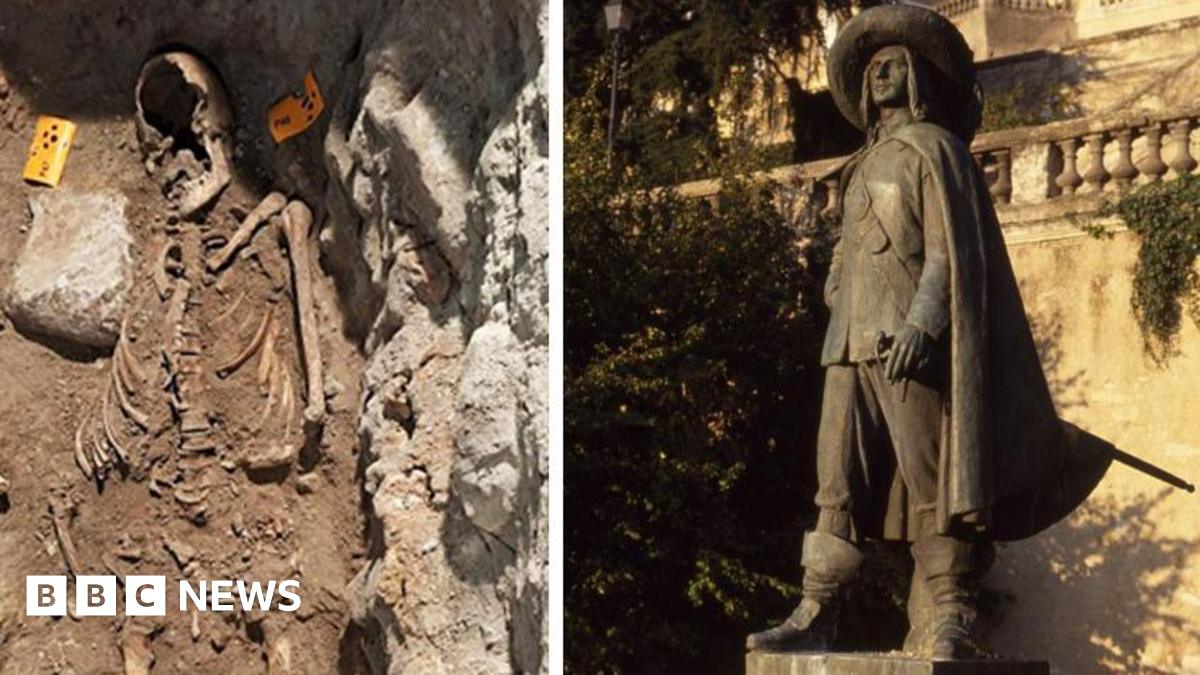
Archaeologists Discover Possible Remains of Historical Musketeer d'Artagnan Under Dutch Church
Archaeologists in the Netherlands have discovered skeletal remains under a church that they believe may belong to the historical musketeer d
bbc.co.uk·2mo ago
Archaeologists Reconstruct Face of 75,000-Year-Old Female Neanderthal from Iraqi Cave Burial Site
Archaeologists have reconstructed the face of a 75,000-year-old female Neanderthal named Shanidar Z, whose skull was discovered in a cave in
 cam.ac.uk·2mo ago