
 Shared by @rswebsols.bsky.social ↗
 rswebsols.com20m ago
 Shared by @gadgetsbriefly.bsky.social ↗
 briefly.co21m ago
 Shared by @bgrcom.bsky.social ↗
 bgr.com23m ago
Anthropic has accused operators linked to Chinese e-commerce giant Alibaba of orchestrating the largest known effort to illicitly extract capabilities from its Claude AI model. According to a letter reviewed by Reuters and sent to US Congress members, the operation involved nearly 28.8 million interactions generated through approximately 25,000 fraudulent accounts between April 22 and June 5, 2026. The company described the activity as a "distillation attack," a technique used to copy an AI model's behavior by feeding it vast numbers of queries and using the outputs to train a rival system. "Anthropic describes this as the largest known extraction attack against the company, targeting its Claude AI platform." Anthropic's head of policy, Sarah Heck, wrote in the letter that the fraudulent accounts specifically targeted valuable capabilities including agentic reasoning, software engineering, and long-horizon tasks, according to Mobile World Live. The company alleged that Alibaba used the extracted data to train its competing Qwen AI model, as reported by Tweaktown, and went further to suggest Chinese government involvement in the operation. The incident has already triggered US export controls on Anthropic's Mythos and Fable models due to national security concerns, the same outlet noted. "The accusation draws a parallel to the classic folk tale 'Ali Baba and the Forty Thieves,' framing Alibaba's actions as an elaborate heist." The timing of the accusation, detailed in a June 10 letter to Senators Tim Scott and Elizabeth Warren ahead of a Senate committee hearing on AI, underscores escalating tensions in the global AI race between the United States and China, Ars Technica reported. Anthropic stated that the activity violated its terms of service and access restrictions, raising serious concerns about intellectual property theft and unauthorized model exploitation. The case marks a significant escalation in efforts by US AI developers to protect their proprietary models from foreign entities seeking to clone them without payment.

This article examines the emerging challenge of "Shadow AI" in AWS environments — the unauthorized or ungoverned use of generative AI tools (coding assistants, LLMs, AI-powered analytics) by employees without security team oversight. It covers the visibility gaps, governance risk
 dev.to·Tech by Flipboard·23m ago·9 min read
Google announced the broadest single expansion of its financial services advertiser verification program, extending mandatory verification requirements to all 24 remaining EU and EEA member states. Starting July 23, 2026, banks, insurers, investment firms, and other regulated fin
 ppc.land·Tech by Flipboard·24m ago·9 min read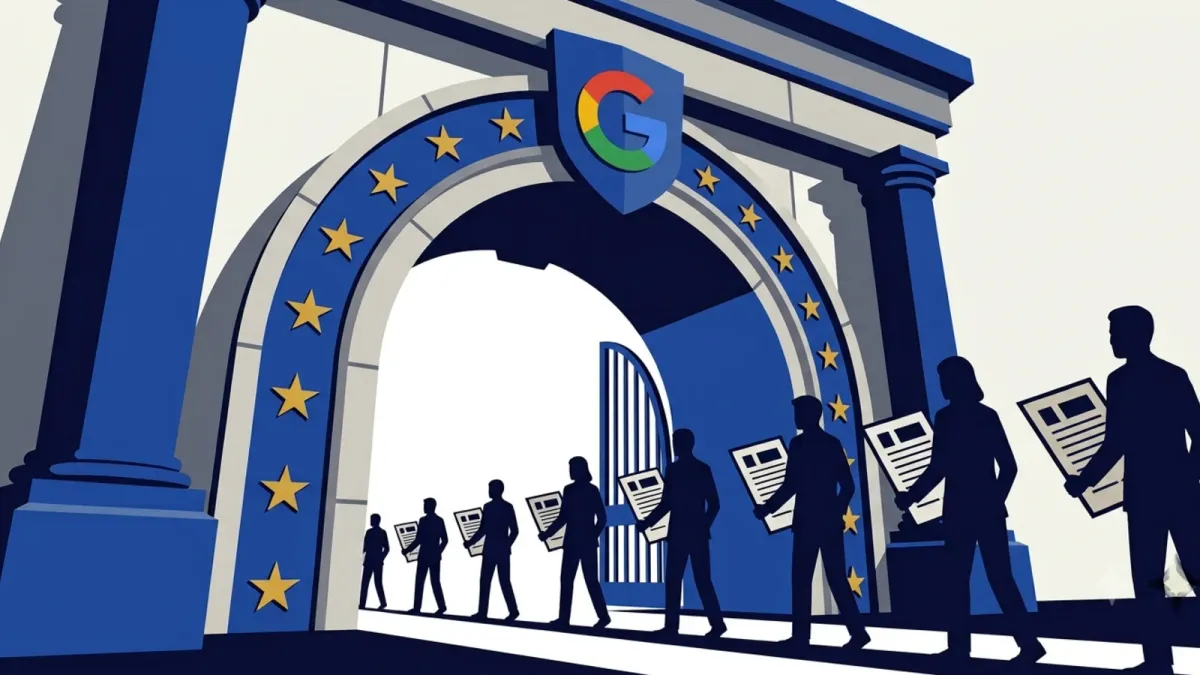

 Shared by @cnbc.com ↗
 cnbc.com1h ago
 Shared by @bgrcom.bsky.social ↗bgr.com1h ago
 Shared by @londonstartbriefly.bsky.social ↗briefly.co1h ago
 Shared by @cambridgeshireuk.bsky.social ↗
 cambridgeindependent.co.uk1h ago
 Shared by @stoicthinker2025.bsky.social ↗
 interestingengineering.com1h ago
 Shared by @dreyer.ch ↗
 Shared by @businessinsider.com ↗
 businessinsider.com1h ago
 Shared by @pasquines.us ↗
 Shared by @economist.com ↗
 econ.st2h ago
 Shared by @canberracat.bsky.social ↗
 independentaustralia.net2h ago