





















XSL Website: Browser-Based Theming Without Server-Side Code or JavaScript
By
Evidlo

A second-rack bagel that's nearly first-rack. Tasty stuff.
Summary
This GitHub repository demonstrates how to use browsers' built-in XSL support to create websites with consistent theming across pages without server-side code, static site generators, or JavaScript. The project shows how XML files reference XSL templates that define how custom tags are rendered as HTML, providing a pure client-side solution for website theming.
Key quotes
· 4 pulledThis is a simple example of using browsers' built in XSL support to build a website with common theming across all pages without any server-side code, static website generators, or Javascript.
When you browse to index.xml (or any of the other XML files), the browser loads the template file given at the top of the XML.
This template file describes how to render the various custom tags in the XML as HTML.
See advanced/ for more advanced examples of defining templates with fields, or using templates inside of other templates.
You might also wanna read


Introduction to the Popover API: Native Browser Tooltips Without JavaScript Libraries
The article explores the Popover API, a native browser feature that enables developers to create tooltips and popovers without relying on Ja
 Smashing Magazine·3mo ago
Web Components Enable Framework-Free Modern UI Development
The article discusses how modern browsers now support Web Components, custom elements, and shadow DOM, enabling developers to build sophisti
 caimito.net·3mo ago
CSS @scope Rule: A Native Solution for Scoped Styles and Component Isolation
The article discusses the new CSS @scope rule as a solution to the challenges of maintaining CSS in complex modern interfaces. It explains h
Smashing Magazine·3mo ago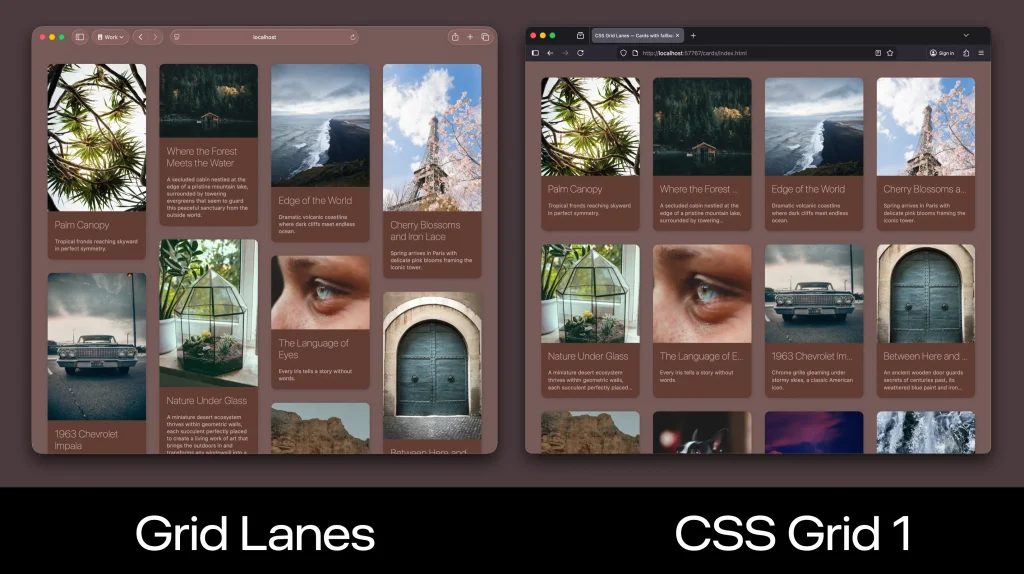
CSS Grid Lanes: Current Browser Support and Implementation Guide
The article discusses the upcoming CSS Grid Lanes feature, explaining its current browser support status and providing practical guidance fo
 webkit.org·4mo ago
Using Custom HTML Tags: How Browsers Handle Unrecognized Elements
The article explains that web browsers treat unrecognized HTML tags as generic elements, allowing developers to create custom tags with hyph
maurycyz.com·5mo ago
CSS Wrapped 2025: How CSS Evolves to Handle Logic, State, and Complex Interactions
The article discusses the 2025 CSS Wrapped report, highlighting how CSS has evolved beyond simple styling to handle logic, state, and comple
Smashing Magazine·5mo ago