





















Study investigates why carnivorous dinosaurs repeatedly evolved tiny forelimbs
By
Sandee Oster

Pale and squishy. Not ruined, just not done.
Summary
A recent paleontological study by Dr. Charlie Roger Scherer and colleagues investigates why many carnivorous theropod dinosaurs evolved such tiny forelimbs. The research measured these diminutive arms to determine whether the trait was inherited from a common ancestor or evolved independently across different dinosaur lineages. The study suggests a link between larger body sizes, powerful skulls, and the reduction of forelimb size in predatory dinosaurs.
Key quotes
· 3 pulledToo short to grab, hold, defend, or even scratch themselves with, why did theropods evolve such small forelimbs?
Was it a hereditary trait passed down from a single short-armed ancestor? Or perhaps something that evolved independently in different dinosaur lineages?
A recent study shows that gigantic predatory dinosaurs repeatedly evolved powerful, prey-crushing skulls in …
You might also wanna read

:max_bytes(150000):strip_icc()/Tyrannosaurus-rex-dinosaur-052626-82414f7fae76417ea17e9a08edf7d01d.jpg)
Ever Wondered Why the T. Rex Had Such Small Arms? Scientists Have an Answer
The emergence and diversification of dog morphology

Study Shows Mammals Independently Evolved to Eat Ants and Termites Multiple Times Since Dinosaur Age
A study reveals that mammals evolved into ant- and termite-eaters independently at least a dozen times over the past 100 million years, adap
news.njit.edu·10mo ago
Evolutionary Research Reveals Species Diversify Through Sudden Bursts Rather Than Gradual Change
New evolutionary research reveals that species evolution occurs through sudden bursts of rapid change immediately after lineage splits, rath
 quantamagazine.org·9mo ago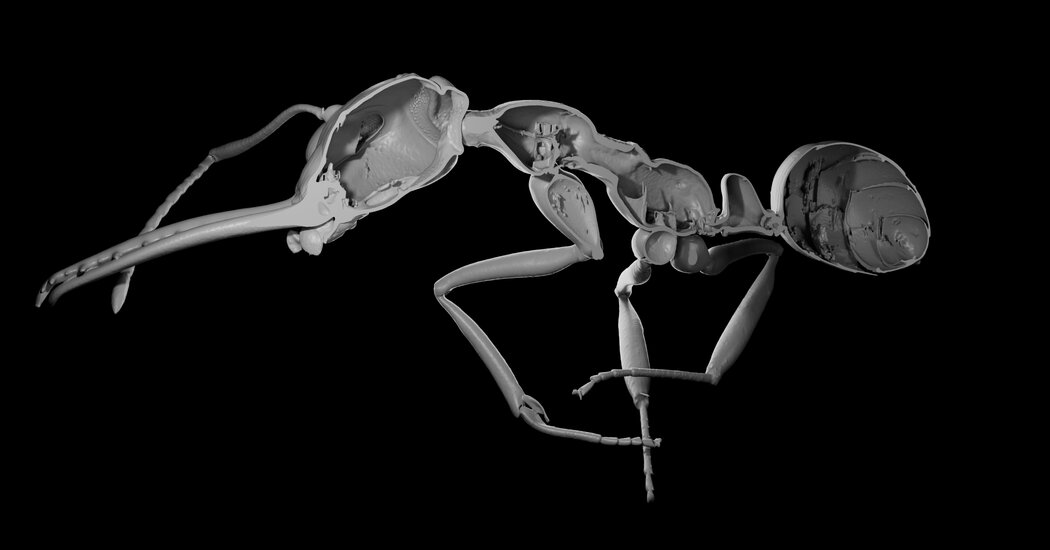
Study Links Ants' Global Success to Exoskeleton Thickness and Armor Adaptations
A new scientific study reveals that ants' evolutionary success and global dominance may be attributed to their exoskeleton thickness and arm
 nytimes.com·4mo ago