





















Understanding Integer Parsing Challenges in C Programming
By
8organicbits

Fresh out the oven, still warm. Top of the tray.
Summary
The article discusses the challenges and pitfalls of parsing integers in C programming, focusing on standard libc functions like atoi(), atol(), and strtol(). It explains how these functions are error-prone due to their lenient input handling, lack of error reporting, and silent swallowing of invalid input. The article contrasts these with safer alternatives like strtol() and strtoul() that provide better error detection, and discusses modern C standards that offer improved integer parsing functions.
Key quotes
· 4 pulledThey are handy and easy to use, but also error-prone and quite lenient in what they accept and silently just swallow.
Some problems these have include that they return 0 instead of an error, that they have no checks for under or overflow and in the atol() case there's this challenge...
The strtol() function is a better alternative that provides error detection through its second argument and errno setting.
Modern C standards (C99 and later) provide strtoll() and strtoull() for long long and unsigned long long types with better error handling.
You might also wanna read

Cscript Style Guide: A Python-Inspired Approach to C Programming
Cscript is presented as a style guide for writing C code that aims to make C development faster and more Python-like while maintaining C's p
 github.com·4mo ago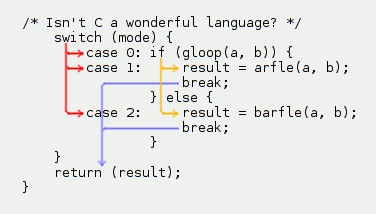
Pigeon's Device: An Independent Loop Optimization Technique in C Programming
The article introduces Pigeon's device, a loop optimization technique in C programming that was independently developed from Duff's device.
Implementing Closures in C Using JIT-Compiled Wrappers for Win32 Window Procedures
The article discusses an advanced programming technique for creating closures in C using JIT-compiled wrappers, specifically applied to Win3
Guidelines for Writing Fully Encapsulated C Programs: Pure vs Performance Approaches
This article presents a comprehensive set of rules and guidelines for writing fully encapsulated C programs, developed by the author over ye

Checked-size Array Parameters in C: Addressing Safety Issues with Array Size Validation
The article discusses a recent attempt to add safety checks for array parameters in the C programming language, specifically within the cryp
 lwn.net·5mo ago
Creating a Leak-Free, Thread-Safe Grep Utility in C23 with Safe Programming Practices
The article details the author's experience creating a leak-free, thread-safe grep utility in C23 using a custom header file called safe_c.h
 hwisnu.bearblog.dev·6mo ago