





















How Drone Technology and Innovation Are Shifting the Momentum in Ukraine's War with Russia
By
Anne Applebaum

Crisp on the outside, thoughtful on the inside. A keeper.
Summary
The article describes a visit to a mobile drone-interceptor base near Kyiv, Ukraine, highlighting how technological advances—particularly in drone warfare and electronic warfare—have fundamentally changed the conflict with Russia. The piece argues that Ukraine is not losing and Russia is not winning, pointing to a momentum shift driven by innovation, decentralized tech adaptation, and the transformation of warfare itself through drones, AI, and electronic countermeasures.
Key quotes
· 4 pulledInside the van there were no passenger seats, just a long desk, two office chairs, two laptops, extra screens.
This was a mobile drone-interceptor base, one of hundreds of similar vehicles now scattered around Ukraine.
It's also part of something much bigger: a set of technological advances that have changed the war with Russia, and maybe all wars, forever.
On one of the laptops, a soldier showed me a bird's-eye view of a part of the Ukrainian countryside more than 100 mi
You might also wanna read

Assessing the Feasibility of a 'Drone Wall' Defense System Against Russian Attacks
The article examines the feasibility and implications of creating a 'drone wall' defense system against Russian drone attacks, using Ukraine
 bbc.co.uk·6mo ago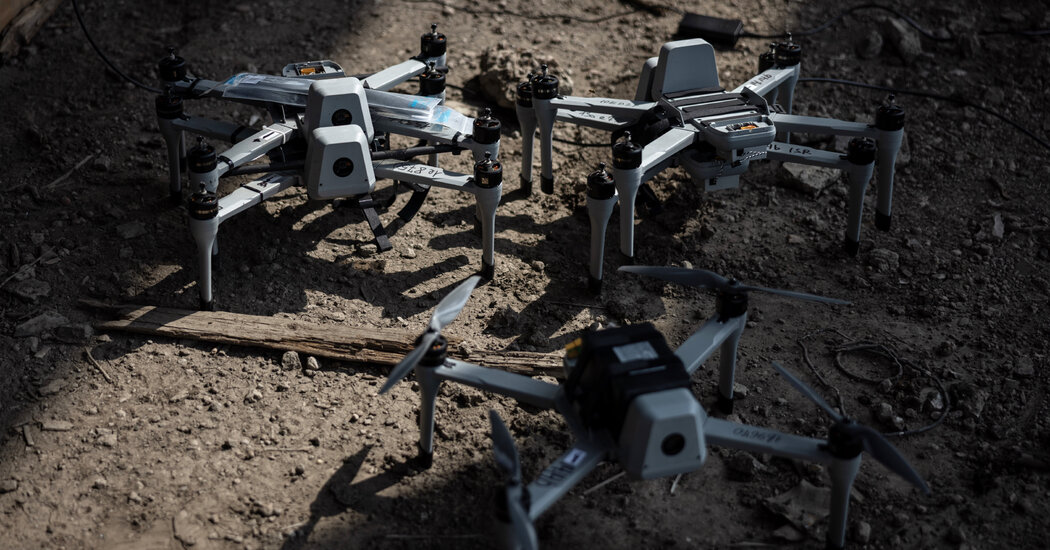
Ukraine Develops AI-Enhanced Semiautonomous Drones to Counter Russian Electronic Warfare
The article describes how Ukraine is developing semiautonomous AI-powered drones in response to sophisticated Russian electronic warfare def
 nytimes.com·5mo ago
Modern warfare's shifting dynamics: Why air superiority no longer guarantees victory
The article examines how modern warfare has evolved, challenging traditional assumptions about air superiority. Drawing on insights from mil
 economist.com·8d ago
Modern warfare's shifting dynamics: Why air superiority no longer guarantees victory
The article examines how modern warfare has evolved, challenging traditional assumptions about air superiority. Drawing on insights from mil
economist.com·8d ago