





















UC Santa Cruz Engineers Develop WiFi-Based Heart Rate Monitoring Without Wearables
By
bookofjoe

Toasted just enough. A reliable bake, gently seasoned.
Summary
Engineers at UC Santa Cruz have developed a method to measure heart rate using standard WiFi signals without any wearable devices. The research demonstrates that even low-cost WiFi equipment can accurately monitor heart rates by analyzing signal variations caused by subtle body movements from heartbeats. This proof-of-concept technology could enable continuous health monitoring in home environments without requiring specialized medical equipment.
Key quotes
· 4 pulledHeart rate is one of the most basic and important indicators of health, providing a snapshot into a person's physical activity, stress and anxiety, hydration level, and more.
But new research from engineers at the University of California, Santa Cruz, shows how the signal from a household WiFi device can be used for this crucial health monitoring with state-of-the-art accuracy—without the need for a wearable.
Their proof of concept work demo
Engineers prove their technique is effective even with the lowest-cost WiFi devices
You might also wanna read

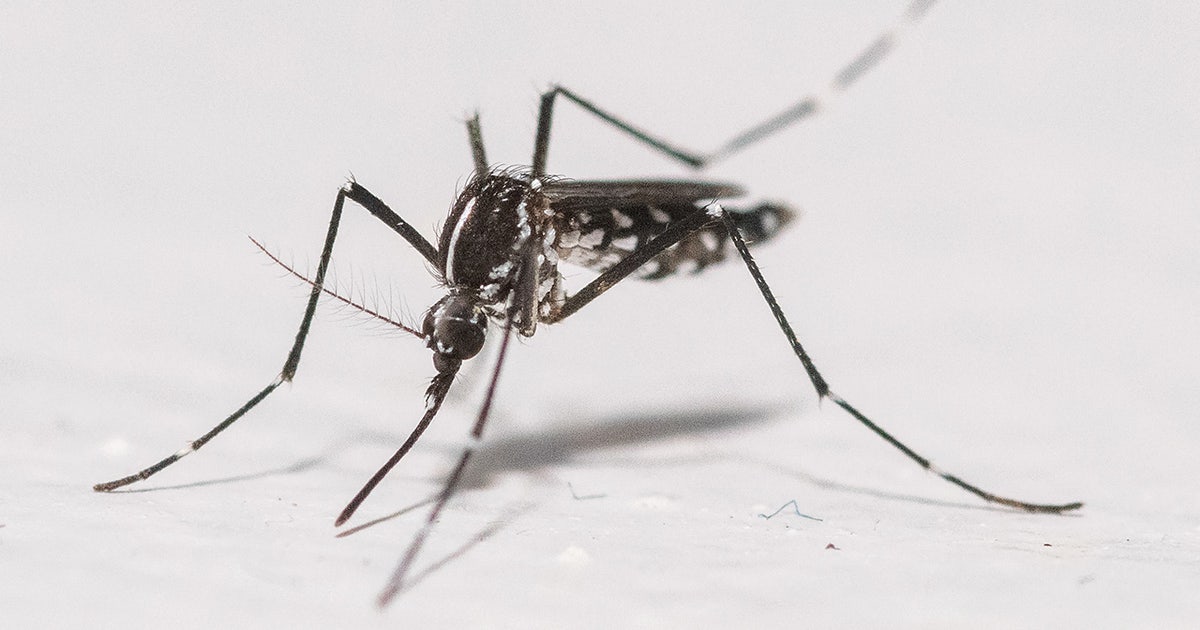
Google's Debug program seeks EPA approval to release 64 million modified mosquitoes in California and Florida
Google's Debug program plans to release up to 64 million genetically modified "good" mosquitoes in California and Florida over two years to
 bit.ly·1h ago
Edible electronic sensors could enable safe internal medical monitoring
Researchers in Belgium and the Netherlands have developed edible electronic components—including wireless transmitters, microchips, batterie
 econ.st·18h ago
Pasqal Demonstrates Logical Qubits Outperform Physical Qubits in Solving Differential Equations
Pasqal has published new research demonstrating that logical qubits (error-corrected quantum bits) outperform standard physical qubits when
 thequantuminsider.com·1d ago
Study Finds Frontier AI Models Disagree on Two-Thirds of Basic Fact-Check Claims
A new study by researcher Kosta Jordanov at Lenz Research tested five frontier AI models (GPT-5.4, Claude Opus 4.7, Gemini 3 Pro, Gemini 3 P
 decrypt.co·2d ago
King's College London becomes first UK team to use Google's Willow quantum chip
King's College London has become the first UK team to use Google's Willow quantum chip, which researchers hope will help answer previously u
 bbc.co.uk·3d ago
How the CircaVent project aims to destigmatize mental health and advance brain research
An interview with Matthew Woodworth about the CircaVent project at the Wyss Institute, which aims to destigmatize mental health issues and d
 wyss.harvard.edu·4d ago