





















The Resurgence of Simple Software: TextEdit as Antidote to AI Complexity
By
gaws

Not artisan, but a perfectly fine bagel. Hits the spot.
Summary
The article explores the resurgence of simple, minimalist software like Mac's TextEdit in an era dominated by complex AI-driven applications. It traces the history of graphical user interfaces from the 1981 Xerox Star to modern computing, arguing that TextEdit represents a 'literalist sensibility' that provides relief from overwhelming technological complexity. The piece examines how basic tools offer clarity and focus in contrast to AI's destabilizing effects on human-computer interaction.
Key quotes
· 5 pulledThe so-called desktop first appeared on a home computer in 1981, with the release of the Xerox 8010 Star Information System.
That device pioneered the graphical-user interface, or G.U.I., a convenient series of visual metaphors that allows us to interact more easily with our machines.
The most basic computing interface is the command-line prompt, the empty box in which users write instructions in code directly to the machine.
The Xerox Star replaced that forbidding vacuum with a friendly illustration of a tabletop surface, textured in patterned pixels, scattered with icons for folders.
TextEdit represents a literalist sensibility that is coming back into vogue as A.I. destabilizes our technological interactions.
You might also wanna read

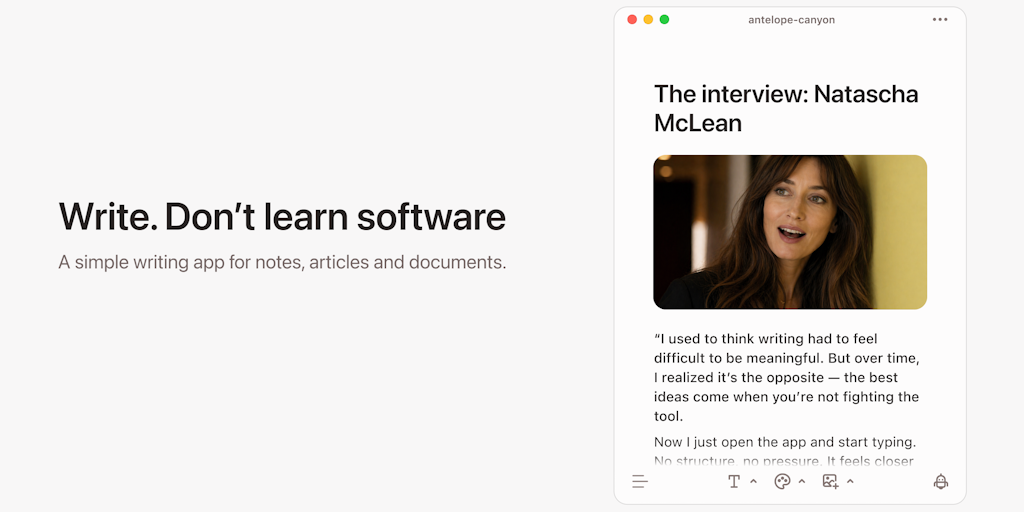
Magic Notebook: A Minimalist, AI-Free Writing App Focused on Simplicity
Magic Notebook is a minimalist writing app designed to provide a calm, clutter-free writing experience without AI or complex features. It su
 Product Hunt·1mo ago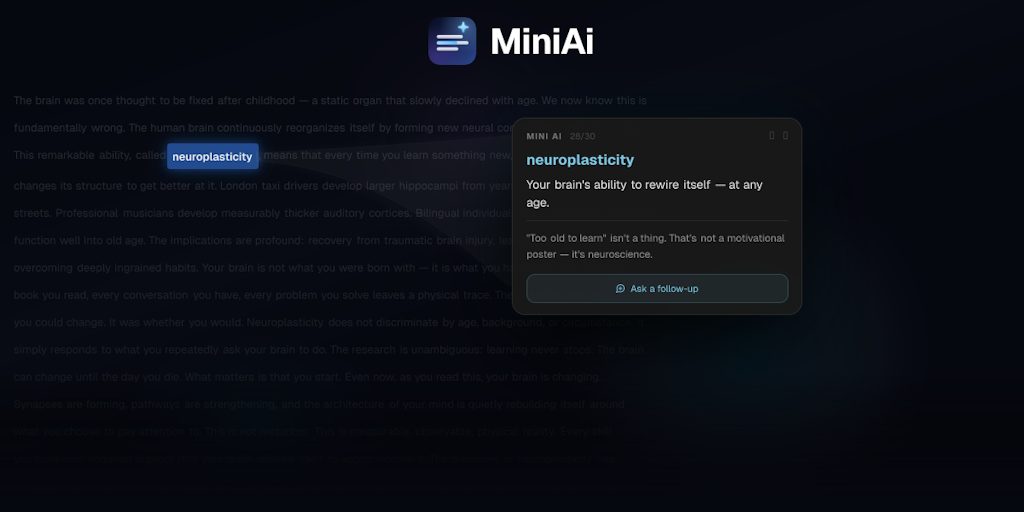
MiniAi: macOS Menu Bar Tool for Instant AI Explanations Without App Switching
MiniAi is a macOS menu bar application that allows users to select any text (from PDFs, emails, code snippets, etc.) and press ⌥Space to get
Product Hunt·1mo ago