





















CNET's People's Picks: Top Internet Service Providers Revealed
By
Dashia Milden

Kettled twice. Extra chewy, extra trustworthy.
Summary
CNET's People's Picks awards highlight the top internet service providers based on user satisfaction, cost effectiveness, speed, and customer support. While major national ISPs are well-known, the article reveals that some local providers score higher than big-name competitors. Fiber internet is noted as the gold standard, and a reliable connection is emphasized as paramount. One all-around favorite ISP emerged as the overall winner.
Key quotes
· 3 pulledJoe Supan, CNET's broadband principal writer, says a reliable connection is paramount.
Your choice of internet service provider has become more personal than ever before.
A lot goes into trusting your ISP. Factors like cost effectiveness, satisfaction, speed and customer support are important.
You might also wanna read


Why Your Home Internet Matters More Than Your Home Theater Gear for Streaming Quality
 Rolling Stone·1d ago
Brothers-in-law Establish Fiber ISP to Compete with Comcast in Michigan
Brothers-in-law in Michigan disliked using Comcast's cable broadband, so they established their own fiber Internet service provider to compe
arstechnica.com·11mo ago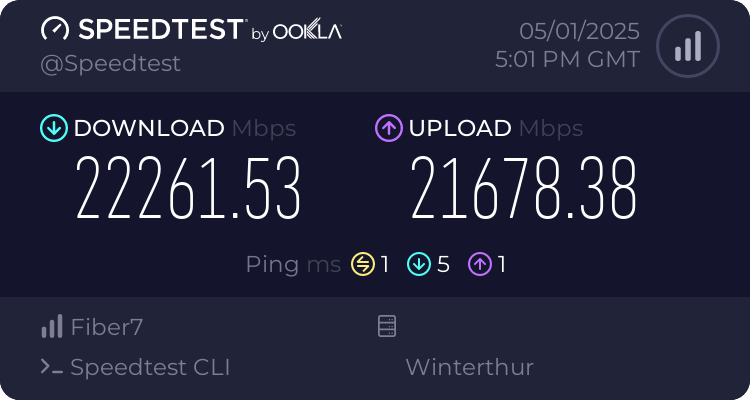
Comparing Internet Infrastructure: Switzerland's 25 Gbit Success vs. America's Market Failures
This article examines why Switzerland has achieved 25 Gbit symmetrical internet at reasonable prices while the United States and Germany lag
 sschueller.github.io·2mo ago
Starlink Satellite Internet Service Provides Global High-Speed Connectivity
Starlink is a satellite internet service that provides high-speed internet connectivity available almost anywhere on Earth. The service uses
 starlink.com·4mo ago
CloudFlare's centralized services create uneven internet experience for users
The article critiques CloudFlare as a centralized service that, while convenient and free for website owners, creates a bifurcated internet
 slashgeek.net·5mo ago
Cloudflare Research: Carrier-Grade NAT Users Face Higher Risk of Internet Throttling
Cloudflare research reveals that users connecting through carrier-grade NAT (network address translation) are more likely to experience inte
 theregister.com·6mo ago