





















The Remarkable Precision of Measuring Microbial Cell Weight
By
arbesman

Pure flour-power. Hearty enough to carry you through lunch.
Summary
The article explores the precise measurement of the weight of single microbial cells, such as S. cerevisiae and E. coli, highlighting the remarkable accuracy of these measurements despite the cells' minuscule size. It questions the methodology behind such precise measurements and provides context about the weight of an E. coli bacterium compared to a grain of sand.
Key quotes
· 2 pulledA single yeast cell weighs about 100 picograms and a single E. coli bacterium weighs about one picogram, or 60 million times less than a grain of sand.
At first blush, measuring the weight of a single cell seems an impossible task. How can we make such a precise measurement with reasonable certainty?
You might also wanna read

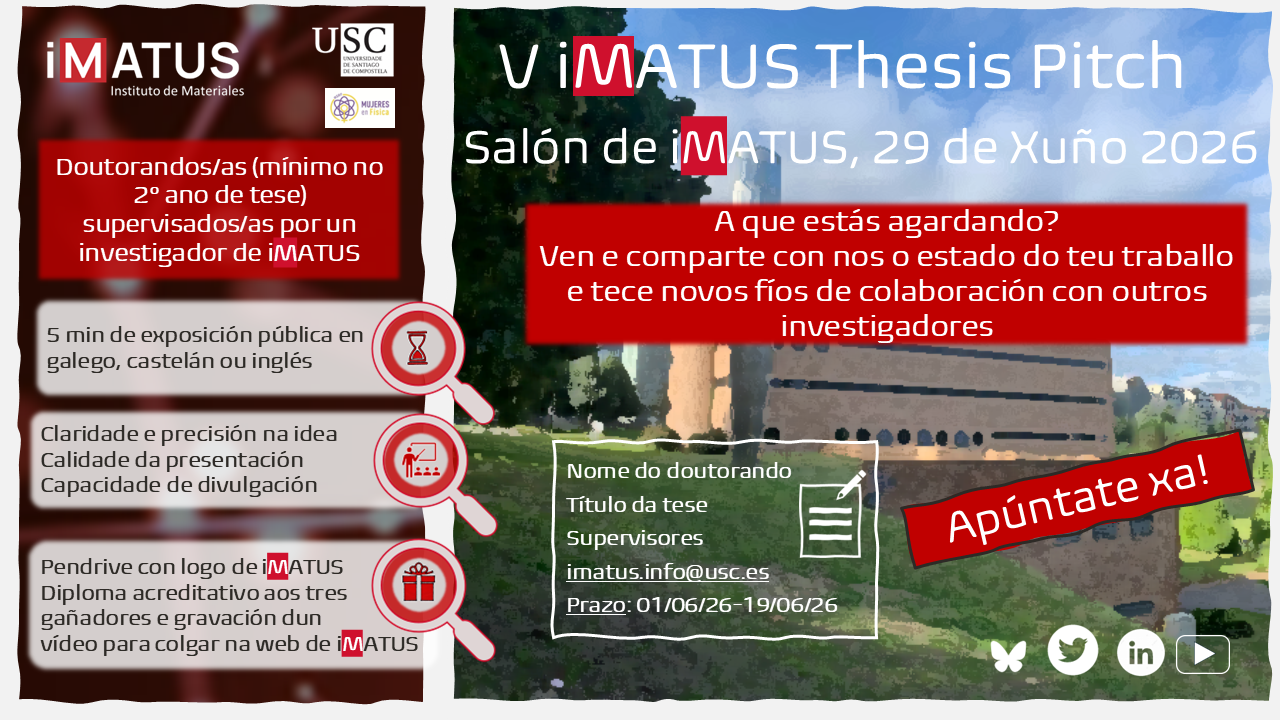
iMATUS anuncia a quinta edición do seu Thesis Pitch para doutorandos en xuño de 2026
O iMATUS organiza a quinta edición do iMATUS Thesis Pitch, un evento onde estudantes de doutoramento vinculados ao instituto presentan a súa
 imatus.usc.es·1h ago
Lightning's temperature is roughly five times hotter than the Sun's surface, NOAA confirms
This article examines the claim that lightning heats the air to five times the temperature of the Sun's surface. It confirms that the US Nat
 spacedaily.com·5h ago
Study examines how defoliation affects carbohydrate reserves and reproduction in mango trees
This scientific study investigates how non-structural carbohydrate (NSC) reserves in mango trees support fruit development and buffer source
 doi.org·7h ago
Mathematicians challenge dark energy model, suggesting cosmic acceleration may arise naturally from Einstein's equations
A team of mathematicians challenges the long-standing dark energy model, arguing that the model it was designed to rescue was never mathemat
 earth.com·8h ago
Massachusetts invests $25M in MIT's new Quantum Systems Laboratory for quantum computing research
MIT is launching a Quantum Systems Laboratory in Cambridge, backed by a $25 million state investment from Massachusetts. The facility aims t

Viewing Mars as an Exoplanet: Lessons for Detecting Habitability from Afar
This scientific article explores what we could learn about Mars if we viewed it as an exoplanet—a distant world orbiting another star. The a
 astrobites.org·10h ago