





















Parker Solar Probe flies through Sun's corona at 430,000 mph with revolutionary heat shield technology
By
By Space Daily Editorial Team · Editorial process

Fresh out the oven, still warm. Top of the tray.
Summary
NASA's Parker Solar Probe is successfully flying through the Sun's outer atmosphere (corona) at 430,000 mph, protected by a 4.5-inch carbon foam heat shield that maintains room temperature for its instruments while the front face reaches 2,500 degrees Fahrenheit. The mission, first proposed in 1958, took six decades to become reality because the necessary heat shield material didn't exist until recently. The probe is the fastest human-made object ever and is gathering unprecedented data about the Sun's corona.
Key quotes
· 3 pulledThat gap, between a face hot enough to soften steel and a payload bay cool enough to touch, is the central trick of the entire mission.
It is also the reason a probe to the Sun's corona, an idea first proposed in 1958, took sixty years to fly.
The concept was proposed the same year NASA was founded.
You might also wanna read

Artemis II astronauts face toilet malfunction during 10-day lunar mission
NASA's Artemis II mission, launched April 1, 2026, successfully completed a 10-day lunar flyby with four astronauts testing Orion spacecraft
 sciencefriday.com·1d ago
The Technical Challenges of Space Toilets and Waste Management in Microgravity
The article explores the challenges and history of bathroom facilities in space, detailing how astronauts have traditionally used dietary re
 mceglowski.substack.com·1mo ago
NASA's Artemis II Computer System: Fault-Tolerant Design Compared to Apollo Era Technology
The article compares the computer systems of NASA's Artemis II lunar mission with the Apollo-era guidance computers, highlighting the dramat
 cacm.acm.org·1mo ago
Understanding Xenon Gas in Spacecraft Ion Thrusters
The article discusses the author's professional work with ion thrusters for spacecraft, which use Xenon gas for propulsion due to its proper
How solar sails could propel humanity to interstellar space
This article explores the concept of solar sails as a realistic propulsion method for interstellar space travel. It discusses how solar sail
 space.com·7h ago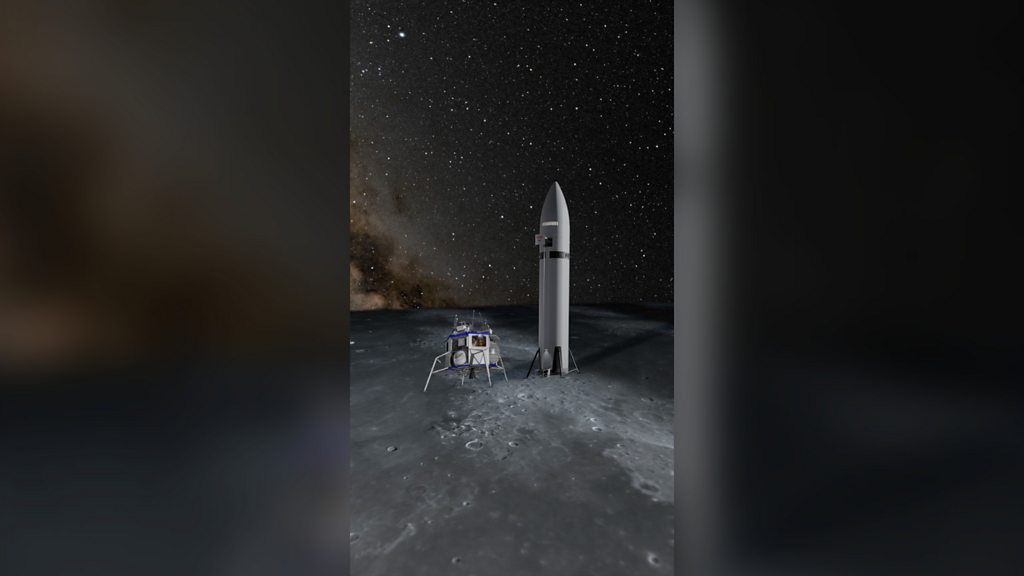
Nasa reveals plans for lunar base with robotic landers and drones
Nasa has released details of its plans to build a lunar base on the Moon, involving robotic landers, hopping drones, and vehicles. The initi
 bbc.com·10h ago