





















The Intelligence-Happiness Paradox: Why Cognitive Abilities Don't Guarantee Life Satisfaction
By
zdw

Master baker tier. Every paragraph earns its place on the tray.
Summary
The article explores the paradoxical relationship between intelligence and happiness, examining why highly intelligent people often don't report greater life satisfaction despite their cognitive advantages. Drawing from psychological research and personal observations, the author investigates various theories including the 'curse of knowledge' where smarter people may overthink problems, the tendency for intelligence to create higher expectations that are harder to meet, and the possibility that intelligence doesn't necessarily correlate with emotional well-being. The piece combines scientific research with philosophical reflection on what constitutes true happiness and whether cognitive abilities might actually create barriers to contentment.
Key quotes
· 5 pulledIntelligence is a very general mental capability that, among other things, involves the ability to reason, plan, solve problems, think abstractly, comprehend complex ideas, learn quickly and learn from experience.
Here's a definition of intelligence that lots of psychologists can get behind.
He studies how people perceive and misperceive their social worlds.
He has a PhD in psychology from Harvard and a certificate of completion from 137 different escape rooms.
He's originally from Monroeville, Ohio (pop. 1,400) and currently lives in New York City.
You might also wanna read

University of Vermont Study Challenges 70-Year-Old Theory That Language Is Organized Around Emotion
A new study from the University of Vermont challenges the 70-year-old theory that word meanings are organized primarily around emotion. Afte

Mathematical Model Identifies the Optimal Threshold for Human Ambition
A collaborative mathematical study reconciled conflicting pieces of cultural advice by mapping the exact parameters of human ambition. Using
 neurosciencenews.com·1d ago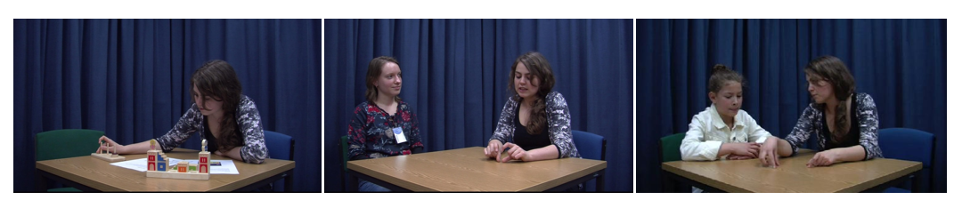
Study finds Italian and Dutch adults use similar teaching gestures when explaining concepts to children
A new study by researchers from the University of Catania and the Max Planck Institute for Psycholinguistics found that Italian and Dutch ad
 mpi.nl·3d ago
The mental number line is not universal: How culture shapes the way we map numbers in our minds
This article explores the SNARC effect (Spatial-Numerical Association of Response Codes), a psychological phenomenon where people associate
 theconversation.com·4d ago
The Science and Ethics of Learning While Asleep: From the Psycho-phone to Modern Dream Research
This article explores the history and modern science of sleep learning, from Alois Benjamin Saliger's 1932 Psycho-phone to contemporary rese
 newyorker.com·1mo ago
Study Finds Intelligent People Are Better at Recognizing Intelligence in Others
A scientific study published in the journal Intelligence reveals that intelligent people are better at recognizing intelligence in others. T
 comuniq.xyz·1mo ago