





















The History and Impact of Drywall: How an Invisible Technology Transformed Home Construction
By
zdw

Pure flour-power. Hearty enough to carry you through lunch.
Summary
The article explores the history and significance of drywall as an invisible but transformative building technology. It contrasts traditional construction methods like wattle-and-daub with modern drywall, highlighting how this seemingly mundane material revolutionized home construction by making walls smooth, fire-resistant, and affordable. The piece examines drywall's development from early gypsum board experiments to its widespread adoption after World War II, emphasizing how this 'invisible' advancement dramatically improved living standards and housing accessibility.
Key quotes
· 5 pulledNo person should get excited about a blank wall. But your wall at home is a reminder that most advancements are almost entirely invisible.
To render dirt into a plausible building material, you need another Minecraft staple: wood. If you take a bunch of sticks, weave them into a tapestry, then slather wet dirt (also known by its technical name mud) and let it dry, you get wattle-n-daub.
Drywall is a miracle of modern construction. It is cheap, fire-resistant, and easy to install. It is also, for the most part, invisible.
The story of drywall is the story of how we went from wattle-and-daub to smooth, white walls in just a few centuries.
Most advancements are almost entirely invisible, and drywall is a perfect example of this principle.
You might also wanna read

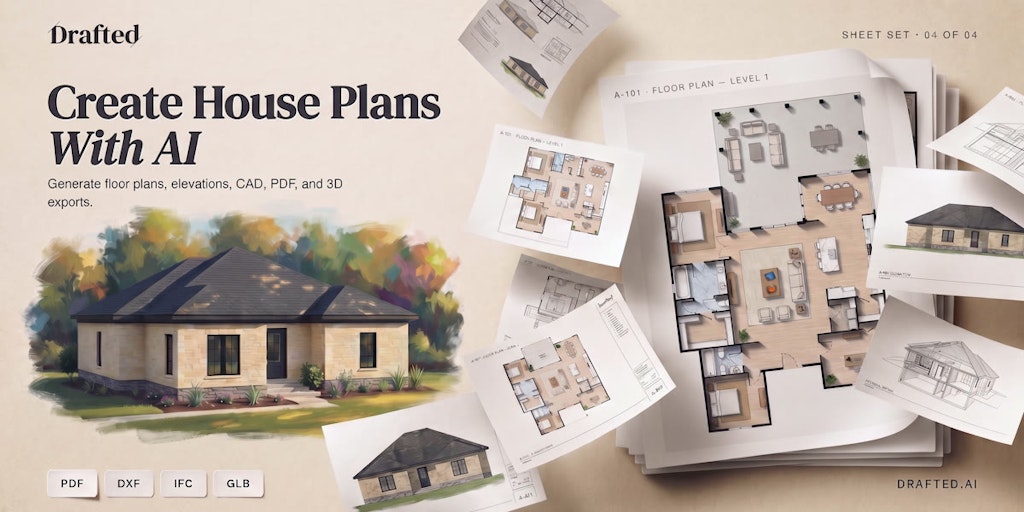
Drafted launches AI-powered instant home design tool on Product Hunt
Drafted is an AI-powered home design tool that lets users draw a footprint, choose rooms, and instantly generate complete floor plans, eleva
 Product Hunt·3d ago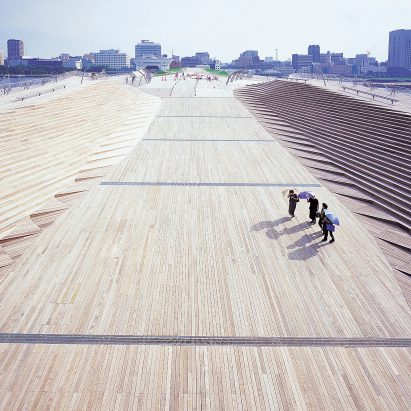
Yokohama International Port Terminal: An early landmark of parametric architecture
This article examines the Yokohama International Port Terminal, designed by Foreign Office Architects (FOA) and opened in 2002, as a landmar
 Dezeen·24d ago
Patrik Schumacher on parametricism's slower adoption and its future as a universal architectural style
Patrik Schumacher, principal of Zaha Hadid Architects, discusses the slower-than-expected adoption of parametricism as an architectural styl
Dezeen·25d ago
Dezeen In Depth newsletter covers America's first mail-order servant robot and Reinier de Graaf interview
This month's Dezeen In Depth newsletter highlights America's first mail-order servant robot, exploring the story behind its design and creat
Dezeen·1mo ago
PoliLam Introduces Translucent HPL Surfaces with Clear Edges for Light Diffusion
PoliLam has developed a collection of translucent HPL (High-Pressure Laminate) surfaces with clear edges that allow light to diffuse through
Dezeen·1mo ago
ICON and Firmah Architecture Design Texas Community with 88 3D-Printed Houses and Artificial Surf Lagoons
Construction company ICON and design studio Firmah Architecture have released designs for a 450-acre community in Texas called Desperado, wh
Dezeen·1mo ago