





















The Dependency Cutout Workflow Pattern: Managing Urgent Bug Fixes in Open Source Dependencies
By
ingve

Kettled twice. Extra chewy, extra trustworthy.
Summary
The article discusses a software development workflow pattern called "Dependency Cutout" for handling bugs in open source dependencies. It presents a scenario where an application (FooApp) depends on an open source library (LibBar) that has a bug causing production issues. Since upstream fixes can take too long (quarterly releases), the pattern involves creating a local copy of the dependency code, fixing the bug there, and maintaining it as a temporary solution while still contributing the fix upstream. The article emphasizes the importance of fixing bugs in dependencies rather than just working around them, and introduces this as a practical workflow pattern for developers facing urgent production issues with open source dependencies.
Key quotes
· 4 pulledYou're working on an application. Let's call it 'FooApp'. FooApp has a dependency on an open source library, let's call it 'LibBar'. You find a bug in LibBar that affects FooApp.
FooApp is your job; LibBar is (at best) your hobby. Blocking on the full upstream contribution cycle and waiting for the next quarterly release is not an option.
It's important to be able to fix bugs in your open source dependencies, and not just work around them.
The Dependency Cutout pattern involves creating a local copy of the dependency code, fixing the bug there, and maintaining it as a temporary solution while still contributing the fix upstream.
You might also wanna read

Zig Devlog: Build System Rework Separates Maker and Configurer Processes
This devlog entry from the Zig programming language project announces a major rework of the build system, separating the maker process from
ziglang.org·1d ago
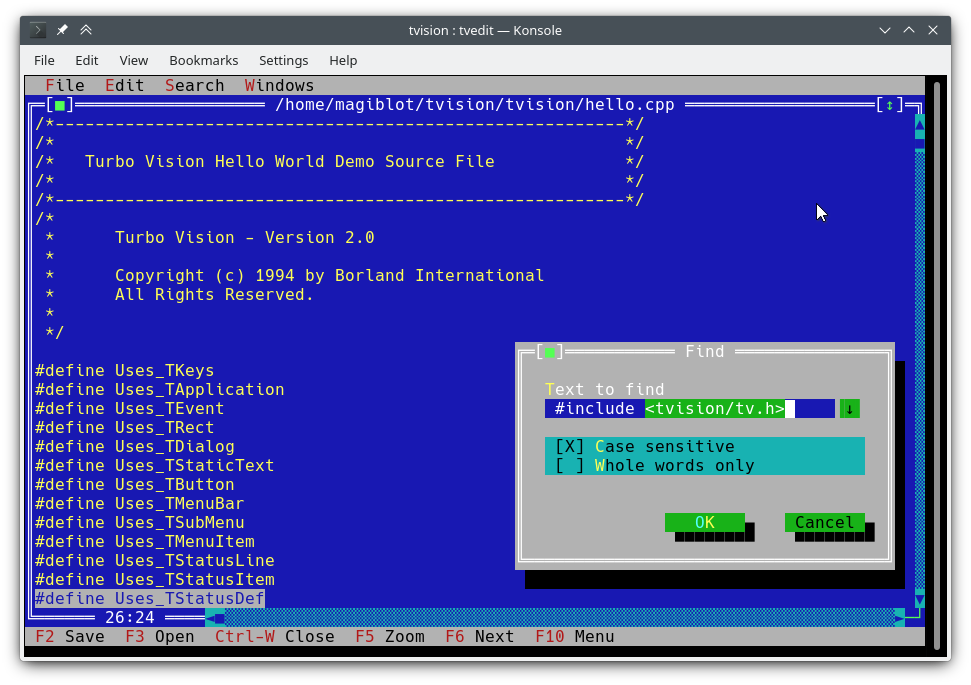
magiblot/tvision: A modern cross-platform port of Turbo Vision 2.0 with Unicode support
A modern, cross-platform port of Turbo Vision 2.0, the classical framework for text-based user interfaces (TUI). Originally started as a per
 github.com·1mo ago
Why a Software Maintainer is Rejecting External Pull Requests
The article is a personal reflection from a software maintainer explaining why they are rejecting pull requests (PRs) from external contribu
GitHub Repository: Chip8 Emulator Project for Virtual Machine Emulation
The article appears to be a GitHub repository page for a Chip8 emulator project called 'navid-m/chip8emu'. The content shows GitHub's interf
github.com·1mo ago
10-year-old unit test with future cookie expiry date breaks Servo browser CI system
A developer shares a story about a unit test written 10 years ago for the Servo browser engine that included a cookie expiry date of April 1
 mastodon.social·1mo ago
Servo Browser Engine Releases First crates.io Version as Embeddable Library
Servo, the web browser engine written in Rust, has released its first crates.io version (v0.1.0), making it available as a library for devel
 servo.org·1mo ago