





















The Case for Using HTML Over JavaScript for Content Generation
By
speckx

Toasted to a respectable shade. No regrets, no crumbs left.
Summary
The author argues against overusing JavaScript to generate HTML, stating it creates unnecessary complexity, slower performance, and harder-to-maintain code compared to using plain HTML. While acknowledging JavaScript's value for adding interactivity, the article advocates for using HTML as the foundation and only using JavaScript for enhancement where HTML cannot handle the functionality.
Key quotes
· 3 pulledI've worked on so many projects recently that were more complicated than they needed to be because they used JavaScript to generate HTML.
JavaScript is inferior to just using HTML in nearly every way.
I think JS is great at augmenting and enhancing what's already there, and adding interactivity that cannot (yet) be handled with HTML.
You might also wanna read


Introduction to the Popover API: Native Browser Tooltips Without JavaScript Libraries
The article explores the Popover API, a native browser feature that enables developers to create tooltips and popovers without relying on Ja
 Smashing Magazine·3mo ago
Web Components Enable Framework-Free Modern UI Development
The article discusses how modern browsers now support Web Components, custom elements, and shadow DOM, enabling developers to build sophisti
 caimito.net·3mo ago
CSS @scope Rule: A Native Solution for Scoped Styles and Component Isolation
The article discusses the new CSS @scope rule as a solution to the challenges of maintaining CSS in complex modern interfaces. It explains h
Smashing Magazine·3mo ago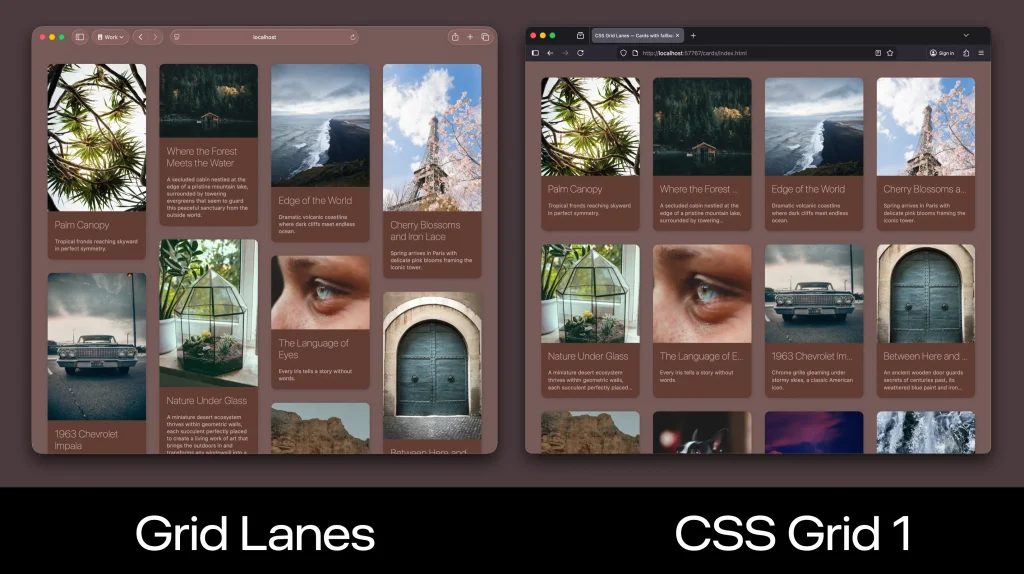
CSS Grid Lanes: Current Browser Support and Implementation Guide
The article discusses the upcoming CSS Grid Lanes feature, explaining its current browser support status and providing practical guidance fo
 webkit.org·4mo ago
Using Custom HTML Tags: How Browsers Handle Unrecognized Elements
The article explains that web browsers treat unrecognized HTML tags as generic elements, allowing developers to create custom tags with hyph
maurycyz.com·5mo ago
CSS Wrapped 2025: How CSS Evolves to Handle Logic, State, and Complex Interactions
The article discusses the 2025 CSS Wrapped report, highlighting how CSS has evolved beyond simple styling to handle logic, state, and comple
Smashing Magazine·5mo ago