





















7 Essential AI Agent Guardrails for Safe Business Deployment
By
Bernard Marr

Fresh out the oven, still warm. Top of the tray.
Summary
The article discusses the critical need for AI agent guardrails as businesses move from experimenting with AI to deploying autonomous AI agents that can take actions, not just suggest answers. It outlines seven essential guardrails businesses must implement: (1) defining clear scope and boundaries for AI agents, (2) implementing human-in-the-loop oversight for high-stakes decisions, (3) establishing monitoring and logging systems, (4) creating fail-safes and kill switches, (5) ensuring data privacy and security compliance, (6) building in transparency and explainability, and (7) developing governance frameworks for accountability. The piece emphasizes that while AI agents promise significant productivity gains, rushing deployment without proper safeguards creates serious operational, legal, and reputational risks.
Key quotes
· 3 pulledThe more important question is whether businesses are ready for what happens when AI moves from suggesting an answer to taking action.
An AI agent is essentially a software system that can be given a goal and then figure out how to achieve it, making decisions along the way without waiting for human input at every step.
Without proper guardrails, an AI agent operating autonomously could make decisions that harm customers, violate regulations, or damage a company's reputation in minutes.
You might also wanna read

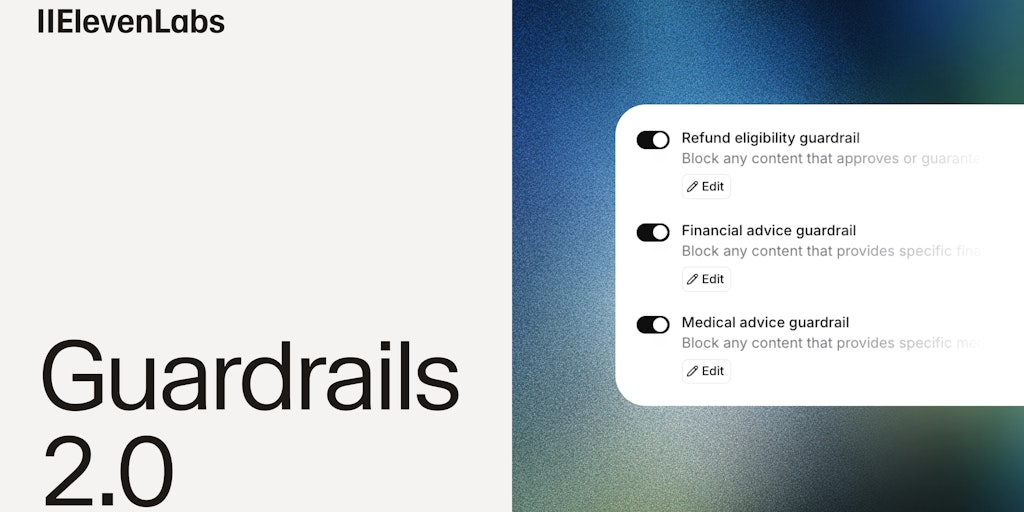
ElevenAgents Guardrails 2.0: Configurable Safety Controls for Enterprise Voice Agent Deployment
ElevenAgents has released Guardrails 2.0, a configurable safety control system for enterprise voice agent deployment. The solution addresses
 Product Hunt·2mo ago
AI safety guardrails removed from Meta and Google models in minutes, research finds
The article reports on research showing that safety guardrails designed to prevent AI models from generating harmful content can be easily s
 ft.com·8d ago
OpenAI's Pentagon Agreement for AI Deployment in Classified Environments
OpenAI has reached an agreement with the Pentagon (Department of War) for deploying advanced AI systems in classified environments. The comp
 openai.com·3mo ago
Challenges in Implementing Safe AI Agent Orchestrators for Code Generation
The article discusses the challenges of using AI agent orchestrators for code generation, highlighting the need for extensive safety guardra
 news.ycombinator.com·3mo ago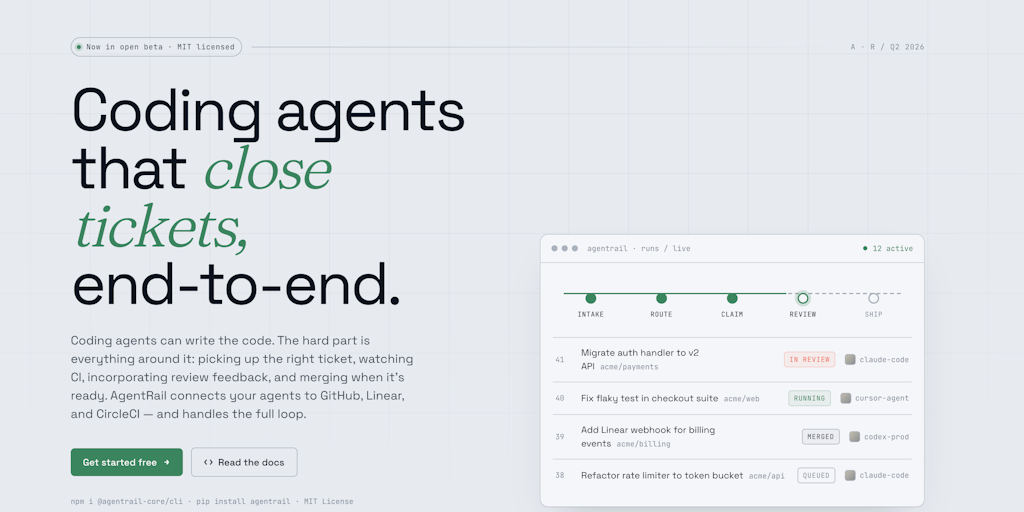
AgentRail: Open-source local control plane for managing AI coding agent task lifecycles
AgentRail is an open-source, locally-run task lifecycle layer for AI coding agents. It solves the operational challenges beyond code writing
Product Hunt·21d ago
AI Security: Why You Should Treat AI Agents as Untrusted and Build for Containment
The article argues that AI agents should be treated as inherently untrusted and potentially malicious, advocating for security architectures
 nanoclaw.dev·3mo ago