





















Texas A&M Study: Vacant Land Increases Urban Heat in Houston Neighborhoods
By
PaulHoule

A five-star bake. Worth schmearing, sharing, saving.
Summary
A Texas A&M University study led by Dr. Dingding Ren reveals that vacant and abandoned land significantly contributes to urban heat in Houston neighborhoods. The research shows that vacant lots with vegetation can help cool surrounding areas, while abandoned buildings and paved lots raise land surface temperatures by up to 20 degrees Fahrenheit, exposing vulnerable residents to heightened health risks due to lack of vegetation and shade.
Key quotes
· 4 pulledNew research from Texas A&M University shows vacant and abandoned land is a big reason why some Houston neighborhoods heat up far faster than others.
A new study led by Dr. Dingding Ren, a lecturer in the Department of Landscape Architecture and Urban Planning, finds that vacant lots with vegetation can help cool surrounding areas.
Abandoned buildings and paved lots do the opposite, raising land surface temperatures by as much as 20 degrees Fahrenheit.
Research highlights how a lack of vegetation and shade exposes vulnerable residents to heightened health risks.
You might also wanna read

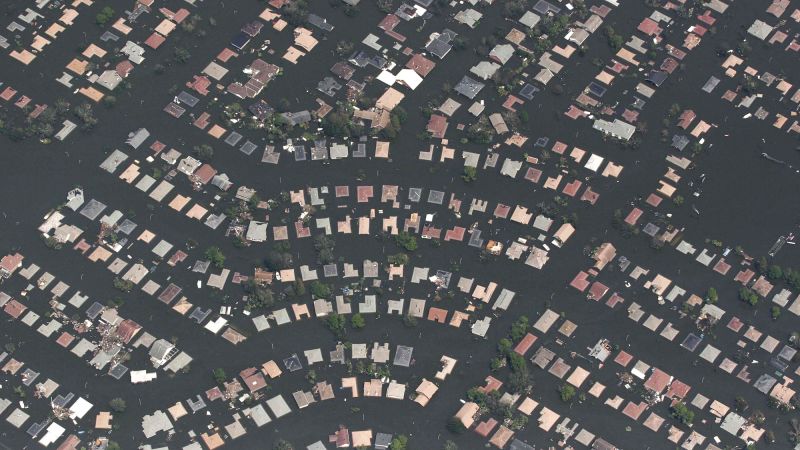
Scientists warn New Orleans faces ocean encroachment this century, urge immediate relocation planning
A new expert analysis warns that New Orleans is locked into a future where rising seas could surround the city by ocean as early as this cen
 cnn.com·4d ago
Scientists warn New Orleans faces ocean encroachment this century, urge immediate relocation planning
A new expert analysis warns that New Orleans is locked into a future where rising seas could surround the city by ocean as early as this cen
cnn.com·4d ago
Cornell Study: NYC Congestion Pricing Reduces Air Pollution by 22% in First Six Months
A Cornell University study found that New York City's congestion pricing scheme reduced air pollution by 22% in Manhattan's toll zone during
 airqualitynews.com·5mo ago
Japanese Summers Lengthened by 3 Weeks Over 42 Years Due to Climate Change
A research group from Mie University found that Japanese summers have lengthened by approximately three weeks over the 42-year period from 1
 english.kyodonews.net·7mo ago
Study: Climate change could increase large hailstones by nearly 50% by 2100
A new study published in Nature warns that climate change will significantly increase the frequency of large hailstones (bigger than a marbl
 euronews.com·1h ago
NIST physicist's decade-old sealed envelope experiment reveals new questions about gravity measurement
Physicist Stephan Schlamminger from NIST led an experiment to verify a 2007 French measurement of the universal gravitational constant (G),
 thedebrief.org·1h ago