





















Technical Analysis of Intel 80386 Processor's Multiplication and Division Capabilities
By
nand2mario

Front-window bakery material. Catches the eye, delivers the goods.
Summary
The article examines the Intel 80386 processor's multiplication and division capabilities, focusing on its technical implementation and performance characteristics. It details how the 386 handled these operations differently from its predecessors, with specific attention to instruction timing, microcode implementation, and the processor's 32-bit architecture advantages. The content provides technical analysis of the processor's arithmetic unit design and how it represented a significant advancement in x86 processor capabilities.
Key quotes
· 4 pulledWhen Intel released the 80386 in October 1985, it marked a watershed moment for personal computing.
The 386 was the first 32-bit x86 processor, increasing the register width from 16 to 32 bits and vastly expanding the address space compared to its predecessors.
This wasn't just an incremental upgrade—it was the foundation that would carry the PC architecture for decades to come.
By the mid-1980s, the IBM PC had established x86 as the dominant PC architecture, but the 16-bit 8086/286 processors were hitting their limits.
You might also wanna read
Technical Reference: Undocumented Opcodes for 65XX/85XX Series CPUs
This document provides a comprehensive technical reference for undocumented or unofficial opcodes in the 65XX/85XX series CPUs, specifically

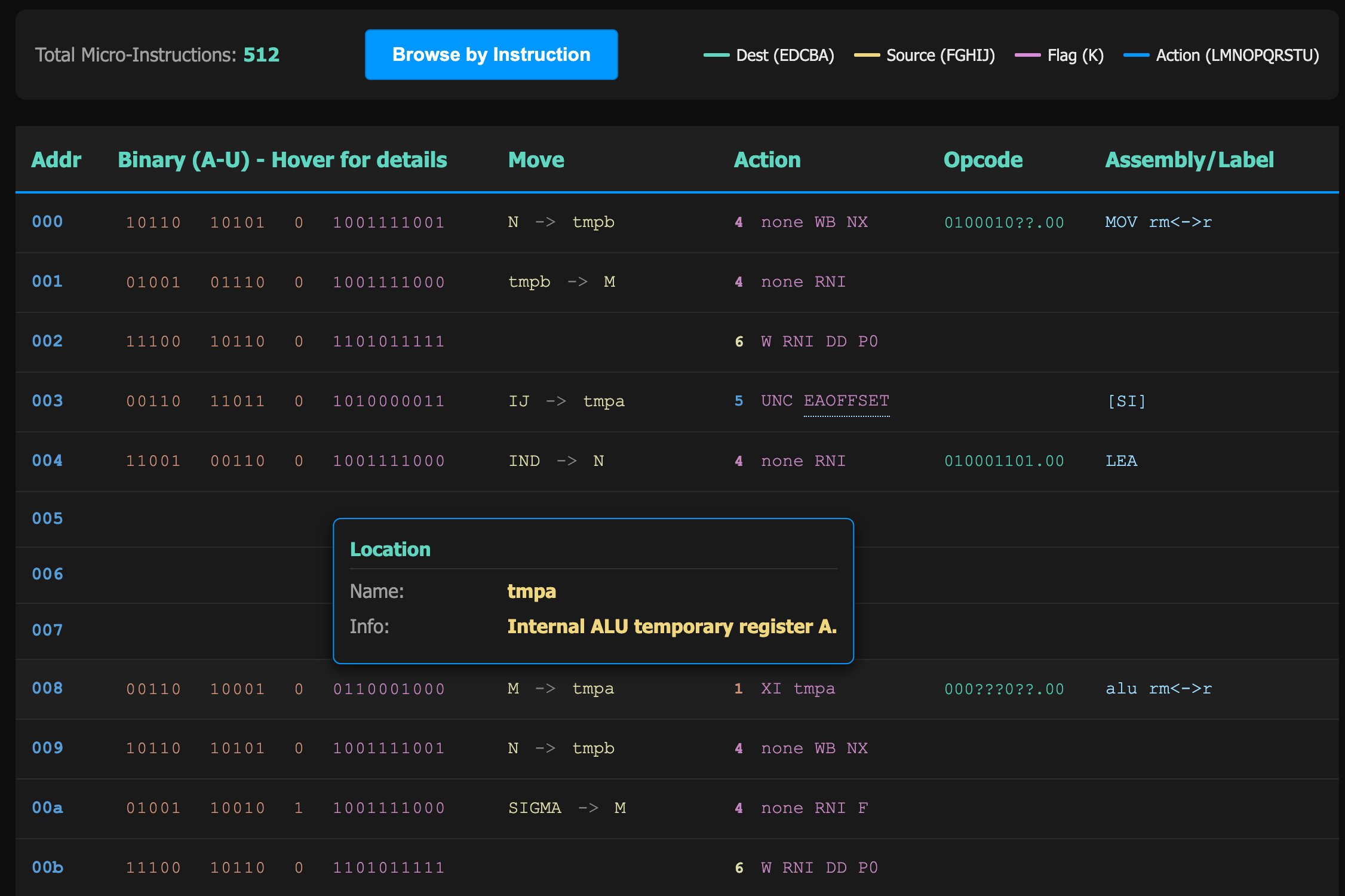
Interactive 8086 Microcode Browser: Exploring the Original Intel Processor's Internal Architecture
A developer has created an interactive online browser for the 8086 microprocessor's microcode ROM, based on extensive research and notes tak
 nand2mario.github.io·6mo ago
ZX Spectrum BASIC interpreter rebuilt from scratch to run natively in web browsers
A developer has rebuilt the ZX Spectrum's BASIC interpreter from scratch to run in a web browser, without emulating the original Z80 hardwar
 boingboing.net·2d ago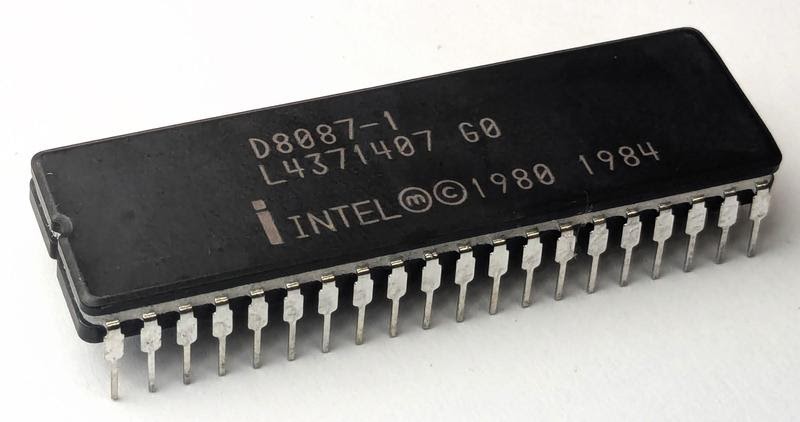
Reverse-engineering the Intel 8087: A look at microcode and register exchange
A detailed technical deep-dive into the Intel 8087 floating-point co-processor's microcode, specifically examining the register exchange ope
 righto.com·2d ago
MacSurf brings CSS3, ES5 JavaScript, and native HTTPS to Classic Mac OS 9 PowerPC systems
MacSurf is an early-alpha web browser for Classic Mac OS 9 PowerPC systems (like the G3 iMac) that brings modern web technologies — CSS3, ES
 github.com·2d ago
Context Free Tests C64 vs Raspberry Pi 4 in Practical Coding Focus Comparison
This article examines the concept of when computers peaked for focused, distraction-free coding. It compares the Commodore 64 (which boots s
 theoasisbbs.com·4d ago