





















Six New Millisecond Pulsars Discovered Using FAST Telescope Data Stacking
By
Lexi Gault

Lightly toasted, lightly seasoned, mostly correct.
Summary
Researchers using China's FAST telescope (the world's largest single-dish radio telescope) have discovered six previously undetected millisecond pulsars by stacking multiple observations of globular clusters. Millisecond pulsars are extremely fast-spinning neutron stars that form in dense stellar environments like globular clusters. The stacking technique allowed the team to detect these faint pulsars that individual observations missed, advancing our understanding of these exotic stellar objects.
Key quotes
· 3 pulledThe fastest spinning pulsars in the universe are often quite difficult to detect.
Globular clusters, compact collections of tens of thousands to millions of stars, are highly dense and rife with dynamical interactions.
These active environments are ideal factories for the formation of millisecond pulsars.
You might also wanna read


Study: Climate change could increase large hailstones by nearly 50% by 2100
A new study published in Nature warns that climate change will significantly increase the frequency of large hailstones (bigger than a marbl
 euronews.com·3h ago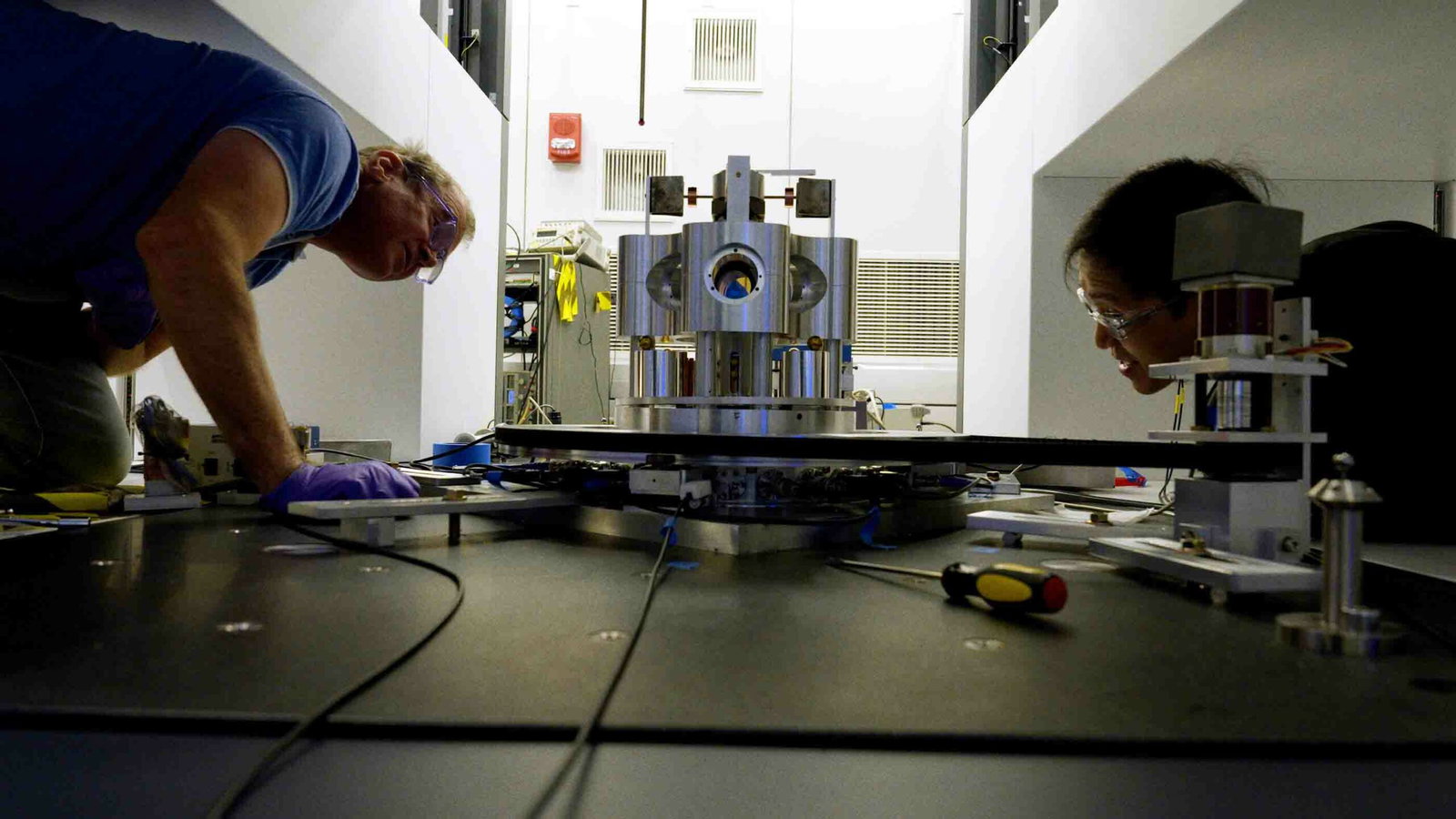
NIST physicist's decade-old sealed envelope experiment reveals new questions about gravity measurement
Physicist Stephan Schlamminger from NIST led an experiment to verify a 2007 French measurement of the universal gravitational constant (G),
 thedebrief.org·3h ago
Türkiye'de Mavi Ay ve Mikro Ay aynı anda gözlemlendi: Bir sonraki 2053'te
Mayıs ayının son gecesinde Türkiye semalarında nadir görülen bir "Mavi Ay" (ikinci dolunay) olayı yaşandı. Ay, aynı zamanda Dünya'ya en uzak
 gazeteoksijen.com·4h ago
NASA to announce Artemis 3 crew on June 9, mission scope shifts to orbital docking tests
NASA has announced it will reveal the four-person Artemis 3 crew on June 9 at the Johnson Space Center in Houston. The event will also provi
 space.com·6h ago
1-Meter Meteor Breaks Up Off Massachusetts Coast, Debris May Have Fallen Into Cape Cod Bay
A 1-meter meteor entered Earth's atmosphere off the coast of Massachusetts, releasing energy equivalent to 300 tons of TNT. Radar data sugge
 hackaday.com·11h ago
Study suggests homing pigeons may navigate using iron-laden liver immune cells as a magnetic compass
Researchers at the Max Planck Institute of Animal Behavior tested whether homing pigeons use iron-laden immune cells in their livers as a ma
 sciencenews.org·13h ago