





















mochi.js: A Bun-Native Browser Automation Tool with Relational Fingerprint Locking and CDP-Based Fetch
By
ccheshirecat

All dough, no crust. Filling but forgettable.
Summary
mochi.js is a Bun-native, raw-CDP browser automation tool that uses a relational consistency engine for fingerprint locking. It derives all fingerprint surfaces (canvas, WebGL, audio, fonts, MediaDevices, WebGPU) from a single (profile, seed) pair through a 48-rule DAG, preventing inconsistent fingerprints. It features Chromium-native fetch routing through CDP for JA4/JA3/H2 coherence, and behavioral synthesis for human-like interactions (click, type, scroll). The tool is designed for stealth browser automation with JIT-installed spoofing and no external dependencies.
Key quotes
· 5 pulledEvery fingerprint surface — canvas, WebGL, audio, fonts, MediaDevices, WebGPU — derives from a single (profile, seed) pair through a 48-rule DAG.
No Frankenstein fingerprints; a Mac UA never lands next to Linux WebGL.
session.fetch() routes through Chromium itself via CDP — Network.loadNetworkResource for simple GETs, page.evaluate('fetch') for non-GET.
JA4/JA3/H2 are real Chrome by definition. No parallel HTTP layer to keep in lockstep, no FFI to install.
Relational fingerprint locking, JIT-installed spoofing, JA4-coherent fetch. Leaves no crumbs.
You might also wanna read

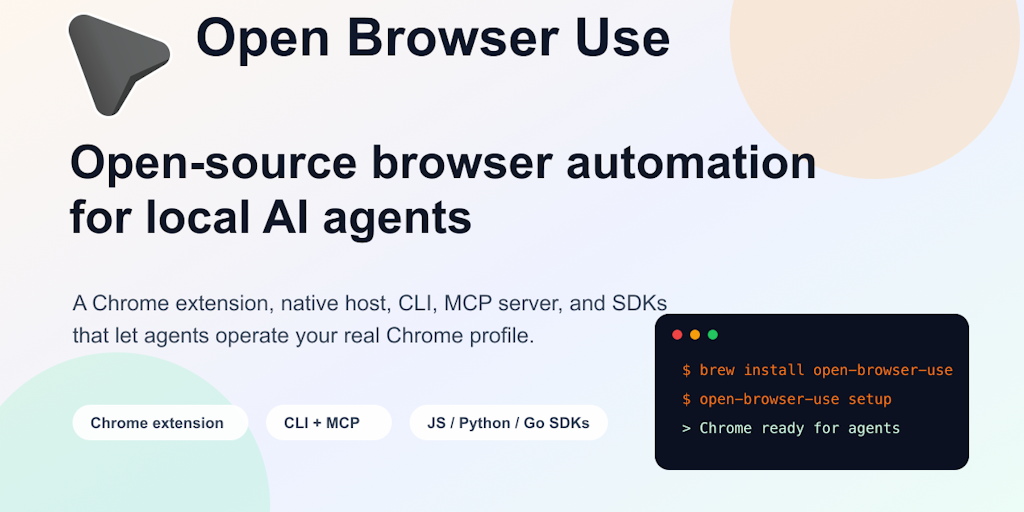
Open Browser Use: Open-source local-first browser automation for AI agents
Open Browser Use is an open-source, local-first browser automation tool that connects AI agents (like Codex, Claude Code) to real Chrome pro
 Product Hunt·19d ago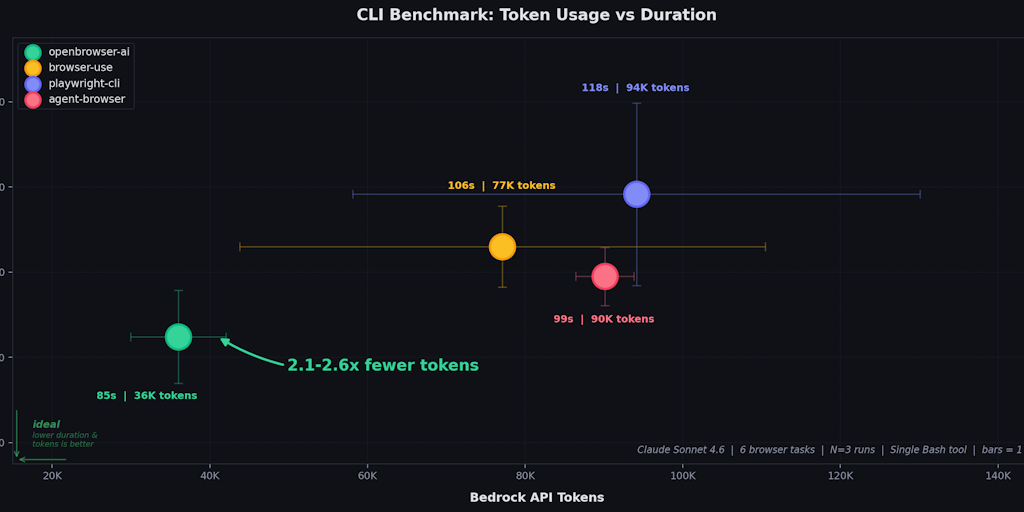
OpenBrowser-AI: Direct Browser Control for AI Agents via Chrome DevTools Protocol
OpenBrowser-AI is a tool that connects AI agents directly to web browsers using raw Chrome DevTools Protocol (CDP) without abstraction layer
Product Hunt·1mo ago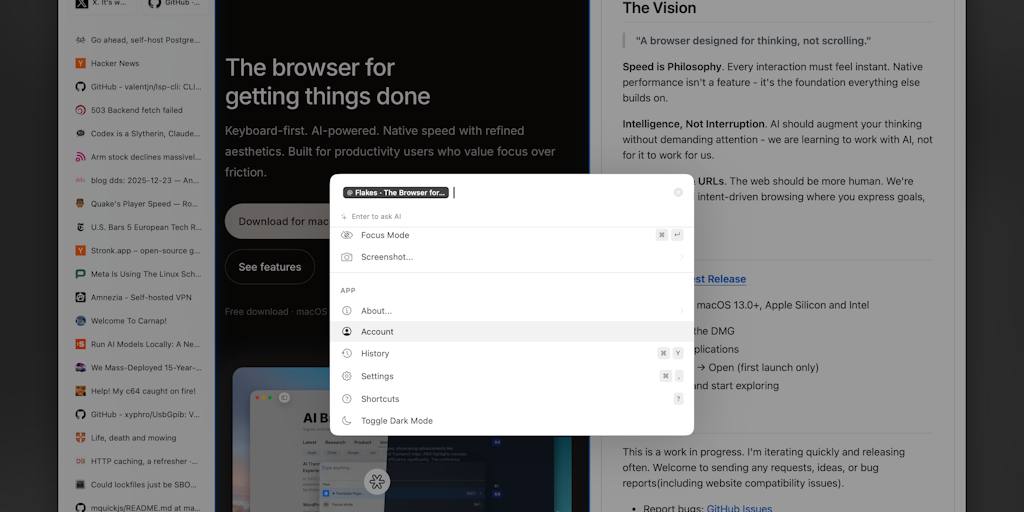
Flakes: A Keyboard-First, AI-Powered Native Browser for macOS
Flakes is a new macOS browser created by developer Mike that emphasizes keyboard-first navigation, native performance, and AI integration. T
Product Hunt·5mo ago