





















Research Shows Two-Dimensional Billiard Systems Are Turing Complete
By
nabla9

Lightly toasted, lightly seasoned, mostly correct.
Summary
Researchers demonstrate that two-dimensional billiard systems are Turing complete, meaning they can perform any computation that a Turing machine can. The study encodes billiard dynamics within Topological Kleene Field Theory, showing that these idealized models of particle motion with elastic reflections can compute. The results establish the existence of undecidable trajectories in physically natural billiard-type models, including those arising in hard-sphere gases and celestial mechanics collision-chain limits.
Key quotes
· 3 pulledWe show that two-dimensional billiard systems are Turing complete by encoding their dynamics within the framework of Topological Kleene Field Theory.
Billiards serve as idealized models of particle motion with elastic reflections and arise naturally as limits of smooth Hamiltonian systems under steep confining potentials.
Our results establish the existence of undecidable trajectories in physically natural billiard-type models, including billiard-type models arising in hard-sphere gases and in collision-chain limits of celestial mechanics.
You might also wanna read


A visual introduction to differential geometry and Maxwell's equations through pictures
This article presents a pictorial introduction to differential geometry, aimed at making the mathematical foundation accessible to pre-unive
 arxiv.org·21h ago
Improved Lower Bounds for Five Classical Ramsey Numbers Achieved Using LLM-Based Code Mutation Agent
Researchers have improved lower bounds for five classical Ramsey numbers using AlphaEvolve, an LLM-based code mutation agent. The new lower
arxiv.org·2mo ago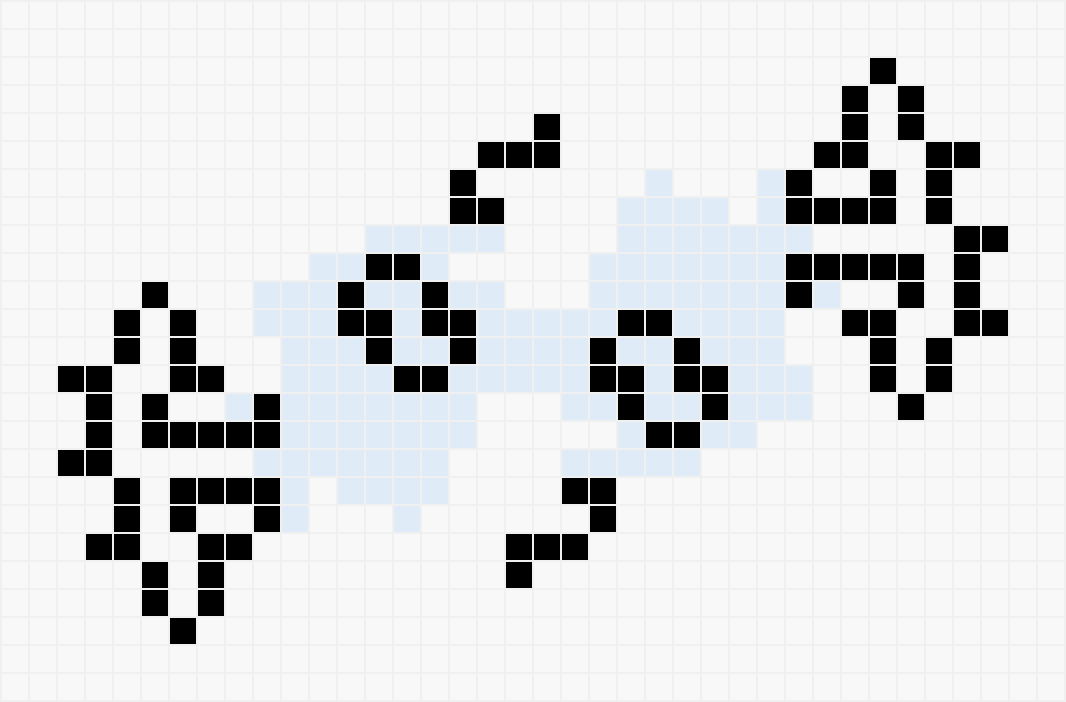
Research Shows All 23-Bit Still Life Patterns in Conway's Game of Life Are Glider Constructible
The article discusses research in Conway's Game of Life about which still life patterns can be constructed by colliding gliders. It explains
 mvr.github.io·4mo ago
Understanding Lie Groups: The Mathematical Framework Bridging Algebra and Geometry
This article explores Lie groups, a mathematical concept discovered in the 1870s by Marius Sophus Lie that combines group theory with geomet
 quantamagazine.org·5mo ago
Reverse Mathematics Reveals Why Certain Computational Problems Are Inherently Hard
The article explores how researchers are using 'reverse mathematics' to understand why certain computational problems are inherently difficu
quantamagazine.org·6mo ago
Feynman's Trick: Differentiation Under the Integral Sign Explained
The article explains Feynman's trick, also known as differentiation under the integral sign or the Leibniz integral rule, which is a mathema
 zackyzz.github.io·6mo ago