





















Quantum Crosstalk Noise Modeling Reveals Higher Error Rates in Fault-Tolerant Computing
By
Futurist

Sesame, salt, and substance. A flagship bake.
Summary
Researchers at The University of Melbourne and Monash University have modeled coherent quantum crosstalk noise in quantum computers using hybrid stabilizer-tensor network simulations. Their findings show that accounting for coherence in noise models significantly increases logical error rates and lowers code thresholds, challenging prior analyses that relied on simplified noise models. This research provides a more accurate assessment of the challenges facing scalable, fault-tolerant quantum computing.
Key quotes
· 5 pulledResearchers at The University of Melbourne and Monash University have conducted a thorough investigation into coherent quantum crosstalk noise and its impact on surface codes, advancing the development of practical, fault-tolerant quantum computers.
The findings reveal that including coherence in noise models sharply increases logical error rates and lowers the code threshold, demonstrating how noise distribution alters performance.
These simulations, enabled by hybrid stabilizer-tensor network techniques, reveal noise dynamics previously beyond the reach of classical computation.
Error rates in logical qubits demonstrably increase when coherent crosstalk noise is accounted for, a finding at odds with prior analyses relying on simplified noise models.
This allows for a more accurate assessment of the challenges facing scalable, fault-tolerant quantum computers.
You might also wanna read

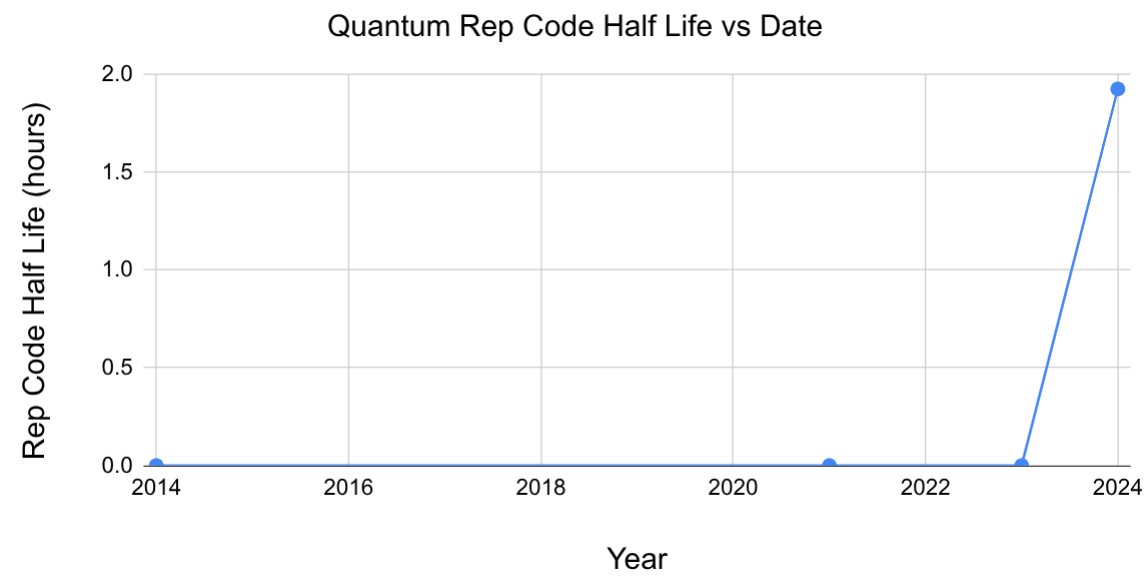
Quantum Error Correction Progress and Future Outlook for Qubit Quality
The article discusses the rapid advancement of quantum error correction, predicting that maximum achievable qubit quality will drastically i
 algassert.com·5mo ago
ETH Zurich Researchers Develop Stable Quantum Gates Using Neutral Atoms
Researchers at ETH Zurich have developed a new method for creating stable quantum logical operations using neutral atom qubits. The quantum
 ethz.ch·1mo ago