





















New CRASH Clock Metric Shows Megaconstellations Reduce Collision Recovery Time to 5.5 Days
By
rapnie

A bagel you'd recommend to a friend without hedging.
Summary
Researchers propose a new metric called the CRASH Clock to measure stress on the orbital environment from megaconstellations. The metric calculates the timescale for a possible catastrophic collision if there are no satellite maneuvers or loss of situational awareness. Current calculations show the CRASH Clock is 5.5 days, indicating limited time to recover from disruptive events like solar storms, compared to 164 days in 2018 before megaconstellations became prevalent. The article highlights the risks of space debris, collisions, ground casualty risks, and environmental impacts from satellite operations.
Key quotes
· 4 pulledOur calculations show the CRASH Clock is currently 5.5 days, which suggests there is limited time to recover from a wide-spread disruptive event, such as a solar storm.
This is in stark contrast to the pre-megaconstellation era: in 2018, the CRASH Clock was 164 days.
There is potential for current or planned actions in orbit to cause serious degradation of the orbital environment or lead to catastrophic outcomes, highlighting the urgent need to find better ways to quantify stress on the orbital environment.
While satellites provide many benefits to society, their use comes with challenges, including the growth of space debris, collisions, ground casualty risks, optical and radio-spectrum pollution, and the alteration of Earth's upper atmosphere through rocket emissions and reentry ablation.
You might also wanna read


First field measurements show data center waste heat warms nearby neighborhoods by up to 2.2°C
This study presents the first direct field measurements of air temperature impacts from data center waste heat on surrounding residential ne
 asmedigitalcollection.asme.org·13d ago
SpaceX Deorbits 1-2 Starlink Satellites Daily Through Atmospheric Incineration
SpaceX is deorbiting approximately one or two Starlink satellites daily through atmospheric incineration, a number expected to increase as t
 theregister.com·7mo ago
DynaFit: A Software Tool for Nonlinear Regression of Biochemical Kinetics and Binding Data
DynaFit is a software program designed for nonlinear least-squares regression analysis of chemical kinetic, enzyme kinetic, and ligand-recep
NVIDIA Open-Sources Cosmos 3 Foundation Model for Physical AI Reasoning and Action Generation
NVIDIA has released Cosmos 3, an open-source foundation model for Physical AI that integrates physical reasoning, world generation, and acti
 developer.nvidia.com·1h ago
NEST Simulator Included in SPEC CPU 2026 Benchmark Suite for First Time
The Standard Performance Evaluation Corporation (SPEC) released its first updated benchmark suite since 2017 in May 2026, designed to measur
 ebrains.eu·1h ago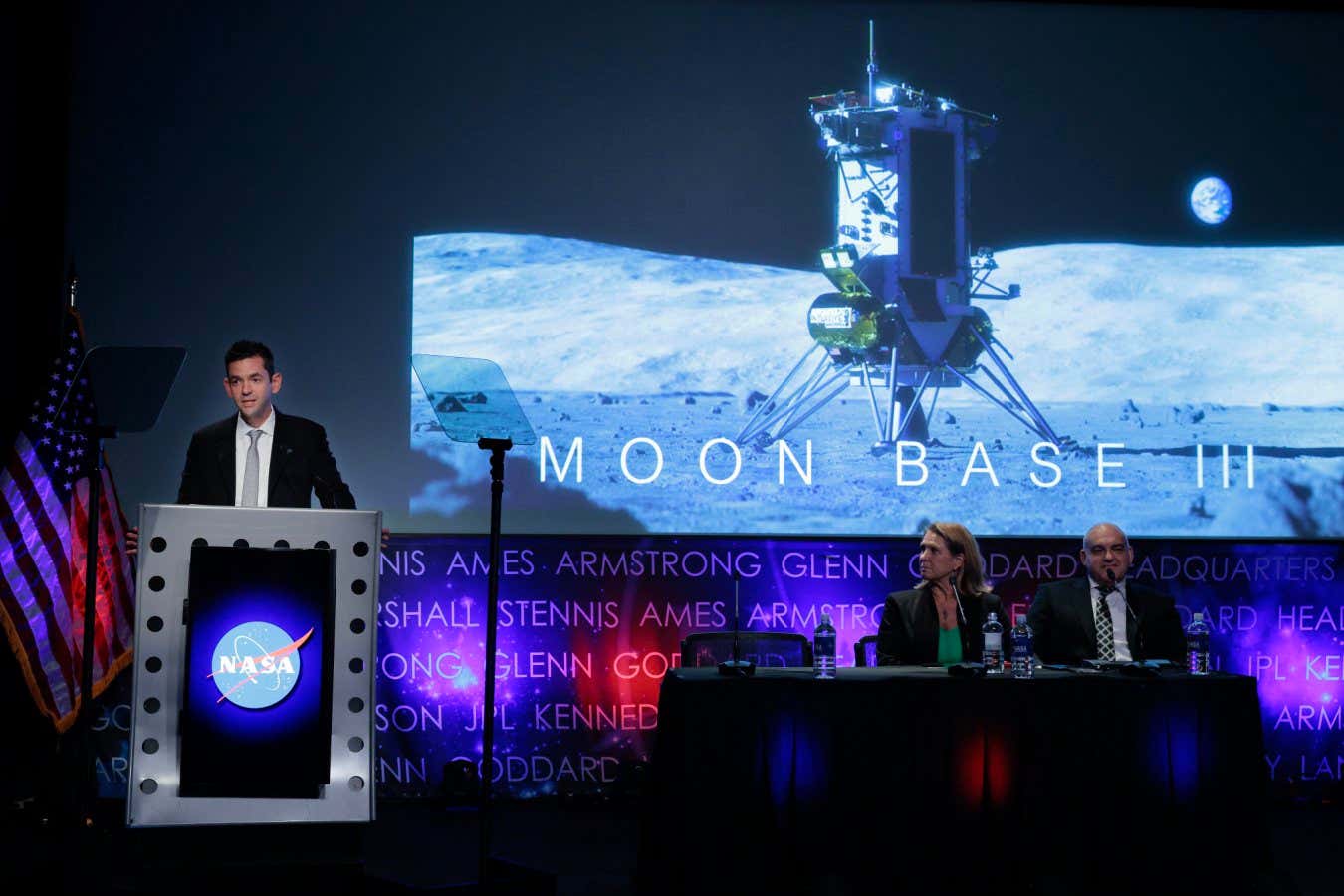
NASA reveals plans for permanent lunar base spanning hundreds of square kilometres
NASA has revealed plans to build a permanent lunar base spanning hundreds of square kilometres as part of its Artemis programme. The initial
 newscientist.com·1h ago