





















Molybdenum-Vacancy Complex in Zinc Oxide Shows Promise as Optically Addressable Spin Qubit
By
Rusty Flint

Kettled twice. Extra chewy, extra trustworthy.
Summary
Researchers at the University of Wisconsin-Madison have identified a molybdenum-vacancy complex within zinc oxide (denoted (MoZnvO)2+) that shows promise as an optically addressable spin qubit. The defect exhibits a spin-triplet ground state, visible-range optical transitions, and a small Huang-Rhys factor of ~5—significantly better than other zinc oxide defects. First-principles calculations suggest spin coherence times around 4 microseconds, potentially enabling high-fidelity, single-shot readout for quantum computing applications.
Key quotes
· 3 pulledThis newly predicted defect, denoted (MoZnvO)2+, possesses a spin-triplet ground state and visible-range optical transitions with a remarkably small Huang-Rhys factor of approximately 5
The team's first-principles calculations further suggest spin coherence times of around 4 microseconds
A defect with both robust optical and spin properties has not yet been identified in this material
You might also wanna read


Nanocrystal Light Emission Reveals Quantum Zero-Point Motion in Atomic Lattice
Researchers have observed unexpected light emission from a nanocrystal cooled to near absolute zero, which is shown to arise from quantum fl
 physics.aps.org·7mo ago
447 TB/cm² at zero retention energy – atomic-scale memory on fluorographane
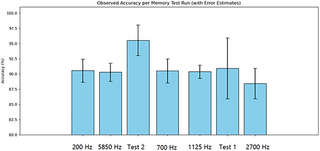
Shiitake Mushroom Mycelium Used to Create Sustainable Memristors for Neuromorphic Computing
Researchers have developed sustainable memristors using shiitake mushroom mycelium for high-frequency bioelectronics applications. The study
 journals.plos.org·7mo ago
Atomically precise carbon structure fabrication demonstrated using inverted-mode STM mechanosynthesis
Researchers demonstrate atomically precise mechanosynthesis of carbon structures on a hydrogen-passivated Si(100) surface using inverted-mod
 arxiv.org·12d ago
Researchers Develop Materials for Light-Based Computer Chips to Improve Efficiency and Speed
Researchers are developing light-based computers that use photons instead of electricity, which could offer greater energy efficiency and fa

Chinese Researchers Develop Analog Chip Claimed to Be 1,000 Times Faster Than Nvidia GPUs for Specific Applications
Chinese researchers from Peking University have developed a new analog chip using resistive random-access memory (RRAM) technology that repo
 livescience.com·7mo ago