





















Migrating from Playwright to Chrome DevTools Protocol for Enhanced Browser Control
By
gregpr07

Toasted golden, schmeared with insight. Top of the rack.
Summary
The article details a technical team's decision to migrate from Playwright to Chrome DevTools Protocol (CDP) for browser automation. The author explains that while Playwright and Puppeteer are excellent for creating readable QA tests and automation scripts, they can obscure important browser-level details. By switching to raw CDP, the team achieved significant performance improvements in element extraction, screenshots, and default actions, gaining finer-grained control over browser operations.
Key quotes
· 3 pulledPlaywright and Puppeteer are great for making QA tests and automation scripts short and readable, but as AI browser companies have been learning the hard way over the last year, sometimes these adapters obscure important details about the underlying browsers.
We decided to peek behind the curtain and figure out what the browser was really doing, and it made us decide to drop playwright entirely and just speak the browser's native tongue: CDP.
By switching to raw CDP we've massively increased the speed of element extraction, screenshots, and all our default actions.
You might also wanna read

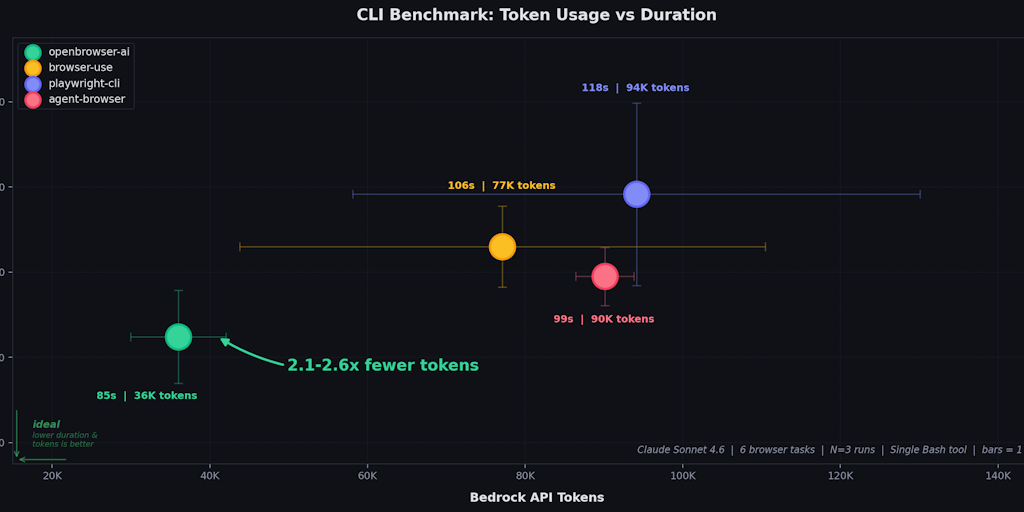
OpenBrowser-AI: Direct Browser Control for AI Agents via Chrome DevTools Protocol
OpenBrowser-AI is a tool that connects AI agents directly to web browsers using raw Chrome DevTools Protocol (CDP) without abstraction layer
 Product Hunt·1mo ago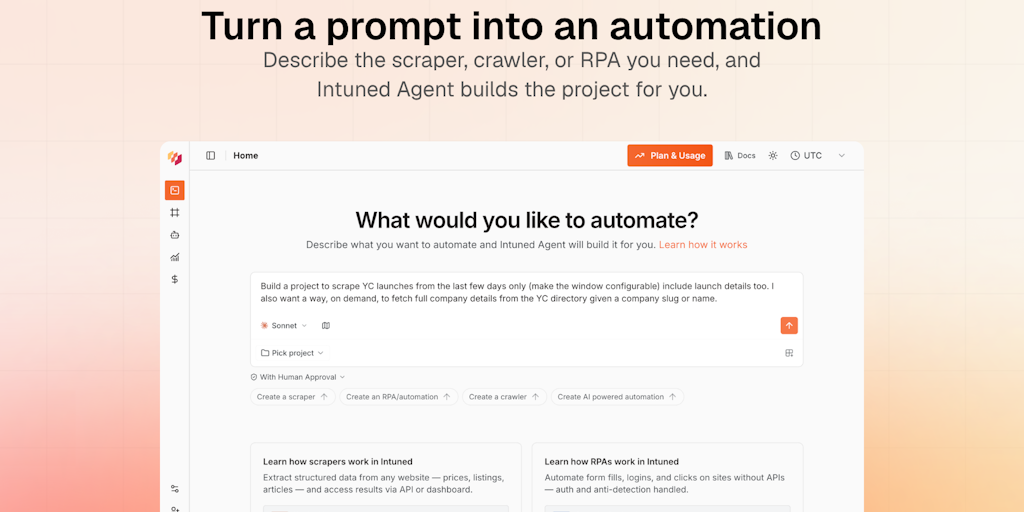
Intuned: AI-powered browser automation platform generates production-ready Playwright code for developers
Intuned is a browser automation platform for developers that uses AI to generate production-ready Playwright code. Users describe the scrape
Product Hunt·1mo ago