





















MemSync: Unified Memory Management Tool for AI Applications
By
Matthew Wang

Crisp on the outside, thoughtful on the inside. A keeper.
Summary
MemSync is a new software tool that provides unified memory management across multiple AI applications including ChatGPT and Claude. It allows users to maintain personalized prompts and context across different AI platforms with one-click synchronization, eliminating the need to start fresh with each interaction. The tool emphasizes privacy with end-to-end encryption and promises seamless integration across various AI services.
Key quotes
· 4 pulledOne click personalizes prompts across ChatGPT, Claude & more
Your context travels with you - no more cold starts
Privacy-first with E2E encryption
Install once, let every AI remember you
You might also wanna read

DiffMem: Git-Based Differential Memory System for AI Agents
DiffMem is a proof-of-concept project that implements a git-based memory storage system for AI agents and conversational systems. It uses Ma
 github.com·9mo ago
YourMemory: Open-source persistent memory layer for AI agents using Ebbinghaus forgetting curve
YourMemory is an open-source persistent memory layer for AI agents that implements Ebbinghaus forgetting curve decay to mimic human memory.
github.com·1mo ago
Anthropic's Claude AI Gains Automatic Memory Feature for Enterprise Users
Anthropic is introducing automatic memory capabilities for its Claude AI chatbot, allowing it to recall past conversations without user prom
 The Verge·8mo ago
Google Gemini Adds Memory Import Features to Transfer User Preferences from Other AI Chatbots
Google Gemini is introducing new 'Import Memory' and 'Import Chat History' features that allow users to transfer their preferences and conve
The Verge·2mo ago
Recall: Persistent Memory for AI Assistants Using Redis
Recall is an npm package that provides persistent memory for AI assistants like Claude, enabling them to remember conversations, decisions,
 npmjs.com·7mo ago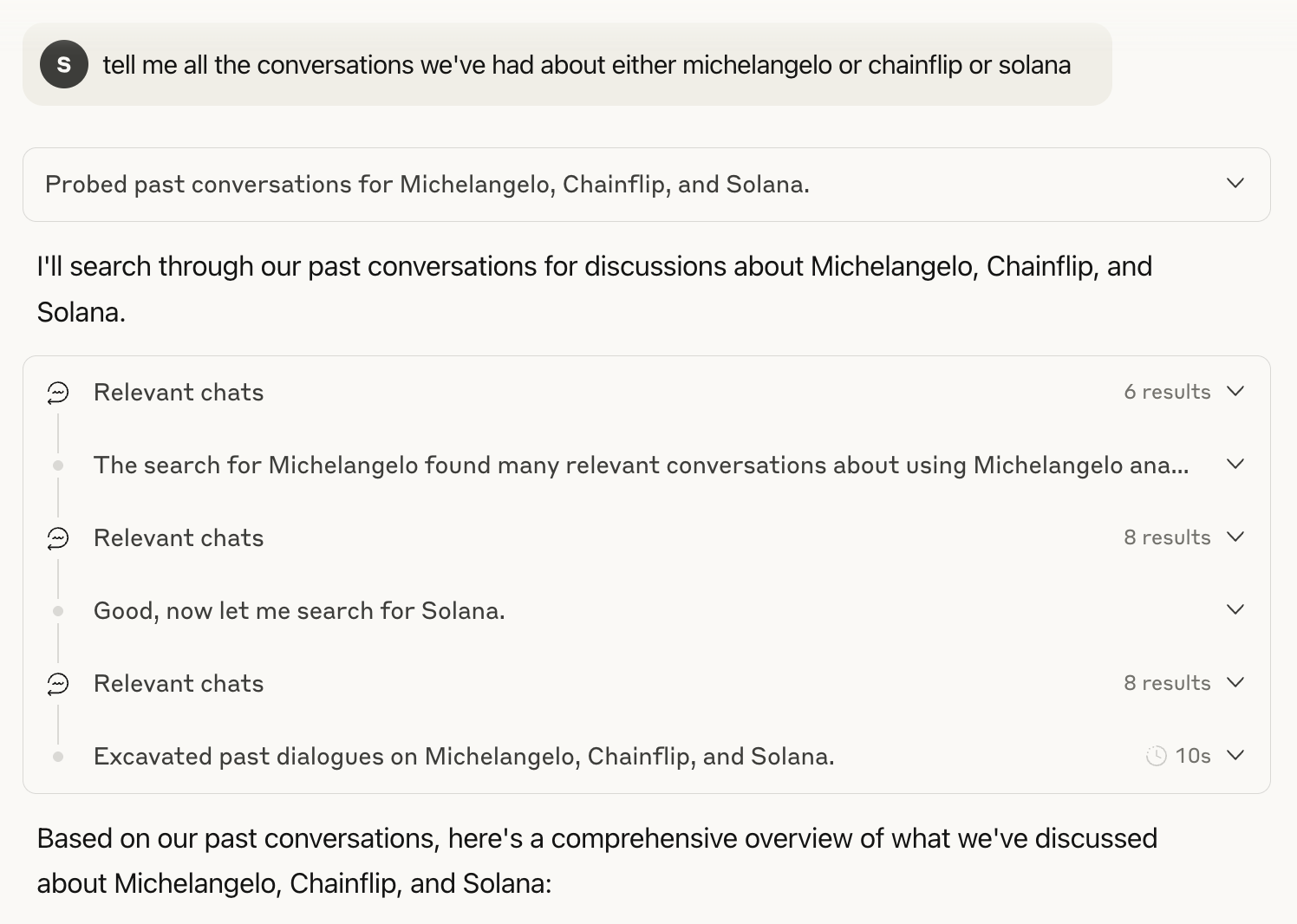
Comparative Analysis: Claude's Memory Architecture vs ChatGPT's Approach
This article provides a detailed analysis of Claude's memory system architecture and how it fundamentally differs from ChatGPT's approach. T
 shloked.com·8mo ago