





















Researchers explore Bayesian statistics to address replication crisis in behavioral sciences
By
Leah Shaffer

Lightly toasted, lightly seasoned, mostly correct.
Summary
This article discusses the "replication crisis" in behavioral sciences and experimental psychology, where repeated studies fail to replicate original findings. It highlights how researchers at Washington University in St. Louis are gathering evidence on the benefits of using Bayesian statistical frameworks as a potential solution for improving research replication and methodological rigor in the sciences.
Key quotes
· 3 pulledThe 'replication crisis' refers to a problem in the sciences where findings from previous experiments don't hold up when studies are repeated.
It is a particular issue for those in the behavioral sciences and experimental psychology; studies that should hold up, don't, and researchers have struggled with the vast task of both confirming what is known and trying to glean new and accurate information.
The concerns ramped up in the 2010s, when repeated experiments to corroborate published psychological studies ended up failing to replicate, adding to concerns about how studies are conducted.
You might also wanna read


Summer night sky guide: Milky Way, eclipses, and meteor showers to watch
A brief guide to astronomical events visible during the summer months, including the Milky Way, the Summer Triangle, eclipses, and a meteor
 bbc.co.uk·5h ago
Dava Sobel to Present Lecture on Marie Curie and Women in Science
This article announces an upcoming public lecture by Dava Sobel, author of popular history of science books like Longitude and Galileo's Dau
Sterilized Soil Continues to Release Carbon Dioxide for Six Years, Hinting at Origins of Life
A biochemist named Sébastien Fontaine conducted a 15-year experiment attempting to sterilize soil completely using gamma radiation to measur
 quantamagazine.org·7h ago
Royal Society elects over 90 new Fellows including pioneers in palaeontology and oncofertility
The Royal Society has elected over 90 outstanding researchers from across the world as new Fellows for this year. The cohort includes pionee
 royalsociety.org·8h ago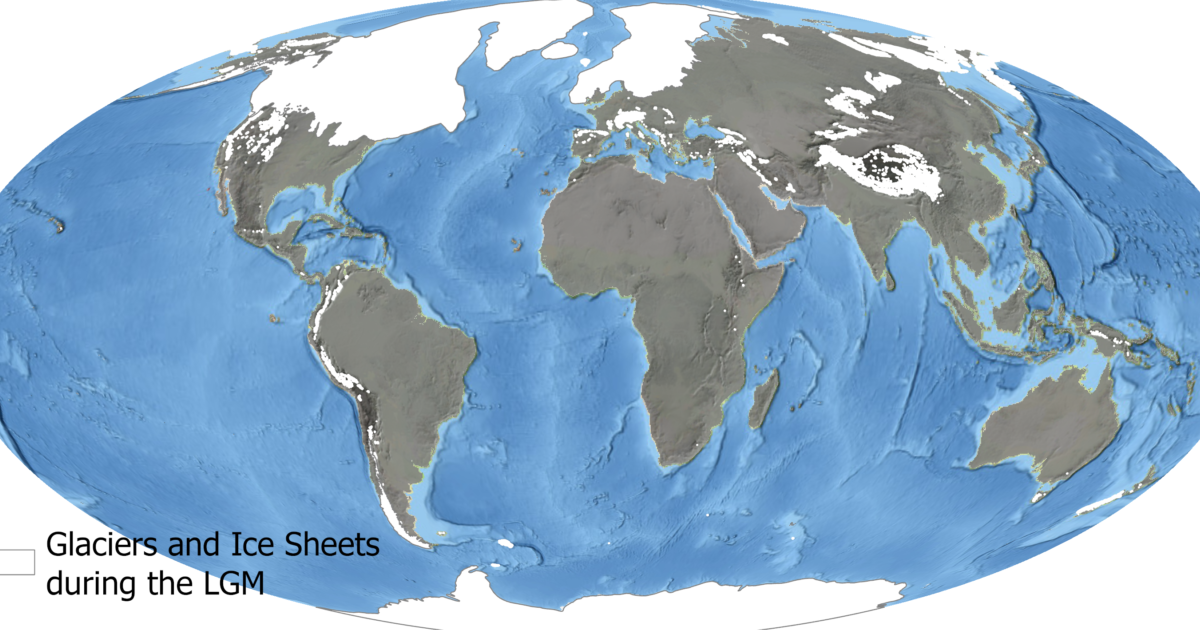
Global database maps Ice Age mountain glacier extents from 21,000 years ago
Researchers Augusto Lima and Suzette Flantua from the University of Bergen and the Bjerknes Centre have created GLACIMONTIS, a global geodat
 bjerknes.uib.no·8h ago
NSF Ends Postdoctoral Fellowship Program for Earth Scientists
The National Science Foundation (NSF) has eliminated its postdoctoral fellowship funding for Earth scientists, with the opportunity listed a
 eos.org·8h ago