





















Exploring K2-141 b: The Extreme Lava World Exoplanet with 2,000°C Surface Temperatures
By
SETI Institute

Master baker tier. Every paragraph earns its place on the tray.
Summary
SETI Institute host Dr. Moiya McTier interviews ETH Zurich geoscientist Dr. Claire Marie Guimond about K2-141 b, an extreme exoplanet located 200 light-years away. This "lava world" orbits so close to its host star that surface temperatures reach approximately 2,000 degrees Celsius, melting rock into molten landscapes and potentially creating oceans of liquid magma.
Key quotes
· 3 pulledIn the vast catalog of discovered exoplanets, few environments are as extreme as the 'lava world.'
Unlike Earth, this planet orbits its host star so closely that its surface temperature reaches roughly 2,000 degrees Celsius.
At these temperatures, rock cannot remain solid. Instead, the surface becomes a molten landscape, potentially featuring oceans of liquid magma.
You might also wanna read


JWST Study Reveals Exoplanet GJ 3929b as Likely Bare Rock Without Atmosphere
The James Webb Space Telescope's Rocky Worlds program has revealed that exoplanet GJ 3929b is likely a bare rock with no significant atmosph
 arxiv.org·9mo ago
NASA's Voyager Probes Encounter 'Wall of Fire' at Solar System's Edge
NASA's Voyager probes encountered a 'wall of fire' at the edge of the Solar System, measuring temperatures of 30,000-50,000 kelvin. The boun
iflscience.com·11mo ago
Isotopic Evidence for a Cold and Distant Origin of the Interstellar Object 3I/ATLAS
arxiv.org·3mo ago
Candidate Giant Planet Detected in Habitable Zone of α Cen A via JWST Observations
The article reports on coronagraphic observations of the star α Cen A using the James Webb Space Telescope's MIRI instrument. A candidate gi
arxiv.org·10mo ago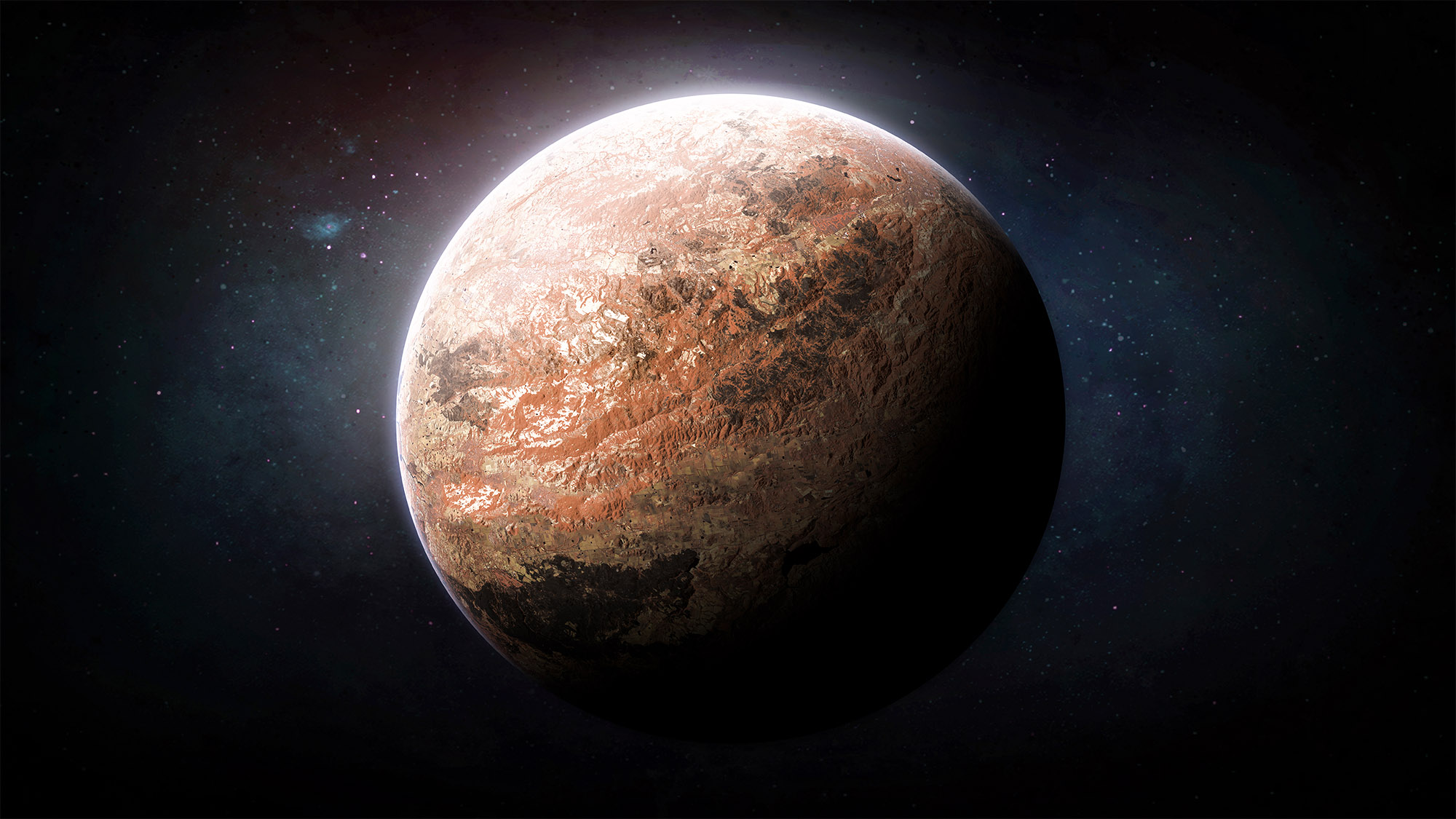
NASA Discovers Exoplanet HD 101581 b With Conditions That Could Support Rocks
NASA researchers announced the discovery of exoplanet HD 101581 b, which has conditions that could potentially support rocks. The planet's w
 The Onion·5mo ago
Researchers Confirm Fifth Habitable Planet in L 98-59 Planetary System
A team led by the Trottier Institute for Research on Exoplanets at the Université de Montréal has confirmed the existence of a fifth planet