





















Implementing Conway's Game of Life in Physical Systems
By
surprisetalk

A five-star bake. Worth schmearing, sharing, saving.
Summary
The article explores the concept of Conway's Game of Life, a cellular automaton that simulates life-like patterns on a grid, and discusses its implementation in real-world physical systems. It explains the basic rules where cells live or die based on neighbor counts, and examines how this mathematical concept can be translated into physical implementations using various technologies. The content bridges theoretical computer science concepts with practical applications, showing how abstract mathematical rules can manifest in tangible systems.
Key quotes
· 4 pulledConway's Game of Life takes place on a two-dimensional grid of square cells, each cell either alive (1) or dead (0)
In each iteration, all live cells with fewer than two neighbors die of 'starvation', while the ones with four or more die of 'overpopulation'
Any dead cell that has exactly three living neighbors comes alive — I guess that's ménage à trois or digital necromancy
The 'game' isn't really a game; you just draw an initial pattern and watch what happens
You might also wanna read


Survey of Fast Hyperbolic Tangent Approximation Techniques for Neural Networks and Audio Processing
This article surveys various mathematical approximation techniques for the hyperbolic tangent (tanh) function, focusing on computational eff

Floating-Point Format Explorer: Binary Representations and Mathematical Analysis
This appears to be a technical reference or educational tool exploring floating-point number formats, specifically showing binary representa
float.exposed·8mo ago
MerLean-Prover: A Recursive Agent Harness for Lean 4 Theorem Proving Outperforms Baselines
MerLean-Prover is an end-to-end Lean4 theorem prover that replaces 'sorry' declarations with kernel-checkable proofs using three agent types
 arxiv.org·6h ago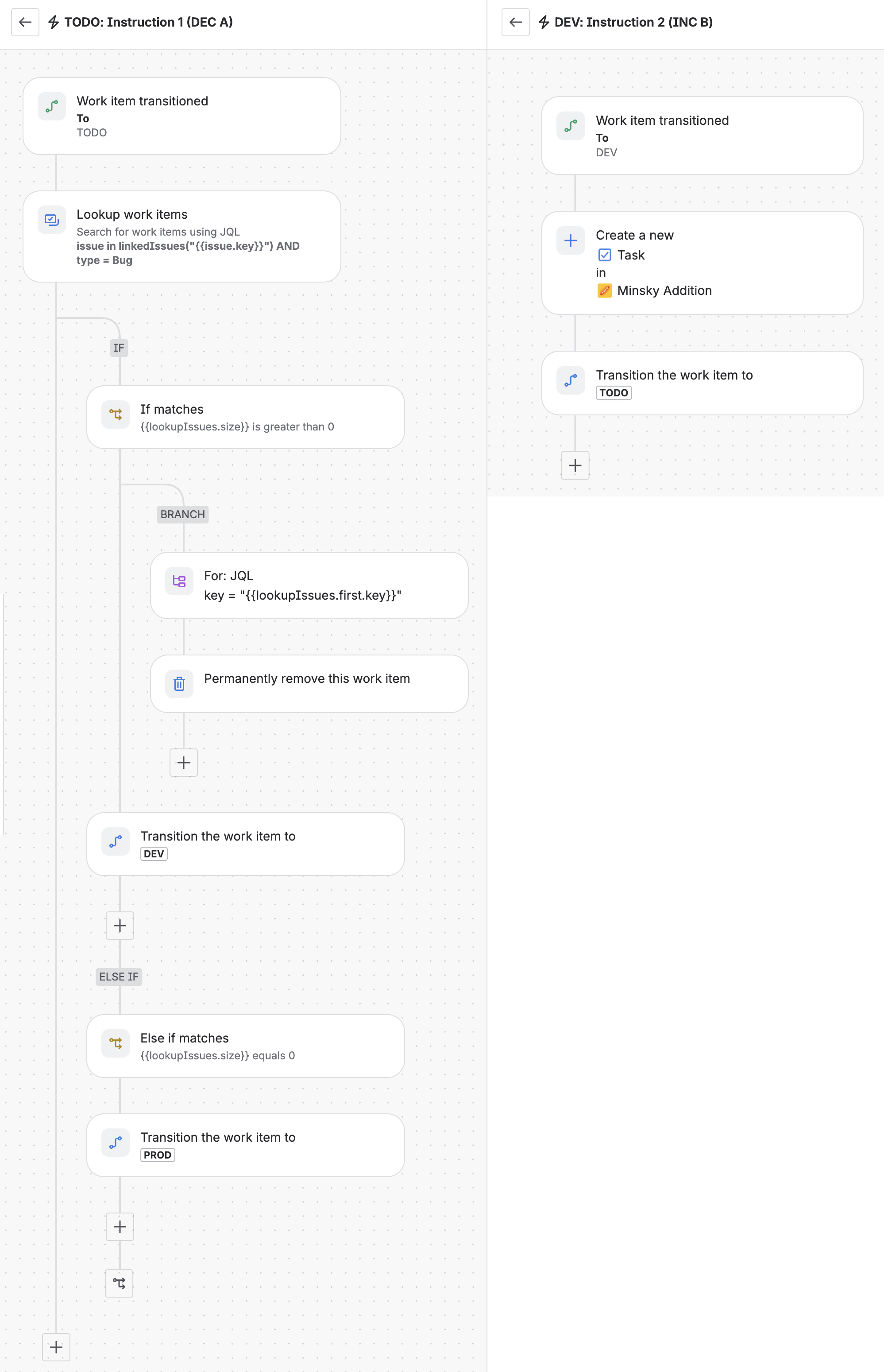
A Formal Proof That Jira Is Turing-Complete via Minsky Machine Implementation
This article provides a formal proof that Jira (Atlassian's project-tracking tool) is Turing-complete by demonstrating how to build a Minsky
A Formal Proof That Jira Is Turing-Complete via Minsky Machine Implementation
This article provides a formal proof that Jira (Atlassian's project-tracking tool) is Turing-complete by demonstrating how to build a Minsky

How Shamir's Secret Sharing Algorithm Enables Threshold Cryptography
This article explains Adi Shamir's Secret Sharing algorithm, a cryptographic method published in 1979 that splits a secret into multiple pie
 ente.com·6d ago