





















OpenAI launches three new audio models for real-time voice applications in the API

Front-window bakery material. Catches the eye, delivers the goods.
Summary
OpenAI is introducing three new audio models in its API that enable developers to build more natural, intelligent, and real-time voice applications. These models allow voice interactions that can reason, translate, and transcribe speech, making voice a more seamless interface for tasks like driving assistance, travel changes, multilingual support, and hands-free task completion. The article emphasizes that effective voice products require more than just fast response times or natural-sounding voices.
Key quotes
· 4 pulledWe're introducing three audio models in the API that unlock a new class of voice apps for developers.
With these models, developers can build voice experiences that feel more natural, respond more intelligently, and take action in real time.
Voice is becoming one of the most natural ways for people to use software.
But building useful voice products takes more than fast turn-taking or a natural-sounding voice.
You might also wanna read

OpenAI Launches GPT-Realtime Model and Voice API for Advanced Voice Agent Development
OpenAI has released its gpt-realtime model and Realtime API, which represent a significant advancement in voice AI technology. The key innov
 Product Hunt·9mo ago
OpenAI Launches GPT-Realtime Model for Advanced Voice Agent Capabilities
OpenAI has released its gpt-realtime model, which represents a significant advancement in voice agent technology. The key innovation is that
Product Hunt·9mo ago
OpenAI Releases Realtime API with Production Voice Agent Features and Advanced GPT-Realtime Model
OpenAI has made its Realtime API generally available with new production-ready features for voice agents, including support for remote MCP s
 openai.com·9mo ago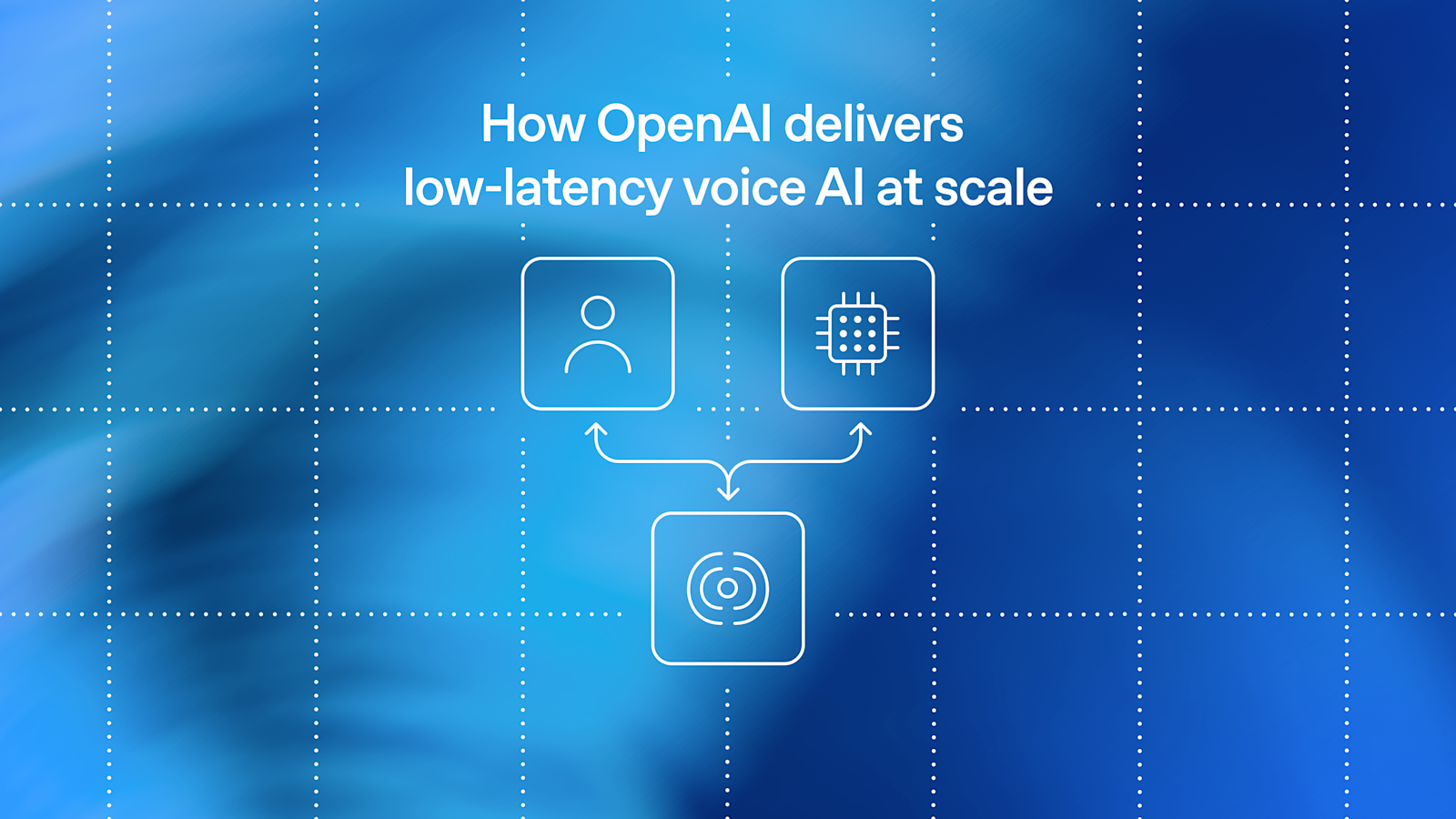
How OpenAI rebuilt its WebRTC stack for low-latency voice AI at scale
OpenAI rearchitected its WebRTC stack to address three key constraints for real-time voice AI: low-latency audio delivery, global scale, and
 OpenAI·1mo ago
VoiceAI: A Developer's Learning Path for Building Real-Time Voice Agents
A curated, developer-friendly learning path for building real-time voice AI agents, covering the full stack from speech-to-text foundations
 GitHub·1mo ago
Building a Sub-500ms Latency Voice Agent: Technical Architecture and Implementation
Nick Tikhonov shares his technical journey building a sub-500ms latency voice agent from scratch, detailing the challenges of achieving real
 ntik.me·3mo ago