





















Singapore's S$100 Billion Climate Plan Embraces District Cooling to Reduce Air Conditioning Use
By
Sing Yee Ong, Ishika Mookerjee, Todd Woody

Reliable enough to start your morning with. Toast it again tomorrow.
Summary
Singapore, a major per capita user of air conditioning in Asia, is shifting toward more efficient cooling solutions like district cooling as part of a S$100 billion climate adaptation plan. The article explores the decades-old technology being used to cool entire neighborhoods underground, alongside a UN assessment of ocean health.
Key quotes
· 3 pulledSingapore is one of the biggest per capita users of air conditioning in Asia.
The government is keen to kick the habit in favor of more efficient solutions including district cooling.
It's part of a S$100 billion climate adaptation plan.
You might also wanna read

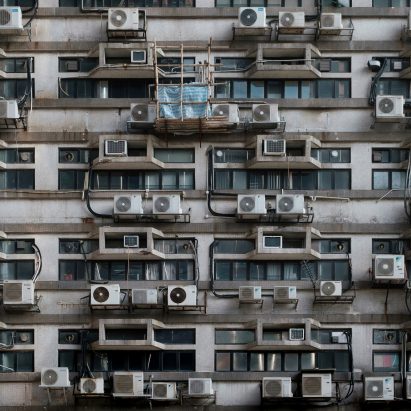
The Environmental Challenge of Global Air Conditioning Demand
The article examines the growing global dependence on air conditioning as temperatures rise, highlighting the environmental paradox where in
 Dezeen·9mo ago
Projects by Singapore University Students: Climate Research Lab and Innovative Designs
Students at Singapore University of Technology and Design have worked on projects including a climate research lab in Tuvalu, 3D printing fo
Dezeen·1y ago
First field measurements show data center waste heat warms nearby neighborhoods by up to 2.2°C
This study presents the first direct field measurements of air temperature impacts from data center waste heat on surrounding residential ne
 asmedigitalcollection.asme.org·22d ago
Asian Governments Implement Emergency Energy-Saving Measures Including Four-Day Weeks and Remote Work
Asian governments are implementing emergency measures including four-day work weeks, work-from-home policies, and energy-saving directives t
 fortune.com·3mo ago
Study Finds Data Center Development Correlated with Heat Island Effects
A non-peer-reviewed study by researchers from institutions including the University of Cambridge and Nanyang Technological University has fo
Dezeen·2mo ago
Exploring Adaptive Reuse in Urban Planning Across Asia
The article discusses adaptive reuse in urban planning across Asia, focusing on Singapore's fragmented ownership, Japan's rural revival, and
governance.fyi·1y ago