





















Study finds dim low-surface-brightness galaxies follow same formation laws as brighter galaxies
By
Guest

Toasted golden, schmeared with insight. Top of the rack.
Summary
This guest post by astrophysics PhD student Prajnadipt Ghosh discusses a study on the baryonic Tully-Fisher relation of HI-bearing low-surface-brightness (LSB) galaxies. The research, led by Zichen Hua, Yu Rong, and Huijie Hu, shows that despite being much dimmer than typical galaxies, LSB galaxies obey the same fundamental laws of galaxy formation as brighter galaxies. This finding suggests that LSB galaxies share similar formation mechanisms with normal galaxies and provides insights into how galaxies and dark matter halos evolve together. The study challenges assumptions that fainter galaxies might form differently and reinforces the universality of galaxy formation physics.
Key quotes
· 3 pulledAre fainter galaxies really different than brighter ones? This study reveals that, despite being dimmer, low surface brightness galaxies obey the same fundamental laws of galaxy formation, offering new clues about how galaxies and dark matter halos evolve.
This guest post was written by Prajnadipt Ghosh (Prajna). Prajna is a PhD student in Astrophysics at the National Centre for Nuclear Research, Warsaw.
Title: The baryonic Tully-Fisher relation of HI-bearing low-surface brightness galaxies implies their formation mechanism
You might also wanna read


Information-Theoretic Framework Proposes Fine Structure Constant as Derived from Resolution Cascade Efficiency
This working paper proposes an information-theoretic framework that reinterprets fundamental physical constants like the fine structure cons
 zenodo.org·6mo ago
Astronomers locate universe's 'missing' matter in the largest cosmic structures
Astronomers Just Solved the Mystery of the Universe's Missing Matter
New synthesis of astronomical measurements shows Hubble tension is real
New synthesis of astronomical measurements shows Hubble tension is real
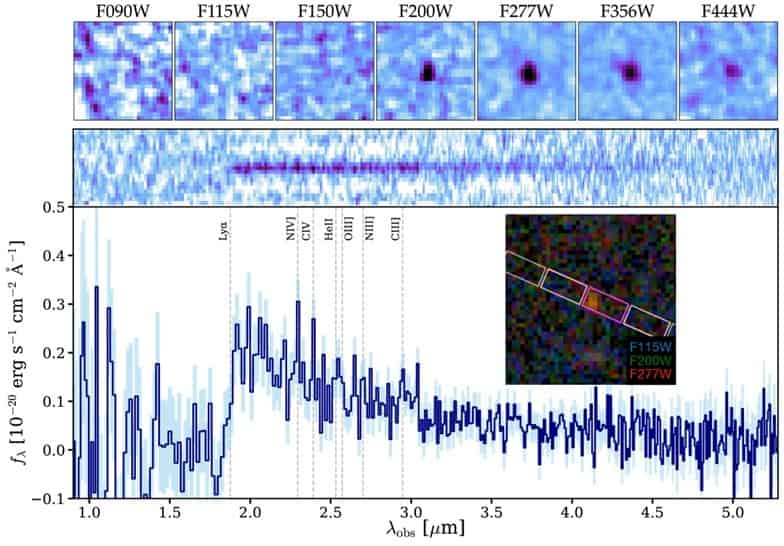
JWST Confirms Discovery of Exceptionally Luminous Galaxy at z=14.44, 280 Million Years After Big Bang
The James Webb Space Telescope has confirmed the discovery of MoM-z14, an exceptionally luminous galaxy that existed just 280 million years
 astro.theoj.org·3mo ago