





















Excerpt from "They Thought They Were Free: The Germans, 1933-45" by Milton Mayer
By
nataliste

The kind of bagel that ruins lesser bagels for you.
Summary
This excerpt from Milton Mayer's book "They Thought They Were Free: The Germans, 1933-45" examines the psychological and social dynamics of ordinary Germans during the Nazi regime. The content focuses on how citizens gradually became complicit through incremental changes, the widening gap between government and people, and the mechanisms of societal control. It explores themes of conformity, the erosion of democratic principles, and how ordinary people can become participants in authoritarian systems without realizing the full implications until it's too late.
Key quotes
· 4 pulled"What no one seemed to notice," said a colleague of mine, a philologist, "was the ever widening gap, after 1933, between the government and the people."
"Just think how very wide this gap was to begin with, here in Germany. And it became always wider."
"You know, it doesn't make people close to their government to be told that this is a people's government, a true democracy, or to be enrolled in civilian defense, or even to vote."
"All this has little, really nothing, to do with knowing one is governing."
You might also wanna read

How soccer's origins in 19th-century English boarding schools shaped the global game
An expert on global history and author of a 2025 book traces the origins of modern soccer (association football) to the well-heeled boarding
 theconversation.com·19h ago
Rethinking History: How Incompetent Leaders Like Kaiser Wilhelm II Shape World Events
This article examines the "Great Man" theory of history (popularized by Thomas Carlyle) through the lens of Kaiser Wilhelm II, arguing that
 deadcarl.com·1d ago
Roman Insulae: Ancient High-Density Urban Living 2,000 Years Ago
This article explores the history of Roman apartment buildings (insulae) as a form of high-density urban living from 2000 years ago. It exam
 commonedge.org·2d ago
Declassified CIA Cartography Maps from the 1980s: Cold War Urban Intelligence
This article showcases a collection of declassified CIA cartography maps from the 1980s, originally shared via a Flickr album. The maps focu
 brilliantmaps.com·4d ago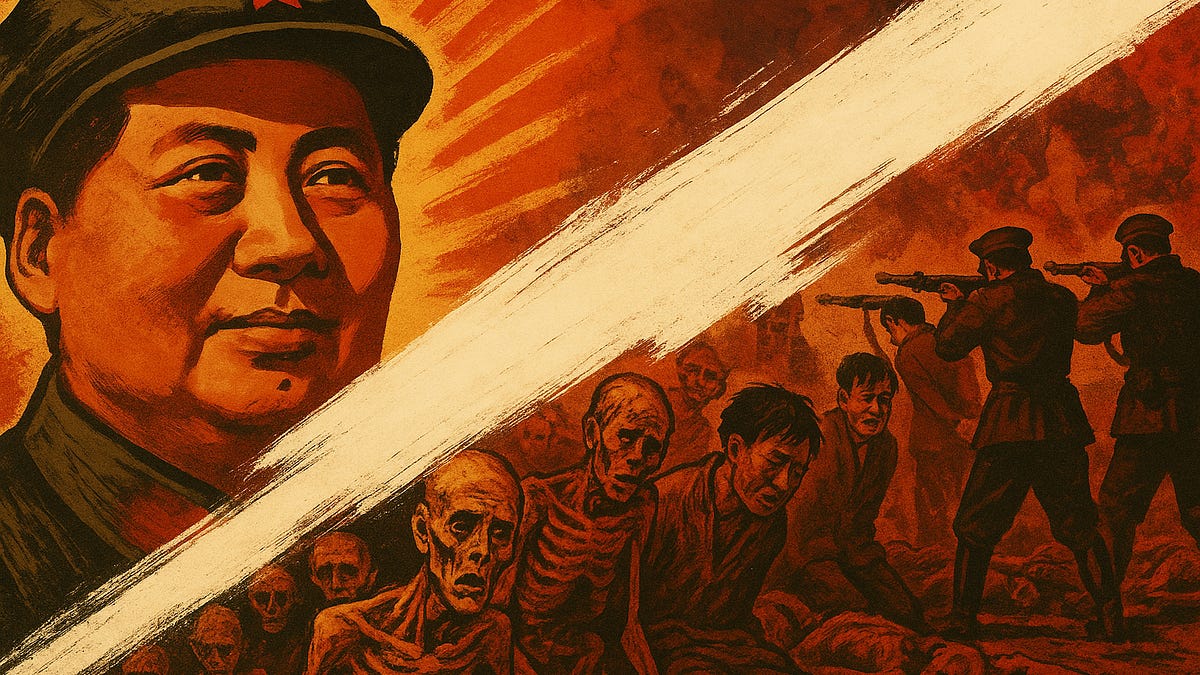
Critique of Wikipedia's Framing of Mao Zedong's Legacy
This article critiques Wikipedia's framing of Mao Zedong's legacy, arguing that the platform's entry on Mao begins with extensive praise—des
 tracingwoodgrains.com·4d ago
A satirical look at the Soviet 1936 constitution and its contrast with modern governance
The article uses a satirical comparison between the Soviet Union's 1936 constitution (which promised extensive rights and benefits) and mode
 experimental-history.com·13d ago